What does Luke 7:14 mean?
"And he came and touched the bier: and they that bare him stood still. And he said, Young man, I say unto thee, Arise." - Luke 7:14
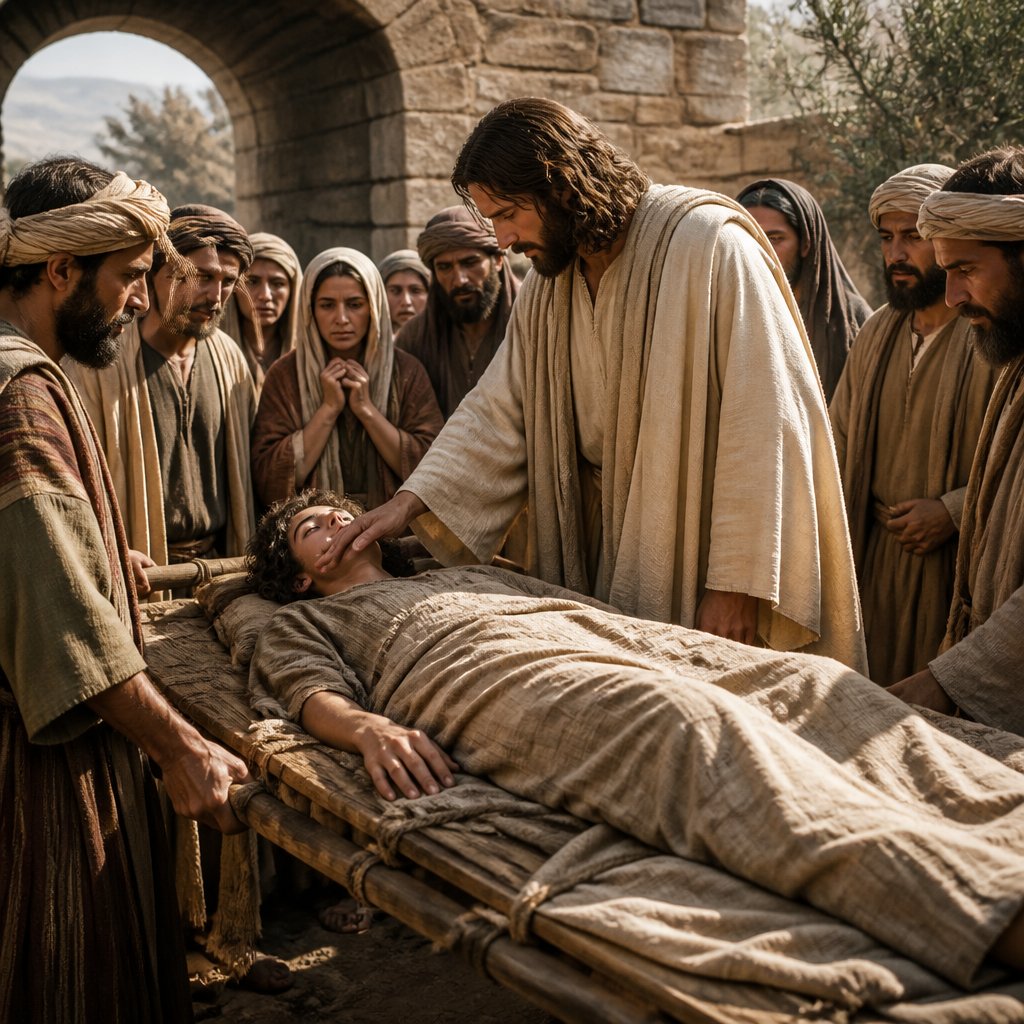
The verse Luke 7:14 in the King James Version of the Bible reads, "And he came and touched the bier: and they that bare him stood still. And he said, Young man, I say unto thee, Arise." This verse is part of the story of Jesus raising a widow's son from the dead, which is found in the Gospel of Luke, one of the four Gospels that make up the New Testament.
The context of this verse is important for understanding its full meaning. In the preceding verses, Jesus has just entered the city of Nain and encounters a funeral procession. The deceased is a young man, the only son of a widowed mother. This woman would have been utterly destitute without her son, as he would have been her only means of support in that culture. When Jesus sees the widow, he is filled with compassion for her and tells her not to weep. He then approaches the bier, which is the stretcher or platform on which the deceased is carried, and touches it. This action of touching the bier would have been seen as highly unorthodox and taboo in that culture. But Jesus, being the Son of God, transcends the limitations of cultural norms and touches the bier to halt the procession. He then speaks directly to the young man, commanding him to rise from the dead, and the young man immediately sits up and begins to speak. This miraculous act causes fear and astonishment amongst the people who witnessed it, and they glorify God, recognizing Jesus as a great prophet and declaring that God has visited his people.
The themes of this verse are numerous and profound. Firstly, the theme of compassion and empathy is evident in Jesus' response to the widow's plight. His heart goes out to her in her time of deepest need, and he acts to alleviate her suffering. This demonstrates Jesus' deep understanding of human suffering and his desire to bring comfort and healing to those who are hurting. Additionally, the theme of resurrection and new life is central to this verse. Jesus' command for the young man to arise from the dead is a powerful foreshadowing of his own resurrection, as well as the promise of new life for all who believe in him. This theme is central to the Christian faith and speaks to the hope and assurance that believers have in the face of death and despair.
Symbolism is also present in this verse, as Jesus' action of touching the bier and speaking to the dead young man holds deep significance. The act of touching the bier is a powerful symbol of Jesus' willingness to enter into the darkest and most taboo spaces of human suffering in order to bring about transformation and healing. His authority over death is symbolized in his command for the young man to rise, demonstrating that he has power over life and death. This foreshadows his own resurrection and serves as a powerful testament to his divinity and role as the Savior of the world.
In conclusion, Luke 7:14 is a rich and profound verse that holds deep meaning for Christians. It speaks to the themes of compassion, resurrection, and the power of Jesus over life and death. The symbol of Jesus' touching the bier and commanding the young man to rise serves as a powerful demonstration of his divinity and his mission to bring hope and new life to a broken and hurting world. This verse reminds believers of the incredible love and power of Jesus, and the assurance of new life that is found in him.
Have questions about Luke 7:14?
Dive deeper into this scripture with Bible Chat — an AI-powered tool for exploring God's Word through conversation. Ask questions, get context, and grow in your understanding of the Bible.
Get Our Apps


Luke 7:14 Artwork

Luke 7:14 - "And he came and touched the bier: and they that bare him stood still. And he said, Young man, I say unto thee, Arise."
"And he came and touched the bier: and they that bare him stood still. And he said, Young man, I say unto thee, Arise." - Luke 7:14
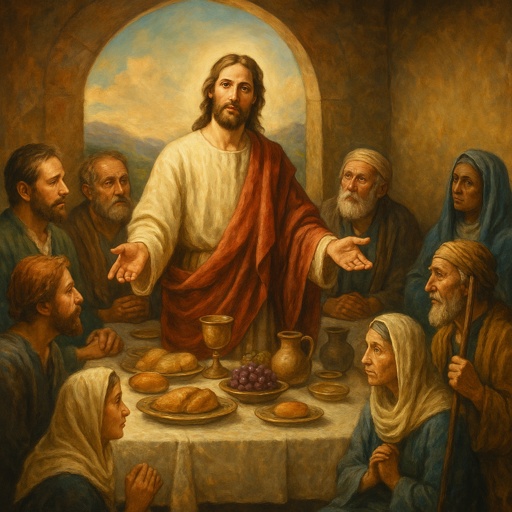
"And he put forth a parable to those which were bidden, when he marked how they chose out the chief rooms; saying unto them, When thou art bidden of any man to a wedding, sit not down in the highest room; lest a more honourable man than thou be bidden of him; And he that bade thee and him come and say to thee, Give this man place; and thou begin with shame to take the lowest room. But when thou art bidden, go and sit down in the lowest room; that when he that bade thee cometh, he may say unto thee, Friend, go up higher: then shalt thou have worship in the presence of them that sit at meat with thee. For whosoever exalteth himself shall be abased; and he that humbleth himself shall be exalted. Then said he also to him that bade him, When thou makest a feast, call the poor, the maimed, the lame, the blind: And thou shalt be blessed; for they cannot recompense thee: for thou shalt be recompensed at the resurrection of the just." - Luke 14:7-14

Luke 14:7 - "¶ And he put forth a parable to those which were bidden, when he marked how they chose out the chief rooms; saying unto them,"

Luke 14:14 - "And thou shalt be blessed; for they cannot recompense thee: for thou shalt be recompensed at the resurrection of the just."

Luke 11:14-15

Luke 18:9-14

Luke 11:1-14

Luke 14:25 - 33

Luke 11:1-14

Luke 2:13-14

Luke 18: 9-14

Luke 2:13-14

Luke 7:33

Luke 7:50

Luke 7:50

Luke 14:6 - "And they could not answer him again to these things."

Luke 7:36-50

Colossians 4:14 - "Luke, the beloved physician, and Demas, greet you."

Luke 7:41-47

Luke 15: 4-7

Luke 7:36–50

Luke 14:30 - "Saying, This man began to build, and was not able to finish."

Luke 20:7 - "And they answered, that they could not tell whence it was."

Luke 24:14 - "And they talked together of all these things which had happened."

Matthew 7:13-14

Matthew 7:13-14

Matthew 7:13-14

Matthew 7:13-14

Matthew 7:13-14