What does Luke 4:30 mean?
"But he passing through the midst of them went his way," - Luke 4:30
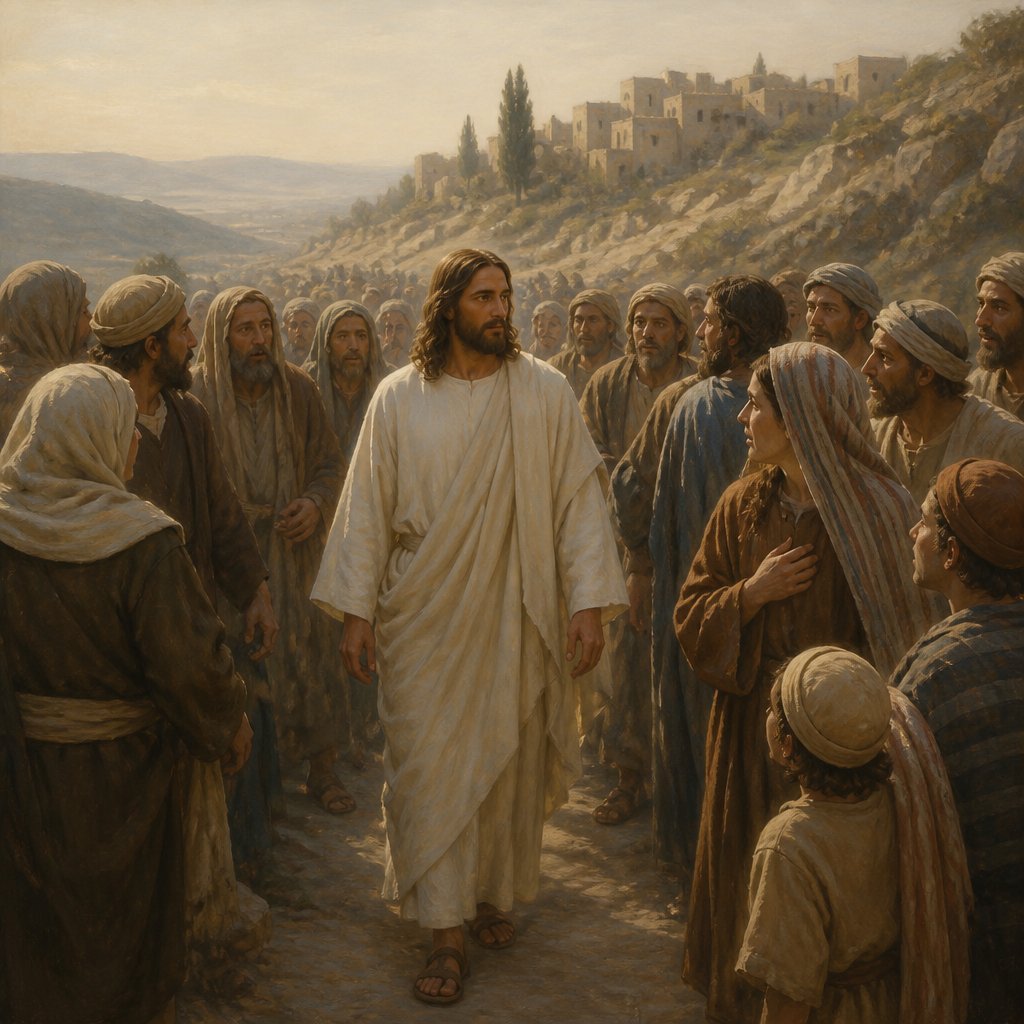
In Luke 4:30, the King James Version (KJV) of the Bible states, "But he passing through the midst of them went his way." This verse comes from the Gospel of Luke, which is one of the four Gospels in the New Testament. The Gospel of Luke was written by the physician Luke, who was a companion of the Apostle Paul, and it is traditionally believed to have been written between 80-90 AD.
The context of this verse is a pivotal moment in the ministry of Jesus. In the preceding verses, Jesus had been preaching in the synagogue in Nazareth, his hometown. He had read from the book of Isaiah and declared that the prophecy was fulfilled in him. However, the people in the synagogue were initially amazed by his words, but then they began to doubt and question his authority.
In Luke 4:29, the crowd becomes angry with Jesus and attempts to throw him off a cliff. This verse, Luke 4:30, describes Jesus passing through the midst of the angry crowd and going on his way. This event highlights the rejection and opposition that Jesus faced, even in his own hometown.
One of the key themes of this verse is the sovereignty and authority of Jesus. Despite the anger and rejection of the crowd, Jesus remains in control of the situation. His ability to pass through the midst of the angry crowd demonstrates his authority and power. This theme of Jesus' authority is a central aspect of the Gospel of Luke, as it emphasizes Jesus' role as the Son of God and the Savior of the world.
Another important theme in this verse is the fulfillment of prophecy. Earlier in the passage, Jesus declares that the prophecy in Isaiah is fulfilled in him. The rejection by his own people, as described in this verse, echoes the rejection and suffering foretold by the prophets. This theme of fulfillment of prophecy underscores Jesus' role as the long-awaited Messiah and the fulfillment of God's redemptive plan.
The symbolism in this verse is also significant. The angry crowd symbolizes the hardened hearts of the people who reject Jesus and his message. Despite his miracles and teachings, many people refuse to accept Jesus as the Son of God. The fact that Jesus passes through the midst of the crowd unharmed symbolizes his divine protection and his ultimate purpose to lay down his life for the salvation of humanity.
Overall, Luke 4:30 is a powerful and poignant verse that illustrates the rejection and opposition that Jesus faced during his earthly ministry. It emphasizes his authority, the fulfillment of prophecy, and the symbolism of the crowd's rejection. This verse serves as a reminder of the challenges and obstacles that Jesus overcame in order to fulfill his mission as the Savior of the world. It also encourages believers to trust in the sovereignty and authority of Jesus, even in the face of opposition and rejection.
Have questions about Luke 4:30?
Dive deeper into this scripture with Bible Chat — an AI-powered tool for exploring God's Word through conversation. Ask questions, get context, and grow in your understanding of the Bible.
Get Our Apps


Luke 4:30 Artwork

Luke 4:30 - "But he passing through the midst of them went his way,"
"But he passing through the midst of them went his way," - Luke 4:30

Luke 1:30

luke 9:30

luke 6:30

luke 9:29- 30

african american luke 10:30

Luke 14:30 - "Saying, This man began to build, and was not able to finish."

Luke 2:30 - "For mine eyes have seen thy salvation,"

Acts 4:30

Acts 4:30

Acts 4:30

Acts 4:30

Luke 20:30 - "And the second took her to wife, and he died childless."

Luke 1:30 Gabriel visits Mary

Luke 17:30 - "Even thus shall it be in the day when the Son of man is revealed."

Luke 13:30 - "And, behold, there are last which shall be first, and there are first which shall be last."

Luke 23:30 - "Then shall they begin to say to the mountains, Fall on us; and to the hills, Cover us."

Luke 9:30 - "And, behold, there talked with him two men, which were Moses and Elias:"

Deu:30:4

Luke 7:30 - "But the Pharisees and lawyers rejected the counsel of God against themselves, being not baptized of him."

Luke 11:30 - "For as Jonas was a sign unto the Ninevites, so shall also the Son of man be to this generation."

Luke 1:30 - "And the angel said unto her, Fear not, Mary: for thou hast found favour with God."

Luke 18:30 - "Who shall not receive manifold more in this present time, and in the world to come life everlasting."

Luke 16:30 - "And he said, Nay, father Abraham: but if one went unto them from the dead, they will repent."

1 Chronicles 4:30 - "And at Bethuel, and at Hormah, and at Ziklag,"

Luke 6:30 - "Give to every man that asketh of thee; and of him that taketh away thy goods ask them not again."

Luke 24:30 - "And it came to pass, as he sat at meat with them, he took bread, and blessed it, and brake, and gave to them."

"Saying, This man began to build, and was not able to finish." - Luke 14:30

Luke 21:30 - "When they now shoot forth, ye see and know of your own selves that summer is now nigh at hand."