What does Luke 3:1 mean?
"Now in the fifteenth year of the reign of Tiberius Caesar, Pontius Pilate being governor of Judaea, and Herod being tetrarch of Galilee, and his brother Philip tetrarch of Ituraea and of the region of Trachonitis, and Lysanias the tetrarch of Abilene," - Luke 3:1
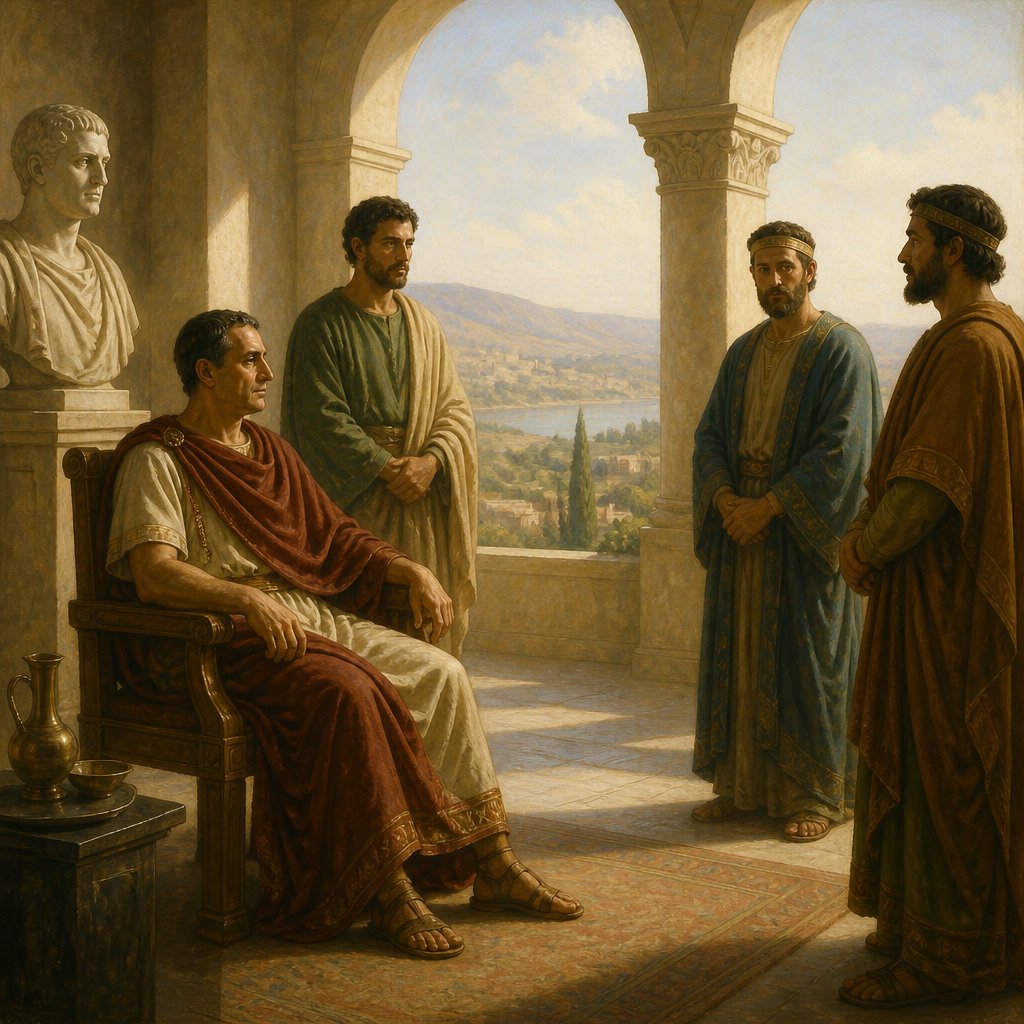
The Bible verse Luke 3:1 from the King James Version reads, "Now in the fifteenth year of the reign of Tiberius Caesar, Pontius Pilate being governor of Judaea, and Herod being tetrarch of Galilee, and his brother Philip tetrarch of Ituraea and of the region of Trachonitis, and Lysanias the tetrarch of Abilene." On the surface, this verse may seem like a simple historical reference, but it holds deeper meaning and significance within the context of the Gospel of Luke.
Firstly, the verse provides historical context for the events that will unfold in the subsequent verses of Luke. It sets the stage for the ministry of John the Baptist, which is the main focus of this chapter. By providing specific details about the political and governmental landscape at the time, Luke ensures that his audience understands the historical backdrop of John the Baptist's ministry and his significance within the broader societal and political context.
The mention of Tiberius Caesar, Pontius Pilate, Herod, Philip, and Lysanias serves to ground the events of the Gospel in a specific time and place, affirming the historicity of the narrative. Tiberius Caesar was the Roman Emperor at the time, and Pontius Pilate was the governor of Judea. Herod, Philip, and Lysanias were local rulers in various regions. By listing these figures, Luke highlights the political and social environment in which the ministry of John the Baptist and Jesus takes place.
Furthermore, Luke 3:1 serves to demonstrate the fulfillment of Old Testament prophecy. The presence of these powerful rulers and their roles in the events that follow aligns with earlier prophecies regarding the coming of the Messiah and the fulfillment of God's plan for salvation. This historical and political backdrop underscores the divine orchestration of events and the presence of God's hand in the unfolding of history.
The verse also underscores the theme of the kingdom of God. By situating the ministry of John the Baptist and Jesus within the context of the Roman Empire and local rulers, Luke emphasizes the juxtaposition of earthly power and the kingdom of God. Despite the political and social realities of the time, the message of John the Baptist and Jesus challenges the status quo and points to a higher, spiritual reality. This theme of the kingdom of God as a counter to worldly power and authority runs throughout the Gospel of Luke and is exemplified in the teachings and actions of Jesus.
Symbolically, the mention of these powerful rulers also serves as a contrast to the true King, Jesus Christ. While Tiberius Caesar, Pontius Pilate, Herod, and the other rulers held earthly power and authority, Jesus comes as the ultimate authority and ruler of the kingdom of God. This contrast sets the stage for the broader theological themes of the Gospel of Luke, highlighting the upside-down nature of God's kingdom in comparison to the kingdoms of the world.
In conclusion, Luke 3:1 from the King James Version is not merely a historical reference, but a rich and significant verse that provides context, symbolism, and theological depth within the Gospel of Luke. It serves to ground the events of the narrative in history, demonstrate the fulfillment of prophecy, and underscore the themes of the kingdom of God and the contrast between earthly and divine rulership. As readers engage with this verse, they are invited to consider the implications of these historical and political details for their understanding of Jesus and his message.
Have questions about Luke 3:1?
Dive deeper into this scripture with Bible Chat — an AI-powered tool for exploring God's Word through conversation. Ask questions, get context, and grow in your understanding of the Bible.
Get Our Apps


Luke 3:1 Artwork

luke 3:1-6

Luke 3:1-6

Luke 3:1-6

Luke 3:1 - "Now in the fifteenth year of the reign of Tiberius Caesar, Pontius Pilate being governor of Judaea, and Herod being tetrarch of Galilee, and his brother Philip tetrarch of Ituraea and of the region of Trachonitis, and Lysanias the tetrarch of Abilene,"
"Now in the fifteenth year of the reign of Tiberius Caesar, Pontius Pilate being governor of Judaea, and Herod being tetrarch of Galilee, and his brother Philip tetrarch of Ituraea and of the region of Trachonitis, and Lysanias the tetrarch of Abilene," - Luke 3:1

Luke 1:3 - "It seemed good to me also, having had perfect understanding of all things from the very first, to write unto thee in order, most excellent Theophilus,"

Luke 3:3 - "And he came into all the country about Jordan, preaching the baptism of repentance for the remission of sins;"

Luke 24:3 - "And they entered in, and found not the body of the Lord Jesus."

Luke 24:1-3 - "On the first day of the week, very early in the morning, the women took the spices they had prepared and went to the tomb. They found the stone rolled away from the tomb, but when they entered, they did not find the body of the Lord Jesus."

Luke 3:6 - "And all flesh shall see the salvation of God."

Luke 15:3 - "¶ And he spake this parable unto them, saying,"
![Luke 2:3 NIV
[3] And everyone went to their own town to register.](https://media.bible.art/624b3d4a-2c40-4bf2-bc2f-1d6418c32a14-thumbnail.jpg)
Luke 2:3 NIV [3] And everyone went to their own town to register.

Luke 11:3 - "Give us day by day our daily bread."

Luke 1:1

Luke 3:10 - "And the people asked him, saying, What shall we do then?"

Luke 2:3 - "And all went to be taxed, every one into his own city."

Luke 22:3 - "¶ Then entered Satan into Judas surnamed Iscariot, being of the number of the twelve."

Luke 3:18 - "And many other things in his exhortation preached he unto the people."

Luke 3:20 - "Added yet this above all, that he shut up John in prison."

Luke 1:31

Luke 1:26

luke 1:26

Luke 1:13

luke 1:26

luke 1:27

luke 1:29

Luke:1

Luke 3:13 - "And he said unto them, Exact no more than that which is appointed you."

Luke 2.12

Luke 18:3 - "And there was a widow in that city; and she came unto him, saying, Avenge me of mine adversary."