What does Luke 2:30 mean?
"For mine eyes have seen thy salvation," - Luke 2:30
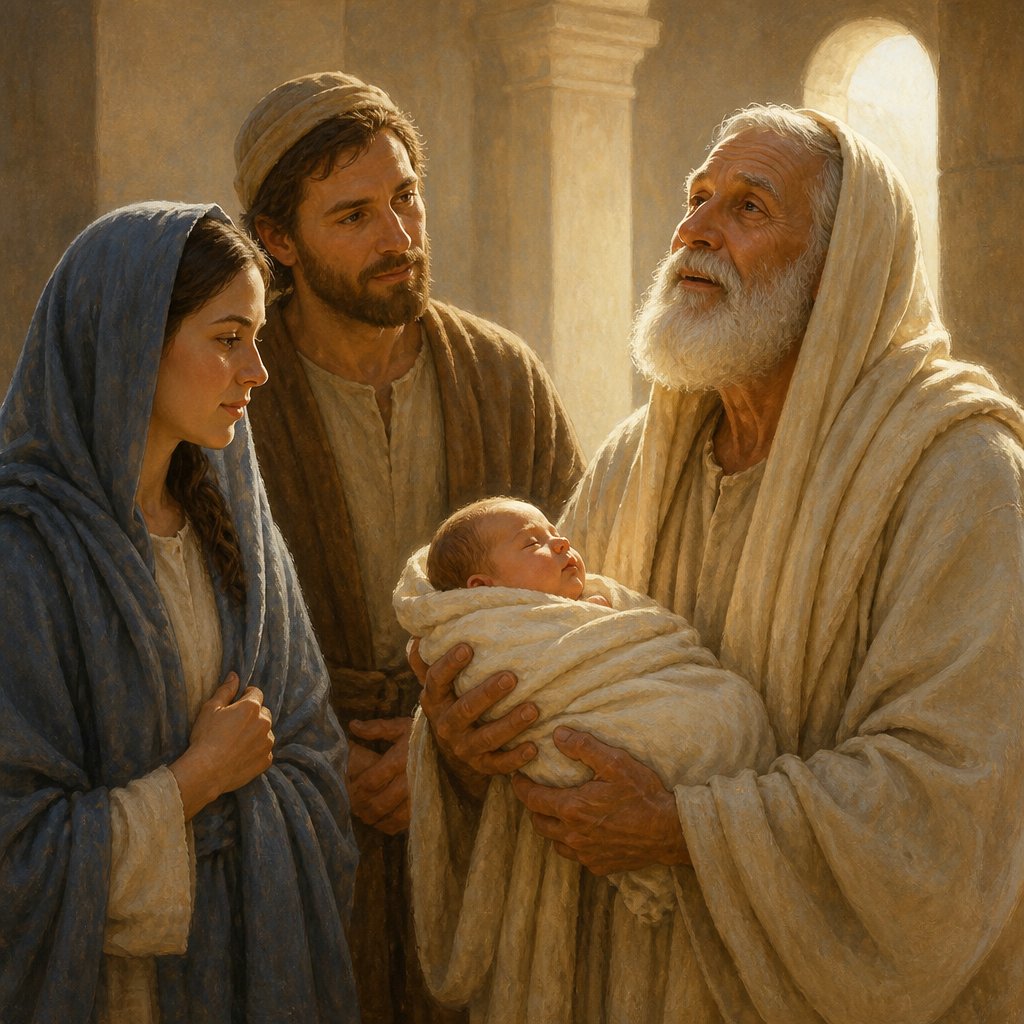
Luke 2:30 (KJV) – “For mine eyes have seen thy salvation.”
The Gospel of Luke, written by the physician and companion of the apostle Paul, is the third book in the New Testament of the Christian Bible and is widely regarded for its rich wording and storytelling. Luke 2:30 is a pivotal verse in the gospel, occurring just after the birth of Jesus Christ in Bethlehem. The verse comes at a significant moment in the narrative, as an elderly man named Simeon, who was described as a pious and devout man awaiting the arrival of the Messiah, finally lays eyes on the infant Jesus.
The verse can be viewed through several lenses, each revealing a deeper meaning and profound insights into the Christian faith. This commentary will explore the themes, context, and symbolism of Luke 2:30 in the King James Version, providing a comprehensive understanding of its significance.
Themes:
1. Salvation – The central theme of Luke 2:30 is the concept of salvation, which is the deliverance or redemption from sin and its consequences. Simeon’s declaration of having seen “thy salvation” emphasizes the fulfillment of God’s promise to send a savior to the world. In Christian theology, Jesus is regarded as the embodiment of salvation, offering a path to eternal life through his sacrificial death and resurrection.
2. Divine Intervention – Another theme that emerges from this verse is the idea of divine intervention. Simeon’s recognition of Jesus as the embodiment of salvation signifies the intervention of God in the affairs of humanity. The coming of Jesus into the world is seen as a direct intervention by God to reconcile mankind with Himself and to provide a way for redemption and forgiveness of sins.
3. Faith and Revelation – Luke 2:30 speaks to the role of faith and the experience of divine revelation. Simeon, through his faithful and devoted life, was granted the privilege of seeing the promised Messiah. The verse underscores the notion that God reveals Himself to those who earnestly seek Him and have faith in His promises.
Context:
The context of Luke 2:30 is set within the larger narrative of the birth and early life of Jesus Christ. In the preceding verses, the infant Jesus is brought to the temple in Jerusalem for the ritual of purification according to Jewish law. Simeon, who had been told by the Holy Spirit that he would not die until he had seen the Lord’s Messiah, is guided by the Spirit to the temple where he encounters the baby Jesus in the arms of his parents, Mary and Joseph.
Simeon’s response to seeing the infant Jesus is captured in the words of Luke 2:30. His prayerful declaration reflects a deep sense of fulfillment and joy upon beholding the long-awaited Messiah. Moreover, in the verses that follow, Simeon blesses the child and prophesies about his future role as a light to the Gentiles and the glory of Israel, alluding to Jesus’ universal significance and the fulfillment of Old Testament prophecies.
Symbolism:
The symbolism inherent in Luke 2:30 is rich and multi-layered, offering profound insights into the significance of Jesus’ birth and mission.
1. Light and Salvation – Simeon’s declaration embodies the symbolism of light and salvation. Jesus is commonly referred to as the “light of the world” in Christian tradition, and in recognizing him as the source of salvation, Simeon is acknowledging Jesus’ role as the illuminator of spiritual darkness and the bringer of deliverance from sin.
2. Fulfillment of Prophecy – The verse also symbolizes the fulfillment of Old Testament prophecies regarding the coming of the Messiah. Throughout the Gospel of Luke, there are numerous references to Jesus’ birth as the realization of God’s promises to the people of Israel, and Simeon’s recognition of Jesus as the fulfillment of those prophecies is a powerful symbol of divine faithfulness and providence.
In conclusion, Luke 2:30 in the King James Version encapsulates profound themes of salvation, divine intervention, faith, and revelation. The context of the verse within the larger narrative of Jesus’ birth and the symbolism it conveys further enrich its significance. As a foundational verse in the Gospel of Luke, it serves as a testament to the central message of the Christian faith – that in Jesus Christ, God’s salvation has come to the world, fulfilling ancient prophecies and offering hope for all who believe.
Have questions about Luke 2:30?
Dive deeper into this scripture with Bible Chat — an AI-powered tool for exploring God's Word through conversation. Ask questions, get context, and grow in your understanding of the Bible.
Get Our Apps


Luke 2:30 Artwork

Luke 2:30 - "For mine eyes have seen thy salvation,"
"For mine eyes have seen thy salvation," - Luke 2:30

Luke 1:30

luke 9:30

luke 6:30

luke 9:29- 30

african american luke 10:30

Luke 14:30 - "Saying, This man began to build, and was not able to finish."
Luke 20:30 - "And the second took her to wife, and he died childless."

Luke 1:30 Gabriel visits Mary

Luke 17:30 - "Even thus shall it be in the day when the Son of man is revealed."

Luke 4:30 - "But he passing through the midst of them went his way,"

Luke 13:30 - "And, behold, there are last which shall be first, and there are first which shall be last."

Luke 23:30 - "Then shall they begin to say to the mountains, Fall on us; and to the hills, Cover us."

Luke 9:30 - "And, behold, there talked with him two men, which were Moses and Elias:"

Luke 7:30 - "But the Pharisees and lawyers rejected the counsel of God against themselves, being not baptized of him."

Luke 11:30 - "For as Jonas was a sign unto the Ninevites, so shall also the Son of man be to this generation."

Luke 1:30 - "And the angel said unto her, Fear not, Mary: for thou hast found favour with God."

Luke 18:30 - "Who shall not receive manifold more in this present time, and in the world to come life everlasting."

Luke 16:30 - "And he said, Nay, father Abraham: but if one went unto them from the dead, they will repent."

Luke 6:30 - "Give to every man that asketh of thee; and of him that taketh away thy goods ask them not again."

Luke 24:30 - "And it came to pass, as he sat at meat with them, he took bread, and blessed it, and brake, and gave to them."

"Saying, This man began to build, and was not able to finish." - Luke 14:30

Luke 21:30 - "When they now shoot forth, ye see and know of your own selves that summer is now nigh at hand."
Luke 12:30 - "For all these things do the nations of the world seek after: and your Father knoweth that ye have need of these things."

Luke 5:30 - "But their scribes and Pharisees murmured against his disciples, saying, Why do ye eat and drink with publicans and sinners?"

Luke 22:30 - "That ye may eat and drink at my table in my kingdom, and sit on thrones judging the twelve tribes of Israel."
Luke 3:30 - "Which was the son of Simeon, which was the son of Juda, which was the son of Joseph, which was the son of Jonan, which was the son of Eliakim,"

Luke 8:30 - "And Jesus asked him, saying, What is thy name? And he said, Legion: because many devils were entered into him."

Luke 15:30 - "But as soon as this thy son was come, which hath devoured thy living with harlots, thou hast killed for him the fatted calf."