What does Luke 24:37 mean?
"But they were terrified and affrighted, and supposed that they had seen a spirit." - Luke 24:37
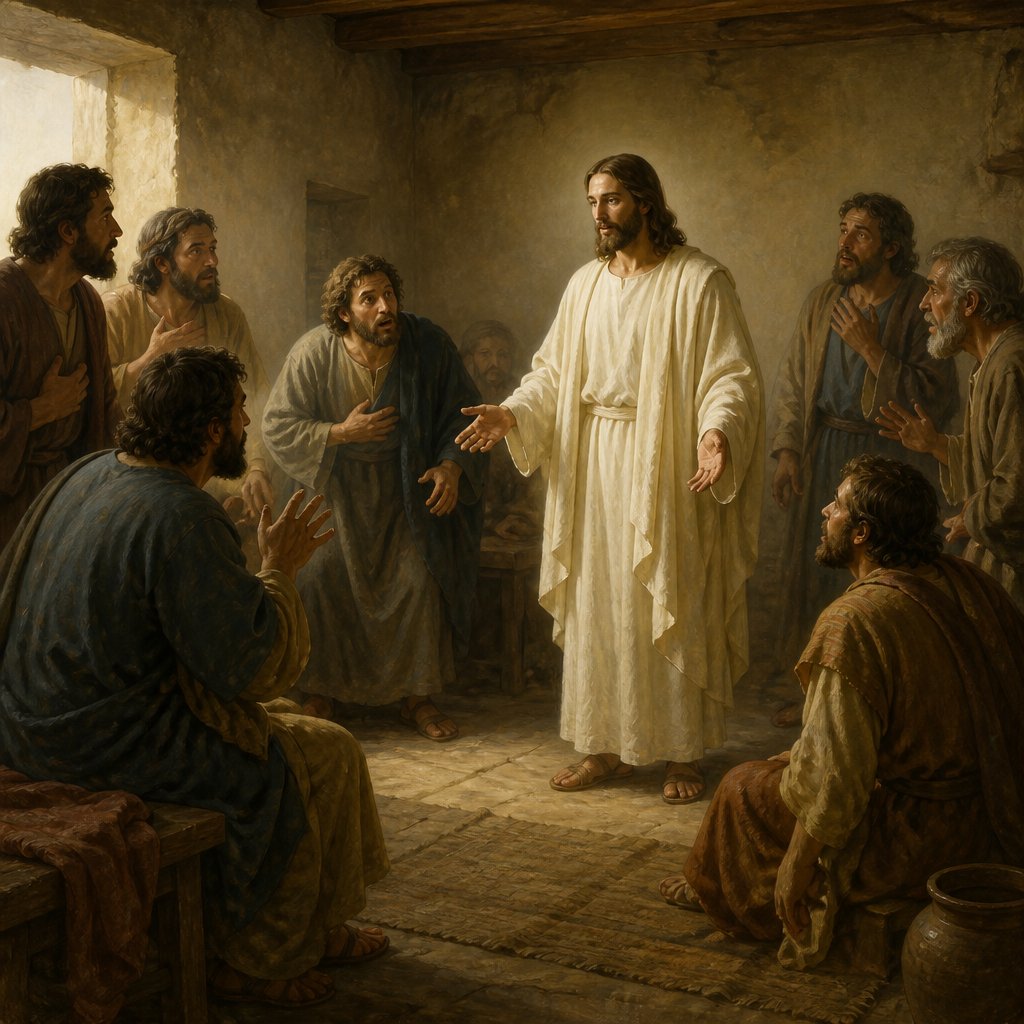
Luke 24:37 (KJV) - "But they were terrified and affrighted, and supposed that they had seen a spirit."
In this verse from the Gospel of Luke, we find the disciples of Jesus experiencing fear and confusion. This scene takes place after the crucifixion of Jesus and leading up to the resurrection. The disciples are gathered together, and Jesus appears to them, causing them to be terrified and frightened. They believe that they are seeing a spirit or ghost, not realizing that it is actually Jesus himself.
This verse speaks to the human experience of fear and the limitations of human understanding. The disciples were living in a time of great turmoil and uncertainty, having just witnessed the crucifixion of their beloved teacher and leader. When Jesus appears to them, they are unable to comprehend the reality of the situation, and their immediate response is one of fear and disbelief.
One of the central themes of this verse is the idea of faith and trust in the midst of uncertainty. The disciples' initial reaction to the appearance of Jesus is one of fear and confusion, but as the story unfolds, they come to understand that Jesus has truly risen from the dead. This transformation from fear to faith is a powerful message that speaks to the resilience of the human spirit and the ability to overcome doubt and uncertainty through belief in something greater than ourselves.
Another theme that can be drawn from this verse is the idea of transformation and renewal. The disciples' fear and confusion give way to understanding and belief as they come to realize the reality of Jesus' resurrection. This process of change and growth mirrors the larger message of Easter, which is a celebration of new life and the triumph of hope over despair. The disciples' experience serves as a reminder that even in the darkest moments, there is always the potential for renewal and transformation.
The context of this verse is also important to consider. It comes at a pivotal moment in the story of Jesus' resurrection, when the disciples are struggling to make sense of the extraordinary events that have transpired. It is a moment of uncertainty and doubt, but it also serves as a turning point in the narrative, as the disciples begin to grasp the significance of Jesus' resurrection and the profound impact it will have on their lives and the world.
Symbolism can also be found in this verse. The disciples' initial fear and confusion can be seen as a representation of the human condition, with its tendency to be ruled by fear and uncertainty. The appearance of Jesus in their midst serves as a symbol of hope and divine intervention, breaking through the darkness and confusion to bring clarity and understanding.
In conclusion, Luke 24:37 is a powerful and evocative verse that captures the fear and confusion of the disciples in the wake of Jesus' resurrection. It speaks to the themes of faith, transformation, and renewal, and carries a message of hope and resilience in the face of uncertainty. This verse has deep spiritual significance and continues to resonate with believers as a testament to the enduring power of faith and the capacity for human transformation.
Have questions about Luke 24:37?
Dive deeper into this scripture with Bible Chat — an AI-powered tool for exploring God's Word through conversation. Ask questions, get context, and grow in your understanding of the Bible.
Get Our Apps


Luke 24:37 Artwork

Luke 24:37 - "But they were terrified and affrighted, and supposed that they had seen a spirit."
"But they were terrified and affrighted, and supposed that they had seen a spirit." - Luke 24:37

Genesis 24-37

Luke 2:37

Luke 2:37

Luke 2:37

Luke 2:37

Luke 2:37

Luke (1:37) For nothing will be impossible with God.”

Luke (1:37) For nothing will be impossible with God.”

Luke (1:37) For nothing will be impossible with God.”

Luke (1:37) For nothing will be impossible with God.”

Luke (1:37) For nothing will be impossible with God.”

Luke (1:37) For nothing will be impossible with God.”

Luke (1:37) For nothing will be impossible with God.”

Luke (1:37) For nothing will be impossible with God.”

Luke (1:37) For nothing will be impossible with God.”

Luke (1:37) For nothing will be impossible with God.”

Luke (1:37) For nothing will be impossible with God.”

Luke (1:37) For nothing will be impossible with God.”

Luke (1:37) For nothing will be impossible with God.”

Luke (1:37) For nothing will be impossible with God.”

Luke (1:37) For nothing will be impossible with God.”

Luke (1:37) For nothing will be impossible with God.”

Luke (1:37) For nothing will be impossible with God.”

Luke (1:37) For nothing will be impossible with God.”

Luke (1:37) For nothing will be impossible with God.”

Luke (1:37) For nothing will be impossible with God.”

Luke (1:37) For nothing will be impossible with God.”

Luke (1:37) For nothing will be impossible with God.”