What does Luke 23:9 mean?
"Then he questioned with him in many words; but he answered him nothing." - Luke 23:9
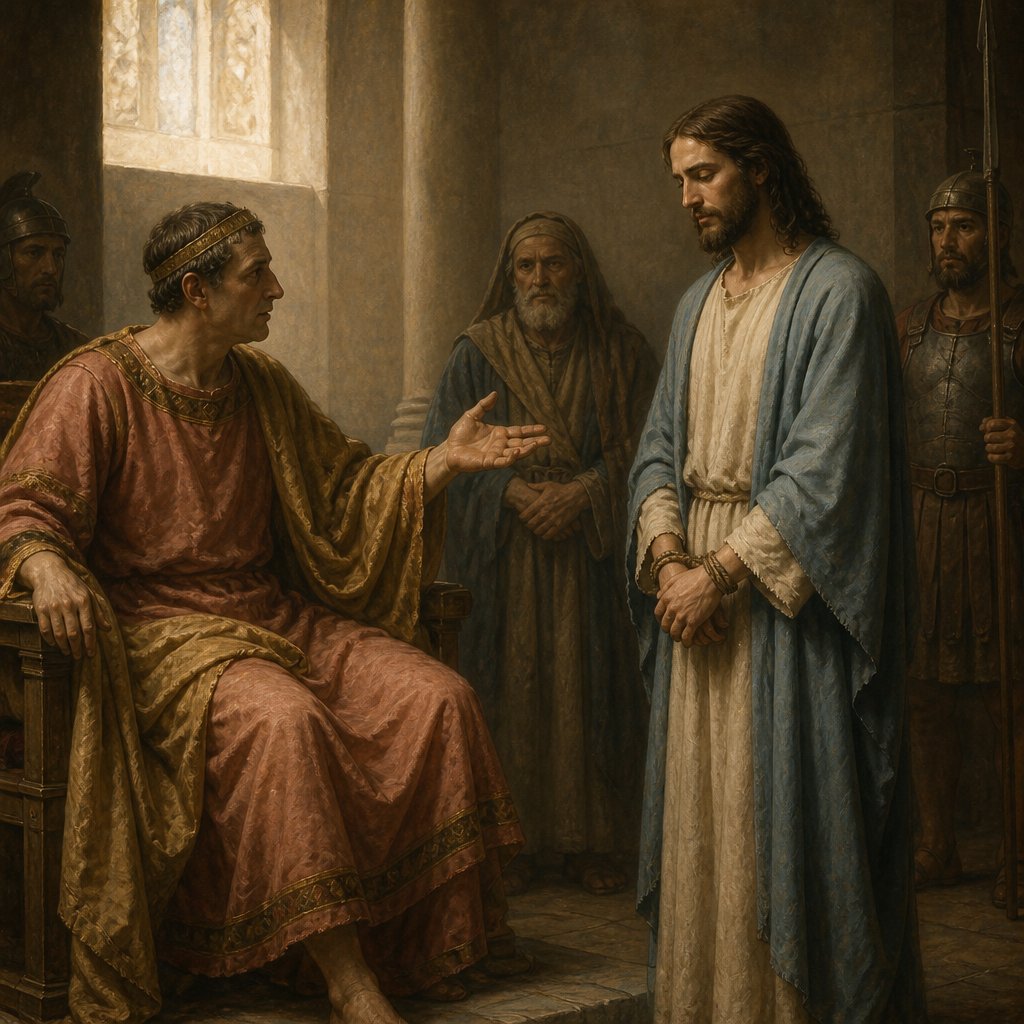
In Luke 23:9 (KJV), the verse reads, "Then he questioned with him in many words; but he answered him nothing." This verse is a part of the narrative of Jesus' trial before Pontius Pilate, the Roman governor of Judea. Pilate was questioning Jesus about the accusations brought against him by the chief priests and scribes, but Jesus chose to remain silent.
This verse is part of the larger context of Jesus' trial and crucifixion, which is a pivotal moment in the New Testament. It marks the climax of Jesus' earthly ministry and sets the stage for his ultimate sacrifice for the sins of humanity. The themes present in this verse include silence in the face of accusation, the innocence of Christ, and the fulfillment of prophecy.
The silence of Jesus in this verse is significant because it fulfills the prophecy found in Isaiah 53:7, which says, "He was oppressed, and he was afflicted, yet he opened not his mouth; like a lamb that is led to the slaughter, and like a sheep that before its shearers is silent, so he opened not his mouth." This prophecy emphasizes the voluntary nature of Jesus' sacrifice and his willingness to endure unjust treatment without protest.
Furthermore, Jesus' silence also serves as a powerful example of humility and submission in the face of adversity. Instead of defending himself or asserting his innocence, Jesus chooses to remain quiet, trusting in the will of God and the ultimate fulfillment of his purpose on earth. This act of silent surrender highlights Jesus' unwavering commitment to fulfilling the will of the Father and serving as the ultimate atonement for the sins of humanity.
The interaction between Jesus and Pilate in this verse also speaks to the theme of innocence and the unjust condemnation of Christ. Despite Pilate's efforts to discern the truth and find a reason to release Jesus, the pressure from the religious leaders and the crowd ultimately leads to his sentencing to death on the cross. This serves as a powerful reminder of the flawed nature of earthly justice and the reality of persecution and suffering that believers may face for their faith.
The symbolism present in this verse is also noteworthy. Jesus' silence can be seen as a mirror of the sacrificial lamb in the Old Testament, which was led to the slaughter without resistance. This imagery emphasizes the fulfillment of the Old Testament prophecies regarding the suffering and death of the Messiah, as well as the atoning significance of Jesus' sacrifice on the cross.
Additionally, the interaction between Jesus and Pilate serves as a representation of the broader conflict between the kingdom of God and the kingdoms of this world. Pilate, as a representative of the Roman Empire, symbolizes the earthly powers that oppose the reign of Christ, while Jesus embodies the ultimate authority and sovereignty of God's kingdom. This conflict underscores the spiritual battle between good and evil, and the enduring victory of Christ over the forces of darkness.
In conclusion, Luke 23:9 (KJV) is a powerful and profound verse that holds deep meaning within the larger narrative of Jesus' trial and crucifixion. Through Jesus' silence and his interaction with Pilate, this verse highlights important themes of humility, innocence, and the ultimate victory of Christ over sin and death. It also serves as a reminder of the sacrificial nature of Jesus' atonement and the enduring significance of his sacrifice for all believers.
Have questions about Luke 23:9?
Dive deeper into this scripture with Bible Chat — an AI-powered tool for exploring God's Word through conversation. Ask questions, get context, and grow in your understanding of the Bible.
Get Our Apps


Luke 23:9 Artwork

Luke 23:9 - "Then he questioned with him in many words; but he answered him nothing."
"Then he questioned with him in many words; but he answered him nothing." - Luke 23:9

Luke 9:23 - "¶ And he said to them all, If any man will come after me, let him deny himself, and take up his cross daily, and follow me."

Luke 9:23-24 - "Then he said to them all: “Whoever wants to be my disciple must deny themselves and take up their cross daily and follow me. For whoever wants to save their life will lose it, but whoever loses their life for me will save it."

Luke 23:53

Luke 19:23

luke 11:23

Luke 19:23

luke 11:23
Luke 15:23

luke 11:23

luke 11:23

Luke 23:54 - "And that day was the preparation, and the sabbath drew on."

Luke 23:23 - "And they were instant with loud voices, requiring that he might be crucified. And the voices of them and of the chief priests prevailed."

Luke 23:24 - "And Pilate gave sentence that it should be as they required."

Luke 23:45 - "And the sun was darkened, and the veil of the temple was rent in the midst."

Luke 7:23 - "And blessed is he, whosoever shall not be offended in me."

Luke 23:21 - "But they cried, saying, Crucify him, crucify him."

Luke 23:16 - "I will therefore chastise him, and release him."

Luke 23:37 - "And saying, If thou be the king of the Jews, save thyself."

Luke 23:10 - "And the chief priests and scribes stood and vehemently accused him."

Genesis 23-9
Luke 11:9

luke 9:30

luke 9:35

luke 9:35

Luke 9:23-25 - "Then he said to them all: “Whoever wants to be my disciple must deny themselves and take up their cross daily and follow me. For whoever wants to save their life will lose it, but whoever loses their life for me will save it. What good is it for someone to gain the whole world, and yet lose or forfeit their very self?"

Luke 9:51

Luke 11:9

Luke 23:52 - "This man went unto Pilate, and begged the body of Jesus."