What does Luke 23:40 mean?
"But the other answering rebuked him, saying, Dost not thou fear God, seeing thou art in the same condemnation?" - Luke 23:40
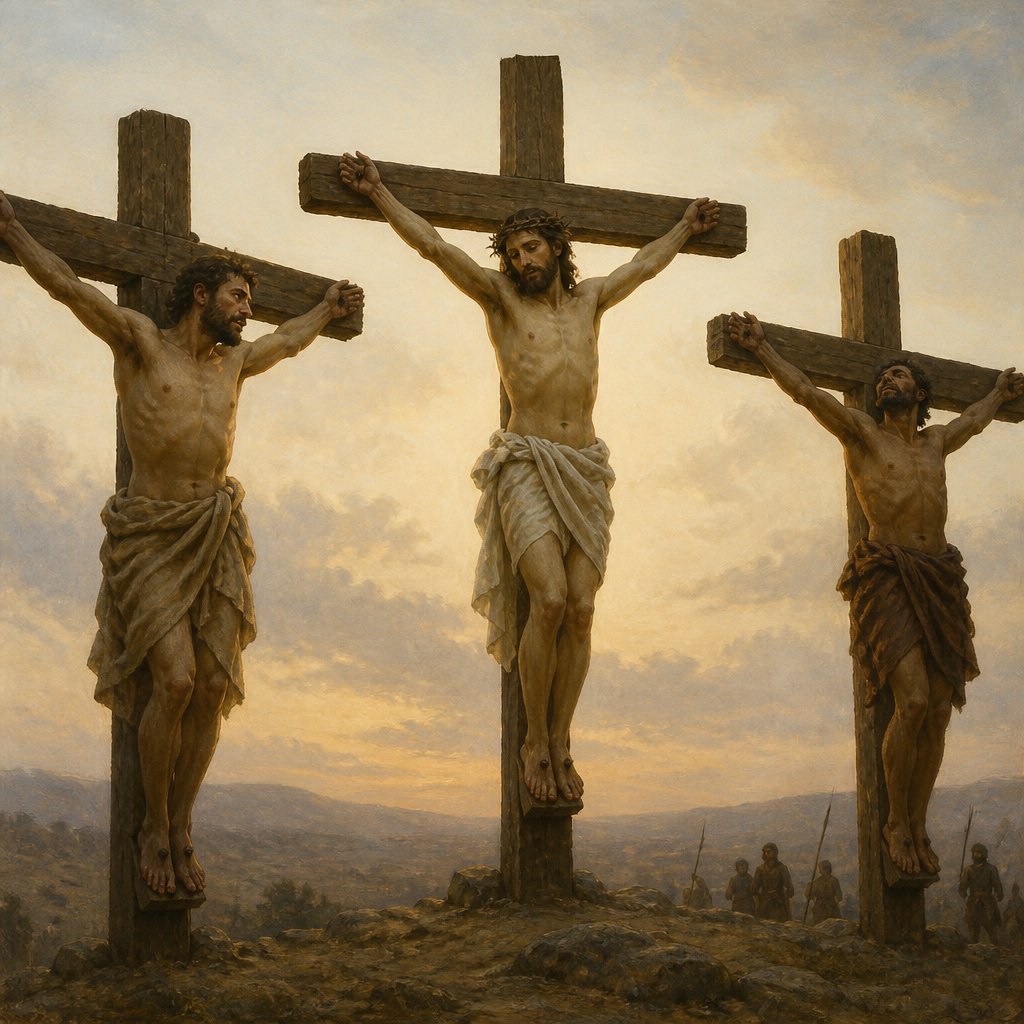
Luke 23:40 (KJV) says, "But the other answering rebuked him, saying, Dost not thou fear God, seeing thou art in the same condemnation?"
This verse is part of the larger narrative of the crucifixion of Jesus Christ. In the verses leading up to this moment, Jesus has been mocked, beaten, and nailed to the cross alongside two criminals. The verse is part of the dialogue between the two criminals and Jesus as they are all crucified together.
The verse begins with the word "But," indicating a contrast or contradiction. This sets the stage for the interaction between the two criminals and serves to highlight the differing responses of the men in their final moments. One of the criminals joins the crowd in mocking Jesus, while the other speaks out in defense of Jesus.
The criminal who rebukes the other is demonstrating a moment of clarity and understanding. In his final moments, he recognizes Jesus as a righteous man and rebukes the other criminal for his lack of fear of God. This demonstrates a theme of repentance and redemption, as the criminal has a change of heart and recognizes his own wrongdoing.
The phrase "Dost not thou fear God" speaks to the idea of acknowledging the power and authority of God. The criminal is not only recognizing Jesus as a righteous man but also acknowledging his fear of God and the consequences of their actions. This highlights the theme of judgment and accountability, as the criminal realizes that he and the other criminal are facing the consequences of their actions.
The phrase "seeing thou art in the same condemnation" further emphasizes the shared fate of the criminals. They are both facing the same punishment, yet one is able to recognize the righteousness of Jesus, while the other continues to mock him. This serves as a powerful reminder of the choices we make and the potential for redemption, even in the face of inevitable consequences.
The broader context of this verse within the crucifixion narrative provides a powerful symbolism of Jesus' sacrifice and the opportunity for redemption. Despite the suffering and humiliation, Jesus maintains his righteousness and offers forgiveness to those around him. The interaction between the three men on the crosses serves as a representation of the division between those who accept Jesus and those who reject him.
Furthermore, this verse speaks to the theme of grace and mercy. Despite the criminal's past actions, his recognition of Jesus and his fear of God leads to Jesus' response later in Luke 23:43, "Verily I say unto thee, To day shalt thou be with me in paradise." This act of mercy and forgiveness demonstrates the transformative power of faith and repentance.
In conclusion, Luke 23:40 captures a powerful moment of redemption, repentance, and the recognition of Jesus' righteousness in the midst of the crucifixion narrative. The contrast between the two criminals and their responses to Jesus serves to highlight themes of judgment, accountability, grace, and mercy. The verse serves as a reminder of the potential for redemption, even in the face of inevitable consequences, and the transformation that can occur through faith and repentance.
Have questions about Luke 23:40?
Dive deeper into this scripture with Bible Chat — an AI-powered tool for exploring God's Word through conversation. Ask questions, get context, and grow in your understanding of the Bible.
Get Our Apps


Luke 23:40 Artwork

Luke 23:40 - "But the other answering rebuked him, saying, Dost not thou fear God, seeing thou art in the same condemnation?"
"But the other answering rebuked him, saying, Dost not thou fear God, seeing thou art in the same condemnation?" - Luke 23:40

Luke 1:40 - "And entered into the house of Zacharias, and saluted Elisabeth."

Luke 20:40 - "And after that they durst not ask him any question at all."

Luke 9:40 - "And I besought thy disciples to cast him out; and they could not."

Isaiah 40:23 - "That bringeth the princes to nothing; he maketh the judges of the earth as vanity."

Genesis 40:23 - "Yet did not the chief butler remember Joseph, but forgat him."

the jewish holidays mentioned in leviticus 23:1 until 23:40 combined in one picture,

Luke 6:40 - "The disciple is not above his master: but every one that is perfect shall be as his master."

Jeremiah 23:40 - "And I will bring an everlasting reproach upon you, and a perpetual shame, which shall not be forgotten."

Luke 12:40 - "Be ye therefore ready also: for the Son of man cometh at an hour when ye think not."

Luke 22:40 - "And when he was at the place, he said unto them, Pray that ye enter not into temptation."

Luke 11:40 - "Ye fools, did not he that made that which is without make that which is within also?"

Luke 2:40 - "And the child grew, and waxed strong in spirit, filled with wisdom: and the grace of God was upon him."

Exodus 40:23 - "And he set the bread in order upon it before the LORD; as the LORD had commanded Moses."

Luke 24:40 - "And when he had thus spoken, he shewed them his hands and his feet."

"And entered into the house of Zacharias, and saluted Elisabeth." - Luke 1:40

Luke 8:40 - "And it came to pass, that, when Jesus was returned, the people gladly received him: for they were all waiting for him."

the jewish holidays mentioned in leviticus 23:1 until 23:40 combined in one picture, with hebrew names in hebrew charactes

Luke 23:53

Luke 19:23

luke 11:23

Luke 19:23

Luke 18:40 - "And Jesus stood, and commanded him to be brought unto him: and when he was come near, he asked him,"

Job 40:23 - "Behold, he drinketh up a river, and hasteth not: he trusteth that he can draw up Jordan into his mouth."

luke 11:23
Luke 15:23

luke 11:23

luke 11:23
"And after that they durst not ask him any question at all." - Luke 20:40