What does Luke 23:25 mean?
"And he released unto them him that for sedition and murder was cast into prison, whom they had desired; but he delivered Jesus to their will." - Luke 23:25
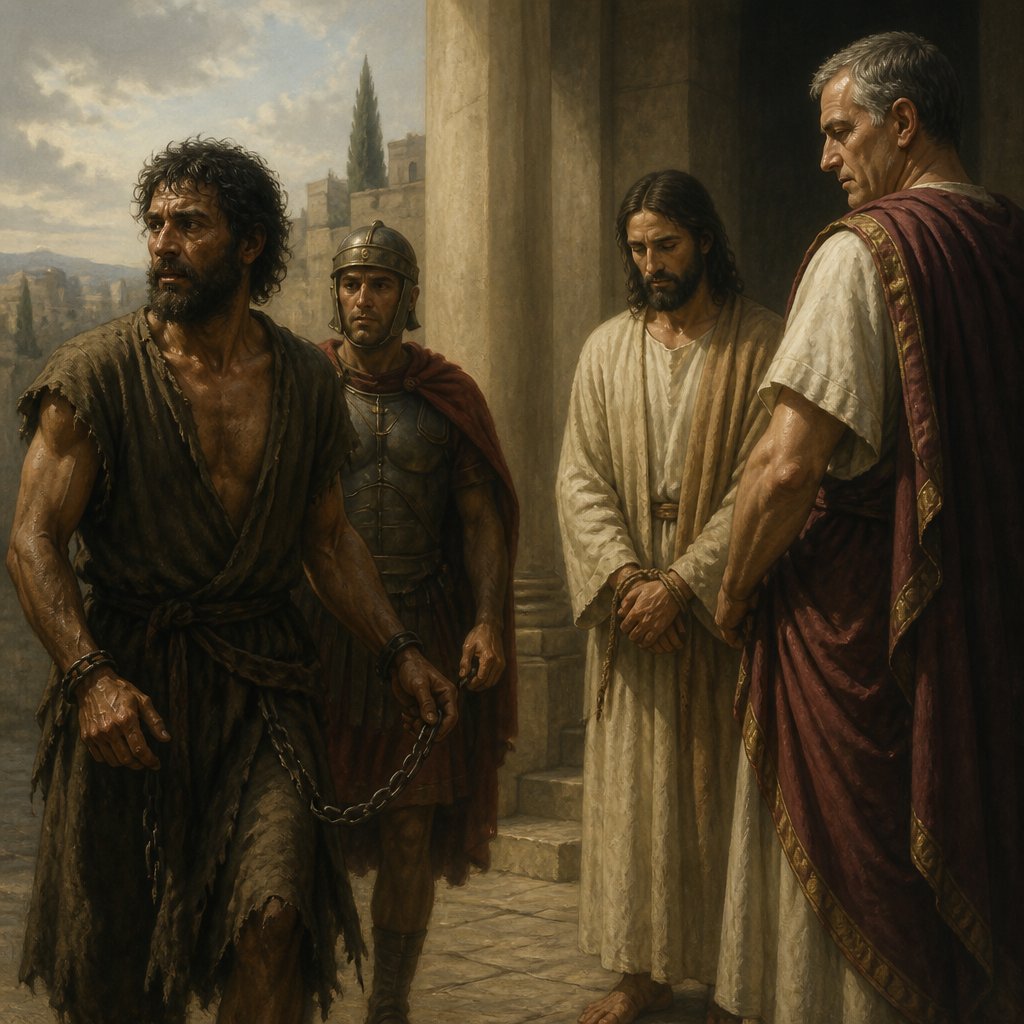
Luke 23:25 in the King James Version reads: "And he released unto them him that for sedition and murder was cast into prison, whom they had desired; but he delivered Jesus to their will." This verse comes at a pivotal moment in the crucifixion narrative, as it describes the release of Barabbas and the condemnation of Jesus to be crucified.
To fully understand the meaning and significance of this verse, it is important to consider the broader context in which it occurs. In the preceding verses, Pilate, the Roman governor, has been presented with Jesus by the religious leaders who are seeking his condemnation. Pilate, however, finds no fault in Jesus and attempts to release him, but the crowd insists on his crucifixion. In an effort to appease the crowd, Pilate offers to release a prisoner and gives them the choice between Barabbas, a notorious criminal, and Jesus. The crowd, incited by the religious leaders, chooses to have Barabbas released and Jesus condemned to death.
The release of Barabbas and the sentencing of Jesus to be crucified carries significant theological and symbolic meanings. From a thematic perspective, this moment speaks to the concept of substitutionary atonement. Barabbas, as a criminal guilty of sedition and murder, deserves to be punished for his crimes. However, in an unexpected twist, he is granted clemency, while Jesus, who is innocent, is condemned in his place. This exchange of places underscores the Christian belief that Jesus willingly took upon himself the punishment that rightfully belonged to others, thereby offering salvation and forgiveness to humanity.
Furthermore, the release of Barabbas and the condemnation of Jesus also serve as a powerful commentary on the nature of sin and the human condition. Barabbas, as a symbol of humanity's fallen state, represents the guilt and shame that all people bear as a result of their sin. In contrast, Jesus, as the sinless Son of God, willingly takes on the consequences of that sin, ultimately offering a path to redemption and reconciliation with God.
Symbolically, the release of Barabbas and the condemnation of Jesus also serve to illustrate the broader narrative of the Bible. Throughout the Old Testament, animals were often sacrificed as a way to atone for sin. This practice was symbolically fulfilled in Jesus, who became the ultimate sacrificial lamb, offering himself as a perfect and unblemished sacrifice for the sins of humanity. This act of substitution points to the deep love and grace of God, who provides a way for reconciliation and salvation despite humanity's inherent sinfulness.
From a historical and cultural context, the release of Barabbas and the condemnation of Jesus also reflect the political and social tension of the time. The Roman authorities were often faced with navigating the delicate balance of keeping the peace and maintaining their power in the face of dissent and insurrection. In this regard, Pilate's decision to release Barabbas and condemn Jesus can be seen as a pragmatic response to the volatile situation, as he seeks to placate the crowd and maintain order. However, in doing so, Pilate unwittingly fulfills the divine purpose and plan for Jesus' sacrificial death, as prophesied in the Old Testament.
In conclusion, Luke 23:25 and the events surrounding the release of Barabbas and the condemnation of Jesus hold profound theological, symbolic, and cultural significance. This pivotal moment in the crucifixion narrative not only underscores the sacrificial and atoning work of Jesus but also speaks to the broader themes of sin, redemption, and the divine plan of salvation. As Christians reflect on this verse, they are reminded of the profound love and grace of God, who, in the midst of human sin and rebellion, offers the gift of salvation through the sacrificial death of his Son, Jesus Christ.
Have questions about Luke 23:25?
Dive deeper into this scripture with Bible Chat — an AI-powered tool for exploring God's Word through conversation. Ask questions, get context, and grow in your understanding of the Bible.
Get Our Apps


Luke 23:25 Artwork

Luke 23:25 - "And he released unto them him that for sedition and murder was cast into prison, whom they had desired; but he delivered Jesus to their will."
"And he released unto them him that for sedition and murder was cast into prison, whom they had desired; but he delivered Jesus to their will." - Luke 23:25
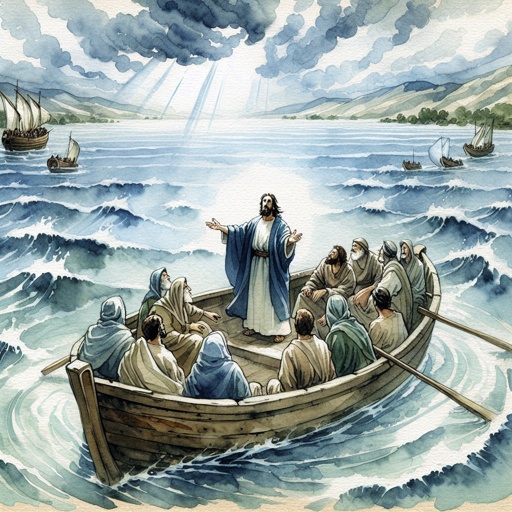
Luke 8:23-25 (KJVA) 23 But as they sailed he fell asleep: and there came down a storm of wind on the lake; and they were filled with water, and were in jeopardy. 24 And they came to him, and awoke him, saying, Master, master, we perish. Then he arose, and rebuked the wind and the raging of the water: and they ceased, and there was a calm. 25 And he said unto them, Where is your faith? And they being afraid wondered, saying one to another, What manner of man is this! for he commandeth even the winds and water, and they obey him.
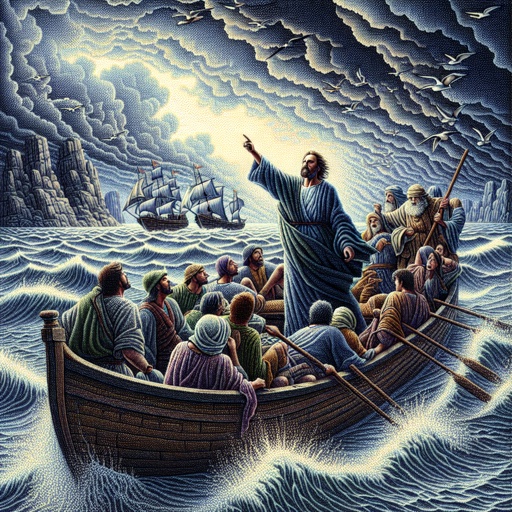
Luke 8:23-25 (KJVA) 23 But as they sailed he fell asleep: and there came down a storm of wind on the lake; and they were filled with water, and were in jeopardy. 24 And they came to him, and awoke him, saying, Master, master, we perish. Then he arose, and rebuked the wind and the raging of the water: and they ceased, and there was a calm. 25 And he said unto them, Where is your faith? And they being afraid wondered, saying one to another, What manner of man is this! for he commandeth even the winds and water, and they obey him.

Matthew 25:23

Luke 1:25

Luke 1:25

Luke 1:25

Luke 12:25

Luke 1:25

Luke 12:25
Luke 1:25

Matthew 25:23

Genesis 25-23

Luke 23:53

Luke 19:23

luke 11:23

Luke 19:23

Luke 12:25-26
Luke 12:25-26

Luke 12:25-26

Luke 12:25-26

Luke 12:25-26

Luke 12:25-26

Luke 14:25 - 33

Luke 12:25-26

luke 11:23
Luke 15:23

luke 11:23

luke 11:23