What does Luke 23:19 mean?
"(Who for a certain sedition made in the city, and for murder, was cast into prison.)" - Luke 23:19

The verse Luke 23:19 in the King James Version (KJV) of the Bible reads, "Who for a certain sedition made in the city, and for murder, was cast into prison."
This verse is part of the larger narrative of Jesus' trial and crucifixion as told in the Gospel of Luke. In this particular passage, Pilate, the Roman governor, is addressing the crowd and attempting to find a way to release Jesus, whom he believes to be innocent. However, the religious leaders and the crowd are insistent that Jesus be put to death, and they continue to pressure Pilate to have him crucified. Pilate attempts to convince the crowd to release Jesus, offering to punish Jesus and then release him, but the crowd becomes increasingly unruly and insistent on Jesus' crucifixion.
In the midst of this tumult, Pilate mentions a man named Barabbas and offers to release him instead of Jesus. This verse comes right after Pilate introduces Barabbas to the crowd, explaining that he is a prisoner who had been involved in sedition and murder. The crowd's response is to demand that Barabbas be released and Jesus be crucified.
From a thematic perspective, this verse touches on several important themes that run throughout the account of Jesus' trial and crucifixion. One of the primary themes is the idea of substitution. In offering to release Barabbas instead of Jesus, Pilate is effectively proposing a substitutionary exchange – an innocent man for a guilty one. This theme of substitution becomes central to Christian theology, as Jesus is understood to be the ultimate substitutionary sacrifice, taking the place of humanity to atone for sin.
Another important theme in this verse is the concept of injustice and the manipulation of power. As Pilate is attempting to find a way to release Jesus and avoid condemning an innocent man, he is confronted with the manipulative power of the religious leaders and the crowd. The fact that Barabbas, a known criminal, is chosen over Jesus, the innocent man, exposes the injustice and corruption of the system. This theme of injustice and misuse of power is echoed throughout the Gospels and serves as a critique of the political and religious authorities of the time.
The context of this verse is also significant. During the time of Jesus' trial and crucifixion, the Jewish people were living under Roman occupation and were subject to Roman rule. The presence of Pilate, a Roman governor, and the involvement of Roman soldiers in Jesus' crucifixion underscore the political tensions and power dynamics at play. This historical context adds depth to the themes of injustice and the misuse of power, as it reflects the larger social and political realities of the time.
There is also symbolism in this verse, particularly in the figure of Barabbas. The name Barabbas is significant, as it can be interpreted to mean "son of the father" in Aramaic. This coincidence has led to theological reflections on the symbolic contrast between Barabbas, the guilty "son of the father," and Jesus, the innocent Son of God. The choice between these two figures becomes a powerful symbol of the choice between sin and righteousness, guilt and innocence, and death and life.
In conclusion, the verse Luke 23:19 in the King James Version of the Bible is a pivotal moment in the narrative of Jesus' trial and crucifixion. It touches on important themes such as substitution, injustice, and the misuse of power, while also carrying deep symbolic significance. This verse not only forms a crucial part of the Gospel narrative but also offers profound theological and ethical reflections for readers and believers.
Have questions about Luke 23:19?
Dive deeper into this scripture with Bible Chat — an AI-powered tool for exploring God's Word through conversation. Ask questions, get context, and grow in your understanding of the Bible.
Get Our Apps


Luke 23:19 Artwork

Luke 23:19 - "(Who for a certain sedition made in the city, and for murder, was cast into prison.)"

"(Who for a certain sedition made in the city, and for murder, was cast into prison.)" - Luke 23:19

Luke 19:23

Luke 19:23

Luke 19:23 - "Wherefore then gavest not thou my money into the bank, that at my coming I might have required mine own with usury?"

"Wherefore then gavest not thou my money into the bank, that at my coming I might have required mine own with usury?" - Luke 19:23

Luke 23:53

luke 11:23

Luke 10:18-19

Luke 13:18-19

Luke 10:18-19

Luke 10:18-19

Luke 13:18-19

Luke 10:17-19

luke 11:23
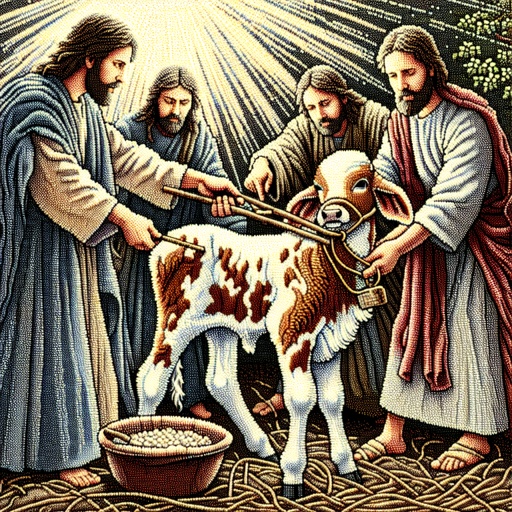
Luke 15:23

luke 11:23

luke 11:23

Luke 10:18-19

Luke 10:18-19

Luke 10:18-19

Luke 10:17-19

Genesis 23-19

Luke 1:19

Luke 19:19 - "And he said likewise to him, Be thou also over five cities."

Luke 19:10
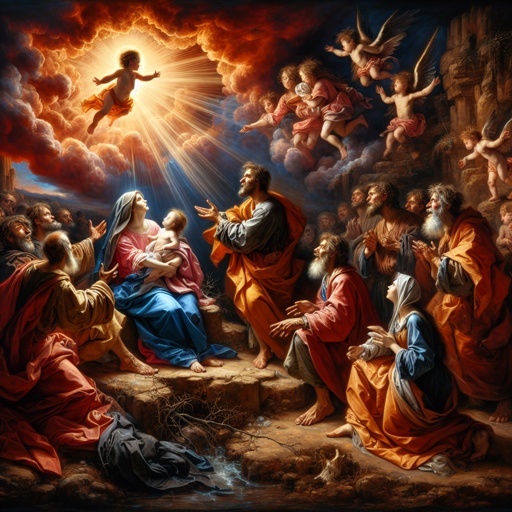
Luke 1:19

Luke 19:28

Luke 1:19

Genesis 19-23