What does Luke 20:33 mean?
"Therefore in the resurrection whose wife of them is she? for seven had her to wife." - Luke 20:33

Luke 20:33 (KJV) states, "Therefore in the resurrection whose wife of them is she? for seven had her to wife."
This verse is part of a larger passage in the Gospel of Luke that records a confrontation between Jesus and the Sadducees, a sect of Jewish religious leaders. The Sadducees did not believe in the resurrection of the dead, and they came to Jesus with a hypothetical question about a woman who had been married to seven brothers in succession, as per the Jewish law of levirate marriage. Levirate marriage was a practice in which a man was obligated to marry the widow of his deceased brother in order to provide for her and ensure the continuation of the family line. The Sadducees, in posing this question to Jesus, were trying to trap him and prove the absurdity of the concept of resurrection.
In addressing the Sadducees, Jesus not only refutes their argument but also reveals important truths about the resurrection and the nature of marriage. He tells them that in the resurrection, people will not marry or be given in marriage, but will be like angels in heaven. This challenges the limited understanding of the afterlife that the Sadducees held and emphasizes the spiritual nature of the resurrected life.
The verse itself touches on the theme of marriage and its implications in the afterlife. The Sadducees' question serves as a platform for Jesus to teach about the transformative nature of resurrection and the way it transcends earthly relationships. By highlighting that people will not be married in the resurrection, Jesus is indicating that earthly relationships and social structures will no longer hold the same significance in the eternal realm. Instead, individuals will be focused on their relationship with God and experiencing the fullness of His kingdom.
The context of this verse is crucial to understanding its meaning. Jesus' response to the Sadducees is not only a refutation of their argument but also a revelation of the deeper spiritual truths about the resurrection. By engaging with the Sadducees on their own terms and using their hypothetical scenario, Jesus demonstrates his authority and understanding of the scriptural teachings.
The symbolism in this verse is rich and layered. The seven marriages of the hypothetical woman represent the temporal and imperfect nature of human relationships. In the Jewish culture, the number seven often symbolizes completion and fullness, which adds depth to the significance of the scenario. Through this illustration, Jesus is pointing to the limitations of earthly marriages and the transformation that takes place in the resurrection.
Furthermore, the question posed by the Sadducees highlights the tension between earthly understanding and spiritual truths. By addressing their faulty assumptions and redirecting the focus to the spiritual realm, Jesus is emphasizing the need for a deeper, faith-based understanding of the afterlife.
In conclusion, Luke 20:33 in the King James Version provides a window into the teachings of Jesus on the resurrection and the nature of earthly relationships in light of eternity. It serves as a reminder of the transformation and transcendence that occurs in the afterlife, where earthly structures and limitations are no longer relevant. This verse challenges believers to shift their focus from temporal concerns to eternal truths and seek a deeper understanding of the spiritual realities that await them in the resurrection.
Have questions about Luke 20:33?
Dive deeper into this scripture with Bible Chat — an AI-powered tool for exploring God's Word through conversation. Ask questions, get context, and grow in your understanding of the Bible.
Get Our Apps


Luke 20:33 Artwork

Luke 20:33 - "Therefore in the resurrection whose wife of them is she? for seven had her to wife."

"Therefore in the resurrection whose wife of them is she? for seven had her to wife." - Luke 20:33

Luke 7:33

Luke 14:25 - 33

Numbers 33:20 - "And they departed from Rimmon-parez, and pitched in Libnah."

Genesis 33:20 - "And he erected there an altar, and called it El-elohe-Israel."

Acts 20:33 - "I have coveted no man's silver, or gold, or apparel."

Matthew 20:33 - "They say unto him, Lord, that our eyes may be opened."

Luke 21:33 - "Heaven and earth shall pass away: but my words shall not pass away."

Luke 13:20-21

Luke 13:20-21

Luke 2:33 - "And Joseph and his mother marvelled at those things which were spoken of him."

Luke 13:20-21

Luke 13:20-21
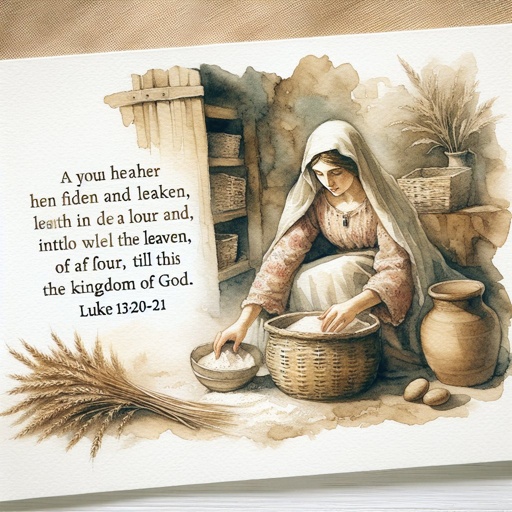
Luke 13:20-21

Luke 4:33 - "¶ And in the synagogue there was a man, which had a spirit of an unclean devil, and cried out with a loud voice,"

Psalms 33:20 - "Our soul waiteth for the LORD: he is our help and our shield."

Job 33:20 - "So that his life abhorreth bread, and his soul dainty meat."

Luke 1:33 - "And he shall reign over the house of Jacob for ever; and of his kingdom there shall be no end."

Luke 20:28

Luke 19:33 - "And as they were loosing the colt, the owners thereof said unto them, Why loose ye the colt?"

Luke 18:33 - "And they shall scourge him, and put him to death: and the third day he shall rise again."

Luke 14:33 - "So likewise, whosoever he be of you that forsaketh not all that he hath, he cannot be my disciple."

Luke 22:33 - "And he said unto him, Lord, I am ready to go with thee, both into prison, and to death."

Luke 24:33 - "And they rose up the same hour, and returned to Jerusalem, and found the eleven gathered together, and them that were with them,"

Luke 13:33 - "Nevertheless I must walk to day, and to morrow, and the day following: for it cannot be that a prophet perish out of Jerusalem."

Luke 2:1-20

Exodus 33:20 - "And he said, Thou canst not see my face: for there shall no man see me, and live."

Luke 7:33 - "For John the Baptist came neither eating bread nor drinking wine; and ye say, He hath a devil."

Luke 20:7 - "And they answered, that they could not tell whence it was."