What does Luke 20:28 mean?
"Saying, Master, Moses wrote unto us, If any man's brother die, having a wife, and he die without children, that his brother should take his wife, and raise up seed unto his brother." - Luke 20:28
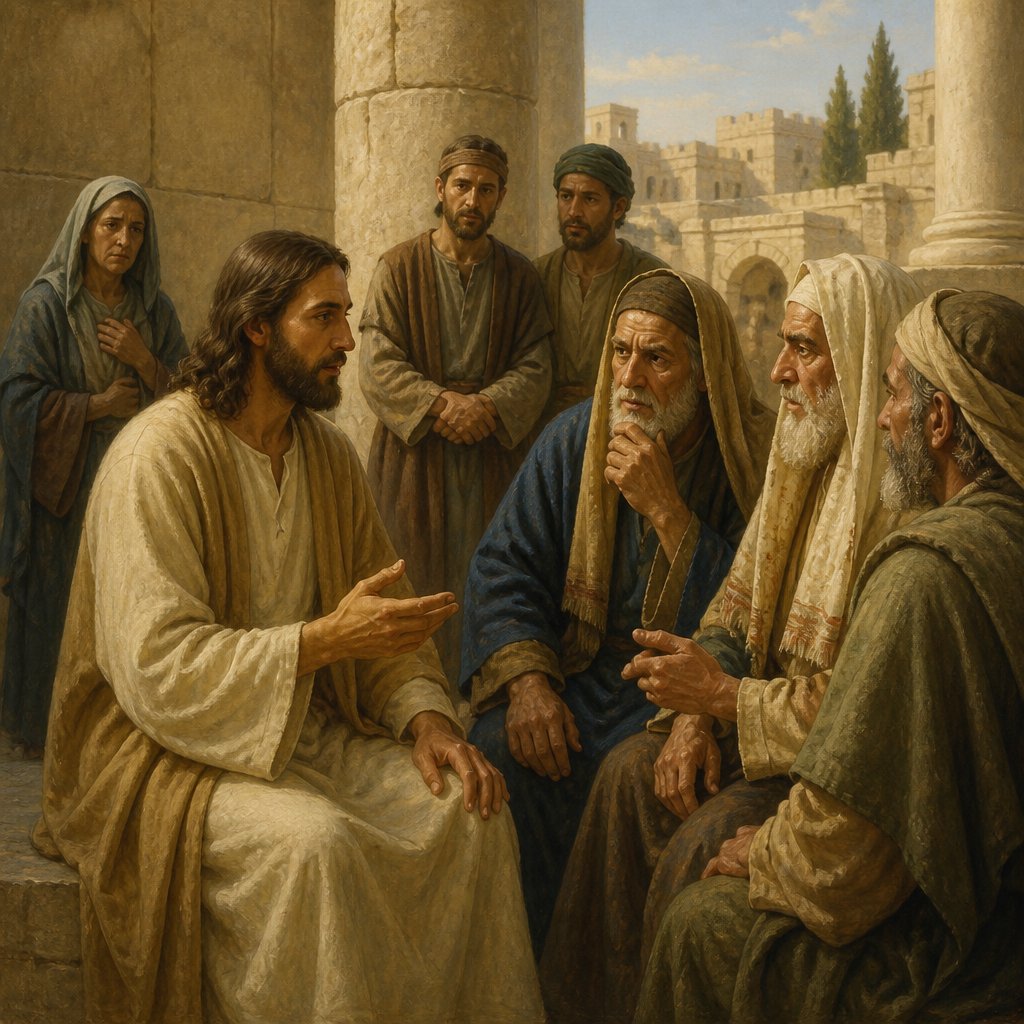
The Bible verse Luke 20:28 from the King James Version (KJV) states, "Saying, Master, Moses wrote unto us, If any man's brother die, having a wife, and he die without children, that his brother should take his wife, and raise up seed unto his brother." This verse is part of a larger passage in which the religious leaders, known as the Sadducees, were questioning Jesus about the resurrection and the afterlife.
To fully understand the meaning and commentary of this verse, it is necessary to delve into the context and historical background of the passage. In this particular instance, the Sadducees were known for their strict adherence to the written Torah, or the first five books of the Old Testament, which are attributed to Moses. They did not believe in the resurrection of the dead or in the existence of angels or spirits, and they were attempting to use this as a point of contention with Jesus.
The verse quoted by the Sadducees is a reference to the levirate marriage, a custom that was practiced in ancient Israel. According to this custom, if a married man died without leaving an heir, it was the duty of his brother to marry the widow and produce a son who would be considered the heir of the deceased. This practice was meant to ensure the continuation of the deceased man's lineage and inheritance. The Sadducees were using this as a hypothetical scenario to challenge the concept of the resurrection, asking Jesus whose wife the woman would be in the afterlife if she had been married to multiple brothers.
In response, Jesus goes on to explain that in the resurrection, people will neither marry nor be given in marriage, but will be like the angels. This assertion contradicted the Sadducees' interpretation of the Torah and their beliefs about the afterlife. Jesus also goes on to challenge their understanding of the resurrection, using quotations from the Torah to emphasize the reality of the afterlife and the resurrection of the dead.
The themes present in this passage are multilayered and significant. The first theme is the contrast between earthly and heavenly matters. The Sadducees were concerned with legalistic aspects of the levirate marriage, while Jesus was pointing to the higher spiritual reality of the resurrection and the afterlife. His teachings emphasize the transitory nature of earthly institutions and the eternal significance of spiritual realities.
Another theme in this passage is the authority of the scriptures. Jesus appeals to the writings of Moses, which were held in high regard by the Sadducees, to support his teachings about the resurrection. This demonstrates the importance of understanding the scriptures in their entirety and interpreting them in light of the broader theological truths they convey.
Symbolism in this passage can be seen in the levirate marriage itself, which can be interpreted as a foreshadowing of the redemptive work of Christ. The duty of the brother to marry the widow and raise up an heir for his deceased brother can be seen as a type of Christ's redemptive work, in which he takes on the responsibility of redeeming and securing the eternal inheritance of his people. This symbolic significance points to the greater spiritual truths that Jesus was emphasizing in his teachings.
In conclusion, Luke 20:28 from the King James Version carries deep theological and spiritual significance within its historical and cultural context. It addresses themes of the authority of scripture, the contrast between earthly and heavenly realities, and the symbolic foreshadowing of Christ's redemptive work. Its teachings challenge the legalistic interpretations of the religious leaders and reveal the deeper spiritual truths of the resurrection and the afterlife. This verse serves as a reminder of the eternal significance of spiritual matters and the importance of understanding the scriptures in their broader theological context.
Have questions about Luke 20:28?
Dive deeper into this scripture with Bible Chat — an AI-powered tool for exploring God's Word through conversation. Ask questions, get context, and grow in your understanding of the Bible.
Get Our Apps


Luke 20:28 Artwork

Luke 20:28
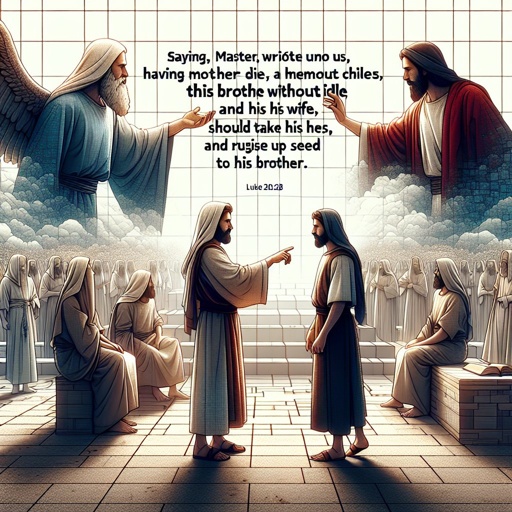
Luke 20:28 - "Saying, Master, Moses wrote unto us, If any man's brother die, having a wife, and he die without children, that his brother should take his wife, and raise up seed unto his brother."
"Saying, Master, Moses wrote unto us, If any man's brother die, having a wife, and he die without children, that his brother should take his wife, and raise up seed unto his brother." - Luke 20:28

Luke 19:28

Genesis 28-20

luke 13:28-37

Luke 13:28-27

Luke 13:28-27

Luke 9:28-45

Luke 13:28-27

luke 13:28-37

Luke 13:20-21

Luke 13:20-21

Matthew 28: 19-20

Matthew 28:19-20

2 Chronicles 20:28

Matthew 28:19-20

Matthew 28:19-20

Luke 13:20-21

Luke 13:20-21
Luke 13:20-21

Luke 5:28 - "And he left all, rose up, and followed him."

Luke 22:28 - "Ye are they which have continued with me in my temptations."

1 Samuel 28:15-20

Job 28:20 - "Whence then cometh wisdom? and where is the place of understanding?"

Luke 4:28 - "And all they in the synagogue, when they heard these things, were filled with wrath,"

Luke 2:1-20

Ezekiel 28:20 - "¶ Again the word of the LORD came unto me, saying,"

Luke 2:28 - "Then took he him up in his arms, and blessed God, and said,"

Luke 20:7 - "And they answered, that they could not tell whence it was."