What does Luke 20:22 mean?
"Is it lawful for us to give tribute unto Caesar, or no?" - Luke 20:22
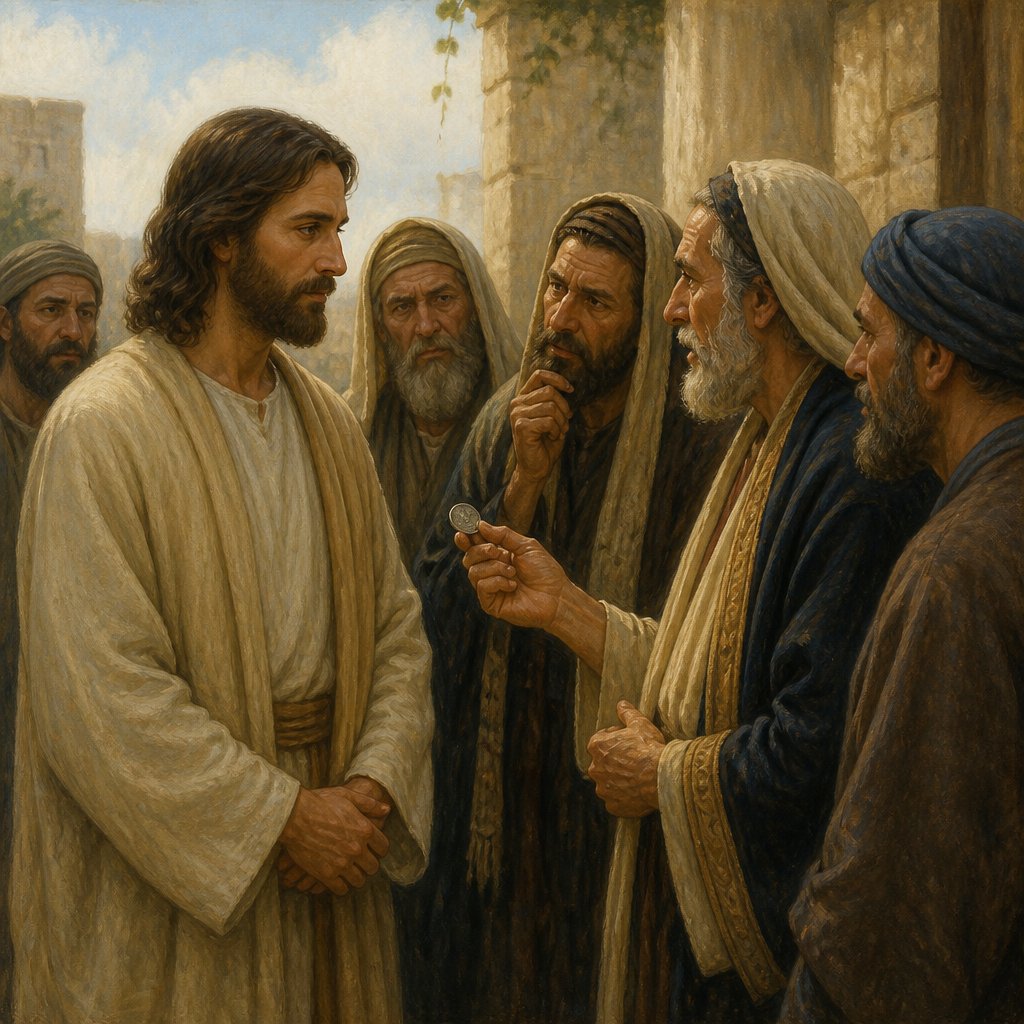
Luke 20:22 KJV - "Is it lawful for us to give tribute unto Caesar, or no?"
This verse is found in the New Testament of the Bible and it is part of a larger story of the religious leaders trying to trap Jesus with their questions. In this specific passage, the Pharisees and Herodians are trying to question Jesus about whether it is right for the Jews to pay taxes to Caesar.
The context of this passage is important to understand the full meaning of the verse. At this time, the Roman Empire had control over the region and the Jewish people were required to pay taxes to the Roman government. This was a point of contention for many Jews, as they resented being forced to support a government that they did not consider their own. The Pharisees and Herodians were aware of this tension and they were hoping to either discredit Jesus in the eyes of the people or to have him arrested by Roman authorities, should he say something against paying taxes.
The question posed to Jesus is a tricky one. If he were to say that it is lawful to pay taxes to Caesar, he would lose favor with the Jewish people who were already disenchanted with Roman rule. However, if he were to say that it is not lawful to pay taxes, he would risk being seen as a rebel against the Roman government and could be arrested and condemned.
The symbolism in this verse is significant. The question of whether to pay taxes to Caesar goes beyond just a financial issue. It speaks to the larger themes of obedience to earthly authorities versus loyalty to God. The Pharisees and Herodians are trying to trap Jesus into taking a stand on a divisive issue, and in doing so, they hope to undermine his authority and credibility.
Jesus' response to their question is both wise and profound. He requests to see a denarius, the coin used to pay the tax, and then asks whose image and inscription are on it. When they respond that it is Caesar's, Jesus famously states, "Render therefore unto Caesar the things which be Caesar's, and unto God the things which be God's" (Luke 20:25 KJV).
This response is a powerful statement about the relationship between earthly authority and divine authority. Jesus is acknowledging the legitimacy of Caesar's rule and the responsibilities that come with being a citizen of a particular nation. At the same time, he is also reminding his audience that their ultimate allegiance belongs to God. This is a call to prioritize spiritual loyalty and obedience to God over earthly concerns and conflicts.
The themes present in this verse are still relevant today. It prompts believers to consider where their ultimate allegiances lie and how to navigate the complexities of living in a world where earthly authorities may conflict with their religious convictions. It also serves as a reminder that honoring God does not grant believers a pass on their civic responsibilities. Rather, it is a call to live in this world with integrity and faithfulness, recognizing the tensions that may arise between earthly and divine authorities.
In conclusion, Luke 20:22 in the King James Version of the Bible is a thought-provoking and poignant passage that addresses the intersection of political and religious obligations. This verse showcases Jesus' wisdom and insight as he navigates a challenging question with grace and truth. It challenges believers to consider where their allegiances lie and to live faithfully in the tension between earthly and divine authorities.
Have questions about Luke 20:22?
Dive deeper into this scripture with Bible Chat — an AI-powered tool for exploring God's Word through conversation. Ask questions, get context, and grow in your understanding of the Bible.
Get Our Apps


Luke 20:22 Artwork

Luke 20:22 - "Is it lawful for us to give tribute unto Caesar, or no?"
"Is it lawful for us to give tribute unto Caesar, or no?" - Luke 20:22

Luke 22:20 - "Likewise also the cup after supper, saying, This cup is the new testament in my blood, which is shed for you."
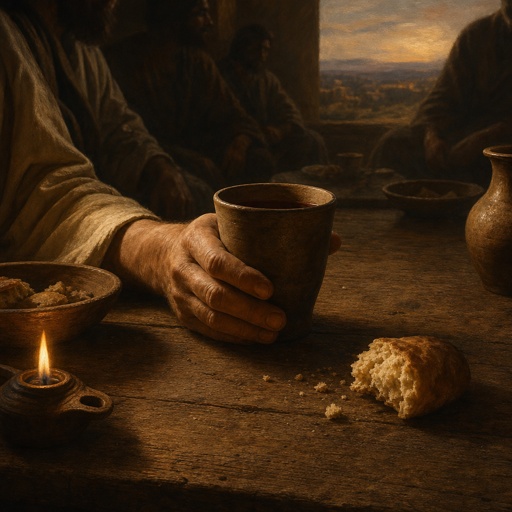
"Likewise also the cup after supper, saying, This cup is the new testament in my blood, which is shed for you." - Luke 22:20

Luke 13:20-21

Luke 13:20-21

Luke 13:20-21

Luke 13:20-21
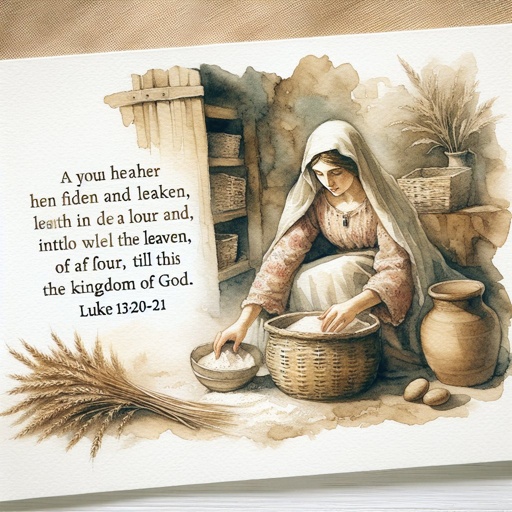
Luke 13:20-21
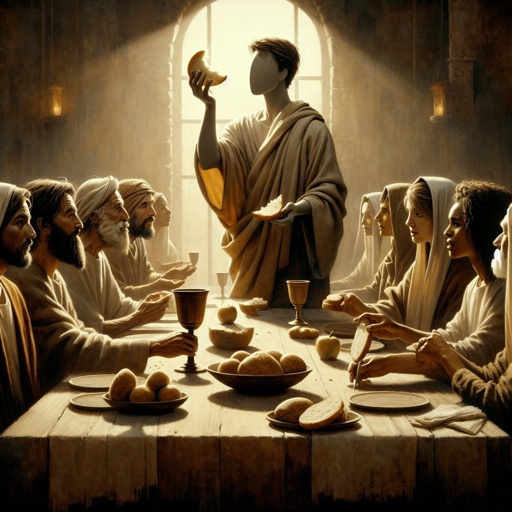
Luke 22:19-20 - "And he took bread, gave thanks and broke it, and gave it to them, saying, “This is my body given for you; do this in remembrance of me.” In the same way, after the supper he took the cup, saying, “This cup is the new covenant in my blood, which is poured out for you."

luke 22:42

Luke 22:39

Luke 22:61,62

Luke 22:39

luke 22 44
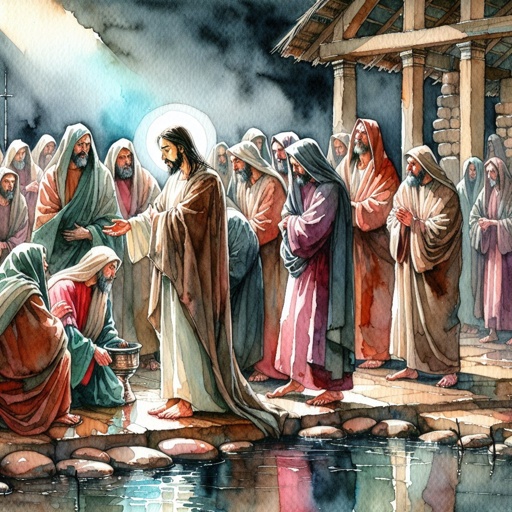
luke 22:42

Luke 22:42

Luke 20:28

Genesis 22-20

Luke 16:22-26

Luke 2:1-20

Luke 20:7 - "And they answered, that they could not tell whence it was."

Luke 22:62 - "And Peter went out, and wept bitterly."

Luke 20:32 - "Last of all the woman died also."
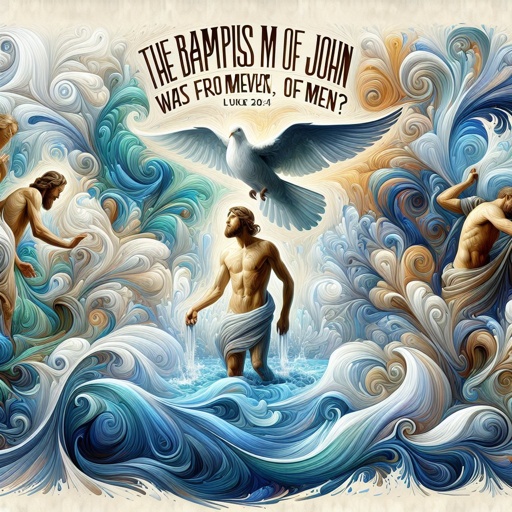
Luke 20:4 - "The baptism of John, was it from heaven, or of men?"

Luke 22:5 - "And they were glad, and covenanted to give him money."

Luke 22:28 - "Ye are they which have continued with me in my temptations."

Luke 22:65 - "And many other things blasphemously spake they against him."

Luke 22:63 - "¶ And the men that held Jesus mocked him, and smote him."

Luke 22:31-32 - "Luke 22:31-32: And the Lord said, Simon, Simon, behold, Satan hath desired to have you, that he may sift you as wheat: But I have prayed for thee, that thy faith fail not: and when thou art converted, strengthen thy brethren."