What does Luke 1:69 mean?
"And hath raised up an horn of salvation for us in the house of his servant David;" - Luke 1:69

Luke 1:69 (KJV) - "And hath raised up an horn of salvation for us in the house of his servant David."
This verse comes within the context of the book of Luke, which is one of the four Gospels in the New Testament. In this verse, the speaker is Zechariah, the father of John the Baptist, who is filled with the Holy Spirit and prophesies about the coming of Jesus Christ as the long-awaited Messiah.
The verse begins with the phrase "And hath raised up," indicating that God has taken action to fulfill His promise of salvation. This verse points to the fulfillment of the Davidic covenant, in which God promised to establish the throne of David forever (2 Samuel 7:12-16). The "horn" mentioned in the verse represents strength and power, and the "house of his servant David" refers to the lineage of David, from which the Messiah would come.
The use of the term "horn" in this verse is significant because it was often used in the Old Testament to symbolize the power and authority of a ruler. In this context, it refers to the Messiah, who would come from the line of David and would be a powerful and authoritative savior.
The theme of salvation is central to this verse. Throughout the Old Testament, God promised to send a Messiah who would bring deliverance and salvation to His people. This verse points to the fulfillment of that promise through the birth of Jesus Christ.
The verse also highlights the faithfulness of God in keeping His promises. Throughout the history of Israel, God remained faithful to His covenant with David, and this verse serves as a reminder of God's faithfulness in fulfilling His promises to His people.
Furthermore, this verse underscores the importance of the lineage of David in the coming of the Messiah. Throughout the Old Testament, the hope of the Messiah was associated with the line of David, and this verse affirms that Jesus is the long-awaited fulfillment of that hope.
In addition to its historical and theological significance, this verse has a personal application for believers today. It serves as a reminder that God is faithful to His promises and that He has provided salvation for His people through the birth, life, death, and resurrection of Jesus Christ.
In conclusion, Luke 1:69 (KJV) is a significant verse that points to the fulfillment of God's promise of salvation through the coming of Jesus Christ, who is the powerful and authoritative Messiah from the line of David. This verse carries themes of salvation, faithfulness, and the fulfillment of God's promises, and it serves as a reminder of God's love and provision for His people. It is a verse that has both historical and personal significance, and it continues to be a source of encouragement and hope for believers today.
Have questions about Luke 1:69?
Dive deeper into this scripture with Bible Chat — an AI-powered tool for exploring God's Word through conversation. Ask questions, get context, and grow in your understanding of the Bible.
Get Our Apps


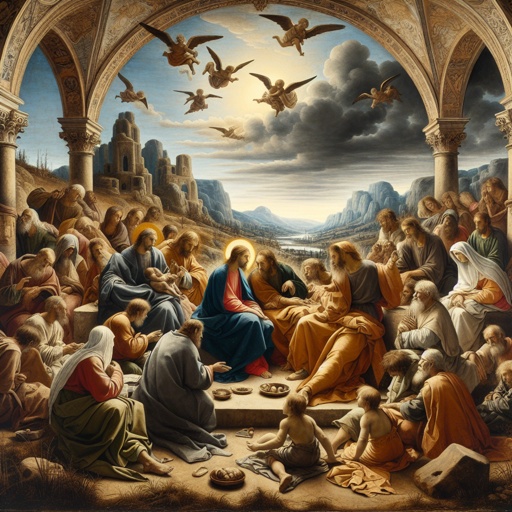
Luke 1:69 Artwork

Luke 1:69 - "And hath raised up an horn of salvation for us in the house of his servant David;"

"And hath raised up an horn of salvation for us in the house of his servant David;" - Luke 1:69

Luke 22:69 - "Hereafter shall the Son of man sit on the right hand of the power of God."

"Hereafter shall the Son of man sit on the right hand of the power of God." - Luke 22:69

1 Chronicles 6:69 - "And Aijalon with her suburbs, and Gath-rimmon with her suburbs:"

Psalms 69:1 - "Save me, O God; for the waters are come in unto my soul."

"And Aijalon with her suburbs, and Gath-rimmon with her suburbs:" - 1 Chronicles 6:69

"Save me, O God; for the waters are come in unto my soul." - Psalms 69:1

Luke 1:1

Luke 1:31

Luke 1:26

luke 1:26

Luke 1:13

luke 1:26

luke 1:27

luke 1:29
Luke:1

Luke 2.12

Luke 19:1-10

Luke 2:1-20

Luke 19:1-10

Luke 1:32

Luke 1:32

Luke 1:32

Luke 1:32

Luke 1:32

Luke 1:32

Luke 1:25

Luke 1:30

Luke 1:78