What does Luke 1:64 mean?
"And his mouth was opened immediately, and his tongue loosed, and he spake, and praised God." - Luke 1:64

Luke 1:64, in the King James Version of the Bible, reads, "And his mouth was opened immediately, and his tongue loosed, and he spake, and praised God." This verse is part of the Luke's Gospel, which recounts the events surrounding the birth of Jesus Christ. In this particular passage, the verse is referring to the moment when Zechariah, the father of John the Baptist, has his speech restored after being struck mute by the angel Gabriel.
In order to fully understand the meaning and significance of this verse, it is important to examine the context in which it occurs. The passage begins with the angel Gabriel appearing to Zechariah while he is serving as a priest in the temple. Gabriel informs Zechariah that his wife, Elizabeth, who was barren, will conceive and give birth to a son who will be named John. This son will be filled with the Holy Spirit from birth and will "make ready a people prepared for the Lord" (Luke 1:17). Zechariah is initially doubtful and questions how this could be possible, as both he and his wife are advanced in years.
As a result of his skepticism, Gabriel tells Zechariah that he will be unable to speak until the fulfillment of these things. Sure enough, Zechariah remains unable to speak until after the birth of his son. When the time comes for the child to be named, Zechariah writes on a tablet that his name is to be John, as instructed by the angel Gabriel. The moment he confirms the name, his speech is restored, and he begins to praise God.
The significance of this event lies in Zechariah's immediate response in praising God. His spiritual silence is broken, and he glorifies the Lord for fulfilling His promises and for the miracle of his son's birth. This moment represents a powerful revelation of God's faithfulness and a manifestation of His divine plan. Zechariah's silence and subsequent praise also serve to emphasize the importance of trusting in God's promises and the significance of obedience to His will.
Furthermore, this passage can also be seen as a prelude to the coming of Jesus. The birth of John the Baptist, as foretold by Gabriel, marks the beginning of the fulfillment of God's plan for the salvation of humanity. John's role as a prophet and forerunner of Jesus Christ is vital in preparing the way for the Messiah. Zechariah's vocalization of praise at this crucial point in the narrative can be interpreted as a sign of the imminent arrival of the Savior.
From a symbolic standpoint, the restoration of Zechariah's speech also holds deeper meaning. It symbolizes the power of God to overcome barriers and obstacles, demonstrating that nothing is impossible for Him. It serves as a testimony to the miraculous workings of God and His ability to bring about His purposes in spite of human doubt and limitations.
In conclusion, Luke 1:64 in the King James Version of the Bible is a pivotal moment in the Gospel narrative. It signifies the fulfillment of God's promises, the importance of faith and obedience, and the impending arrival of Jesus Christ. Zechariah's restoration of speech and his subsequent praise serve as a powerful testimony to the faithfulness and sovereignty of God. It is a reminder to trust in His plan and to rejoice in His miraculous workings.
Have questions about Luke 1:64?
Dive deeper into this scripture with Bible Chat — an AI-powered tool for exploring God's Word through conversation. Ask questions, get context, and grow in your understanding of the Bible.
Get Our Apps


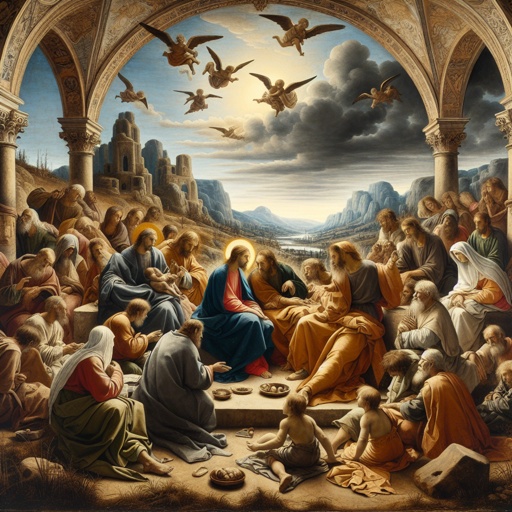
Luke 1:64 Artwork

Luke 1:64 - "And his mouth was opened immediately, and his tongue loosed, and he spake, and praised God."

"And his mouth was opened immediately, and his tongue loosed, and he spake, and praised God." - Luke 1:64

Isaiah 64:8

Luke 22:64 - "And when they had blindfolded him, they struck him on the face, and asked him, saying, Prophesy, who is it that smote thee?"

1 Chronicles 6:64 - "And the children of Israel gave to the Levites these cities with their suburbs."

Psalms 64:1 - "Hear my voice, O God, in my prayer: preserve my life from fear of the enemy."

Isaiah 64:1 - "Oh that thou wouldest rend the heavens, that thou wouldest come down, that the mountains might flow down at thy presence,"

"And when they had blindfolded him, they struck him on the face, and asked him, saying, Prophesy, who is it that smote thee?" - Luke 22:64

"And the children of Israel gave to the Levites these cities with their suburbs." - 1 Chronicles 6:64

"Oh that thou wouldest rend the heavens, that thou wouldest come down, that the mountains might flow down at thy presence," - Isaiah 64:1

"Hear my voice, O God, in my prayer: preserve my life from fear of the enemy." - Psalms 64:1

"Oh that thou wouldest rend the heavens, that thou wouldest come down, that the mountains might flow down at thy presence," - Isaiah 64:1

1 Kings 8:64 - "The same day did the king hallow the middle of the court that was before the house of the LORD: for there he offered burnt offerings, and meat offerings, and the fat of the peace offerings: because the brasen altar that was before the LORD was too little to receive the burnt offerings, and meat offerings, and the fat of the peace offerings."

Luke 1:1

Luke 1:31

Luke 1:26

luke 1:26

Luke 1:13

luke 1:26

luke 1:27

luke 1:29
Luke:1

Luke 2.12

Luke 2:1-20

Luke 19:1-10

Luke 19:1-10

Luke 1:32

Luke 1:32

Luke 1:32

Luke 1:32