What does Luke 1:41 mean?
"And it came to pass, that, when Elisabeth heard the salutation of Mary, the babe leaped in her womb; and Elisabeth was filled with the Holy Ghost:" - Luke 1:41
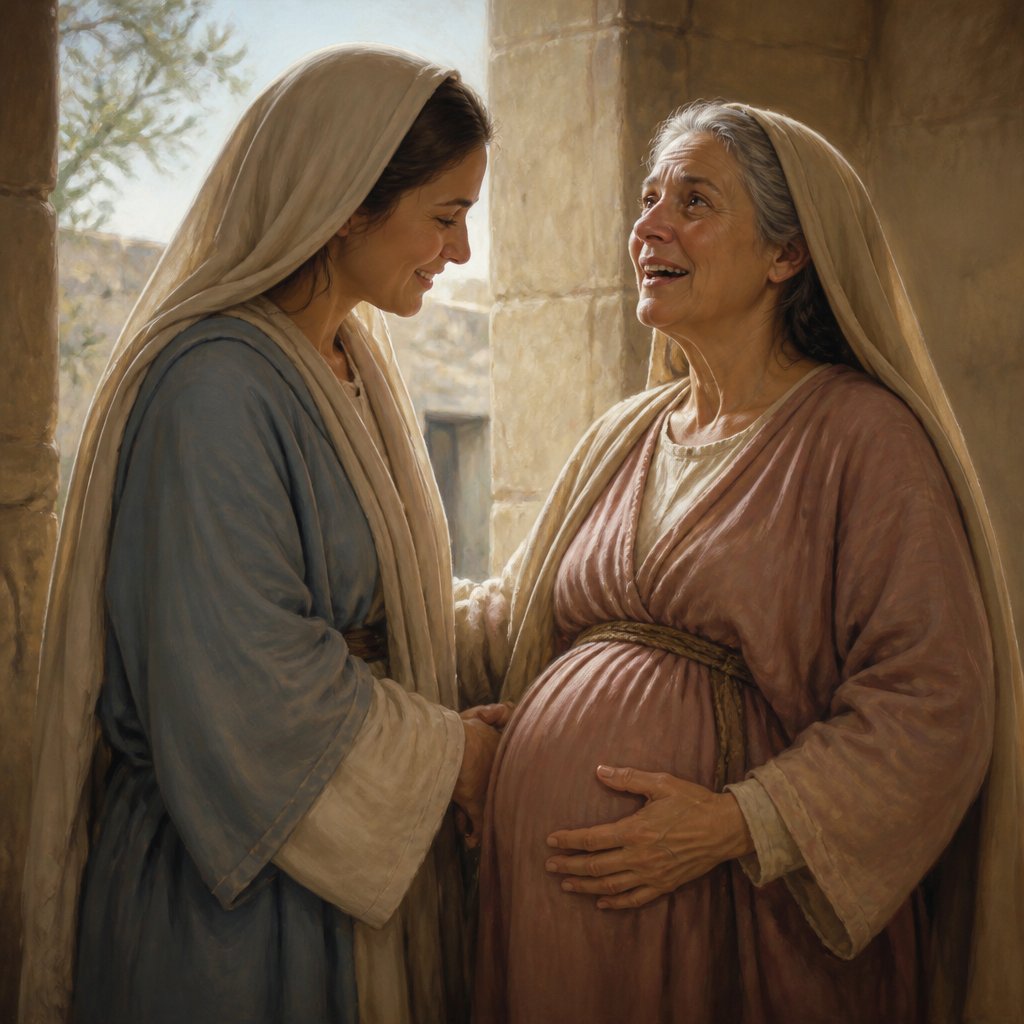
Luke 1:41 from the King James Version of the Bible reads: "And it came to pass, that, when Elisabeth heard the salutation of Mary, the babe leaped in her womb; and Elisabeth was filled with the Holy Ghost."
This powerful and evocative passage captures a pivotal moment in the narrative of the birth of Jesus Christ. The context of this verse lies in the larger story of the Annunciation, which is the announcement by the angel Gabriel to the Virgin Mary that she will conceive and give birth to Jesus, the Son of God. In this specific verse, Mary, who has just received this astonishing news, goes to visit her relative, Elisabeth, who is herself miraculously pregnant with John the Baptist.
The theme of the divine and miraculous runs deep in this passage. There is a sense of awe and wonder at the work of God evident in the actions and reactions of the characters. Mary's unexpected pregnancy and Elisabeth's advanced age are both miraculous births that show the power and purpose of God. The fact that Elisabeth was filled with the Holy Ghost further emphasizes this divine intervention.
The symbolism in this verse is rich and layered. The leaping of John the Baptist in response to the presence of Jesus in Mary's womb is a powerful symbol of recognition and acceptance. It foreshadows the roles these two children will play in the story of salvation.
Additionally, the filling of Elisabeth with the Holy Ghost serves as a symbol of her spiritual awareness and insight. The presence of the Holy Ghost signifies a profound connection to the divine and an understanding of the significance of the moment.
Furthermore, this verse speaks to the interconnectedness of individuals in God's plan. The meeting of Mary and Elisabeth is not a coincidence; it is a moment in which two women who are central to the fulfillment of God's promises come together. Their shared experiences of miraculous conception and deep faith create a powerful bond between them. This bond is a reflection of the broader theme of community and support found throughout the Bible.
Overall, Luke 1:41 is a key verse in the narrative of the birth of Jesus, serving as a powerful and evocative moment of divine revelation and recognition. The themes of the miraculous, the interconnectedness of individuals in God's plan, and the symbolism of divine presence and insight all contribute to the rich and complex meaning of this passage. It is a moment filled with awe and wonder, and it sets the stage for the unfolding of the story of the birth of Christ.
Have questions about Luke 1:41?
Dive deeper into this scripture with Bible Chat — an AI-powered tool for exploring God's Word through conversation. Ask questions, get context, and grow in your understanding of the Bible.
Get Our Apps


Luke 1:41 Artwork

Luke 1:41 - "And it came to pass, that, when Elisabeth heard the salutation of Mary, the babe leaped in her womb; and Elisabeth was filled with the Holy Ghost:"
"And it came to pass, that, when Elisabeth heard the salutation of Mary, the babe leaped in her womb; and Elisabeth was filled with the Holy Ghost:" - Luke 1:41

LUKE 24:41-43

Luke 2:41-52

Luke 7:41-47

Luke 19:41 - "¶ And when he was come near, he beheld the city, and wept over it,"

Luke 20:41 - "And he said unto them, How say they that Christ is David's son?"

Luke 22:41 - "And he was withdrawn from them about a stone's cast, and kneeled down, and prayed,"

Luke 2:41 - "Now his parents went to Jerusalem every year at the feast of the passover."

Luke 6:41 - "And why beholdest thou the mote that is in thy brother's eye, but perceivest not the beam that is in thine own eye?"

Luke 12:41 - "¶ Then Peter said unto him, Lord, speakest thou this parable unto us, or even to all?"

Luke 11:41 - "But rather give alms of such things as ye have; and, behold, all things are clean unto you."

Luke 23:41 - "And we indeed justly; for we receive the due reward of our deeds: but this man hath done nothing amiss."

Luke 7:41 - "There was a certain creditor which had two debtors: the one owed five hundred pence, and the other fifty."

Luke 24:41 - "And while they yet believed not for joy, and wondered, he said unto them, Have ye here any meat?"

Luke 10:41 - "And Jesus answered and said unto her, Martha, Martha, thou art careful and troubled about many things:"

Luke 4:40-41 KJVA (41) And devils also came out of many, crying out, and saying, Thou art Christ the Son of God. And he rebuking them suffered them not to speak: for they knew that he was Christ.

Isaiah 41

Luke 18:41 - "Saying, What wilt thou that I shall do unto thee? And he said, Lord, that I may receive my sight."

Acts 2:41

Isaiah 41:10

Luke 9:41 - "And Jesus answering said, O faithless and perverse generation, how long shall I be with you, and suffer you? Bring thy son hither."

Numbers 3:41

Isaiah 41:10

Deuteronomy 32:41

Isaiah 41:10

LUKE 24:41-43 41 And while they still did not believe it because of joy and amazement, he asked them, “Do you have anything here to eat?” 42 They gave him a piece of broiled fish, 43 and he took it and ate it in their presence.

LUKE 24:41-43 41 And while they still did not believe it because of joy and amazement, he asked them, “Do you have anything here to eat?” 42 They gave him a piece of broiled fish, 43 and he took it and ate it in their presence.

"And he said unto them, How say they that Christ is David's son?" - Luke 20:41

"¶ And when he was come near, he beheld the city, and wept over it," - Luke 19:41