What does Luke 1:14 mean?
"And thou shalt have joy and gladness; and many shall rejoice at his birth." - Luke 1:14
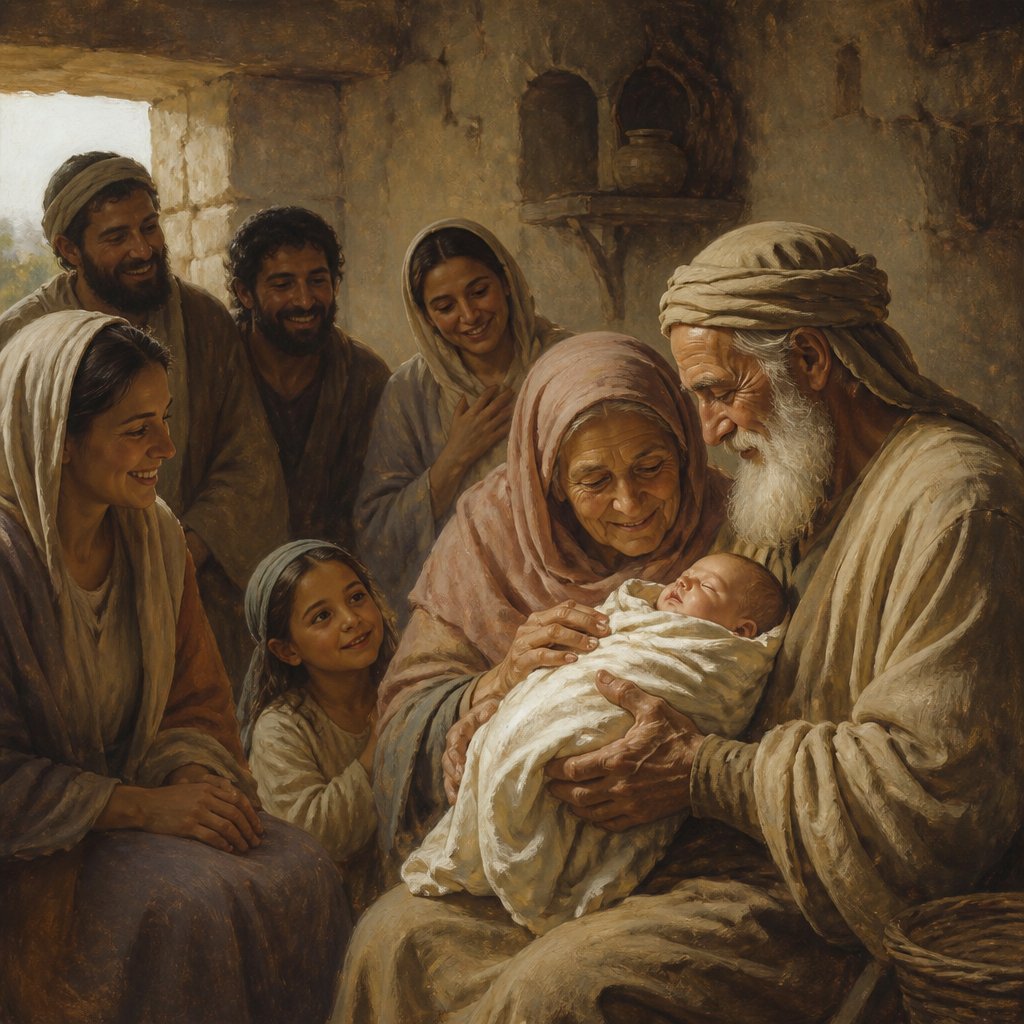
The verse Luke 1:14 in the King James Version (KJV) of the Bible reads, "And thou shalt have joy and gladness; and many shall rejoice at his birth." This verse is part of a larger passage in the Gospel of Luke that tells the story of the miraculous birth of John the Baptist, the cousin of Jesus.
In order to understand the full significance of this verse, it is important to provide some context. The verses leading up to Luke 1:14 describe the angel Gabriel visiting a priest named Zechariah to inform him that his wife Elizabeth, who was well advanced in years and previously barren, would conceive and give birth to a son. This son, John the Baptist, would be a great and important figure in the eyes of the Lord. Zechariah expresses doubt at this impossible news, and as a result, he is rendered temporarily mute until the birth of his son. This verse comes as part of the angel's proclamation to Zechariah about the joy and rejoicing that will come from the birth of John the Baptist.
The theme of joy and gladness in Luke 1:14 is one of great significance in the Gospel of Luke, as well as throughout the entirety of the Bible. Joy and gladness are often interpreted as emotions that come as a result of experiencing or witnessing the miraculous works of God. In this particular context, the birth of John the Baptist is seen as a miraculous event, considering the advanced age and previous barrenness of Elizabeth. The joy and gladness that are promised in this verse therefore speak to the sense of wonder and awe that accompanies the arrival of John the Baptist, and by extension, the fulfillment of God's promises.
Furthermore, the "many" who will rejoice at his birth in Luke 1:14 represent the broader community of believers who will also experience joy as a result of this miraculous event. This emphasis on communal rejoicing points to the idea that the birth of John the Baptist will have a profound impact not only on his immediate family, but also on the wider community of believers who are eagerly anticipating the arrival of the Messiah. The birth of John the Baptist can be seen as a sign of hope and anticipation for the fulfillment of God's promises, and as such, it is a cause for celebration and rejoicing among God's people.
In addition to its thematic significance, Luke 1:14 also carries profound symbolic meaning. The birth of John the Baptist is often seen as a precursor to the birth of Jesus, and as such, it holds symbolic importance in the larger narrative of salvation history. John the Baptist is considered to be the one who will prepare the way for the coming of the Messiah, and his birth represents the beginning of a new era of hope and redemption for God's people. The joy and gladness that are promised in this verse can therefore be seen as a foreshadowing of the even greater joy that will come with the arrival of Jesus and the ultimate fulfillment of God's redemptive plan.
In conclusion, Luke 1:14 in the KJV of the Bible is a verse that carries deep thematic and symbolic significance within the larger narrative of the Gospel of Luke. It speaks to the profound joy and gladness that is associated with the miraculous birth of John the Baptist, and it holds great promise for the broader community of believers who are eagerly anticipating the arrival of the Messiah. This verse serves as a reminder of the great faithfulness and power of God, and it invites believers to rejoice in the fulfillment of God's promises.
Have questions about Luke 1:14?
Dive deeper into this scripture with Bible Chat — an AI-powered tool for exploring God's Word through conversation. Ask questions, get context, and grow in your understanding of the Bible.
Get Our Apps


Luke 1:14 Artwork

Luke 1:14 - "And thou shalt have joy and gladness; and many shall rejoice at his birth."
"And thou shalt have joy and gladness; and many shall rejoice at his birth." - Luke 1:14

Luke 11:1-14

Luke 11:1-14

Luke 11:14-15

Luke 18:9-14

Luke 18: 9-14

Luke 1:4 - "That thou mightest know the certainty of those things, wherein thou hast been instructed."

Luke 14:1 - "And it came to pass, as he went into the house of one of the chief Pharisees to eat bread on the sabbath day, that they watched him."
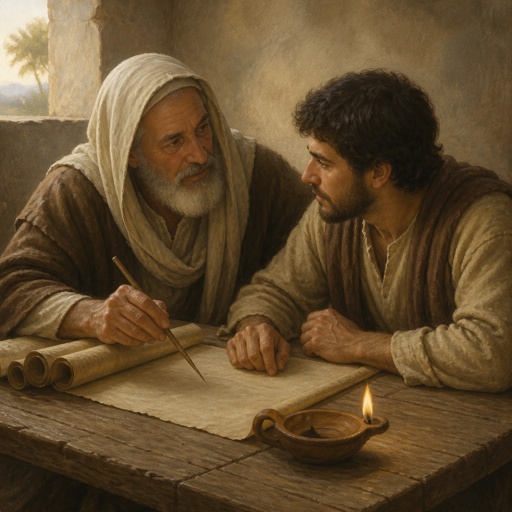
"That thou mightest know the certainty of those things, wherein thou hast been instructed." - Luke 1:4

Luke 14:14 - "And thou shalt be blessed; for they cannot recompense thee: for thou shalt be recompensed at the resurrection of the just."

Luke 14:25 - 33

Luke 2:13-14

Luke 2:13-14

Luke 14:6 - "And they could not answer him again to these things."

Colossians 4:14 - "Luke, the beloved physician, and Demas, greet you."

Luke 14:30 - "Saying, This man began to build, and was not able to finish."

Luke 24:14 - "And they talked together of all these things which had happened."

Luke 10:14 - "But it shall be more tolerable for Tyre and Sidon at the judgment, than for you."

Luke 14:2 - "And, behold, there was a certain man before him which had the dropsy."

Luke 2:14 - "Glory to God in the highest, and on earth peace, good will toward men."

Luke 14:22 - "And the servant said, Lord, it is done as thou hast commanded, and yet there is room."

Luke 14:13 - "But when thou makest a feast, call the poor, the maimed, the lame, the blind:"

Luke 14:25 - "¶ And there went great multitudes with him: and he turned, and said unto them,"

Luke 22:14 - "And when the hour was come, he sat down, and the twelve apostles with him."

Luke 2:13-14 fine pointillism sytle
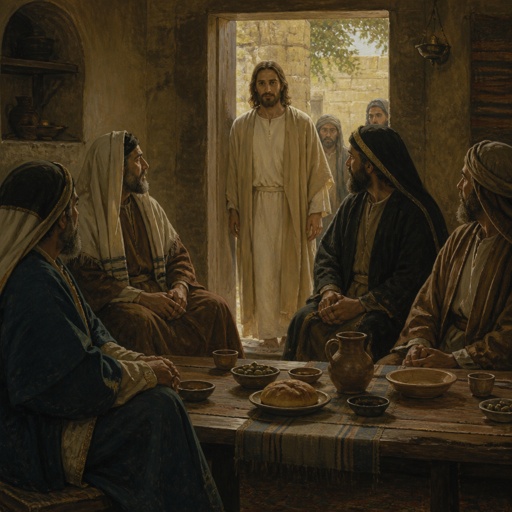
"And it came to pass, as he went into the house of one of the chief Pharisees to eat bread on the sabbath day, that they watched him." - Luke 14:1
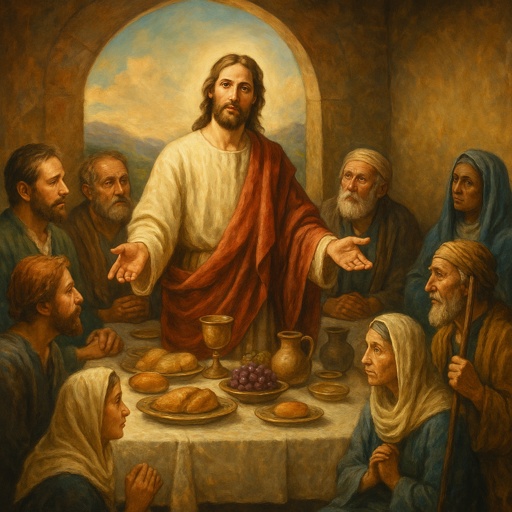
"And he put forth a parable to those which were bidden, when he marked how they chose out the chief rooms; saying unto them, When thou art bidden of any man to a wedding, sit not down in the highest room; lest a more honourable man than thou be bidden of him; And he that bade thee and him come and say to thee, Give this man place; and thou begin with shame to take the lowest room. But when thou art bidden, go and sit down in the lowest room; that when he that bade thee cometh, he may say unto thee, Friend, go up higher: then shalt thou have worship in the presence of them that sit at meat with thee. For whosoever exalteth himself shall be abased; and he that humbleth himself shall be exalted. Then said he also to him that bade him, When thou makest a feast, call the poor, the maimed, the lame, the blind: And thou shalt be blessed; for they cannot recompense thee: for thou shalt be recompensed at the resurrection of the just." - Luke 14:7-14
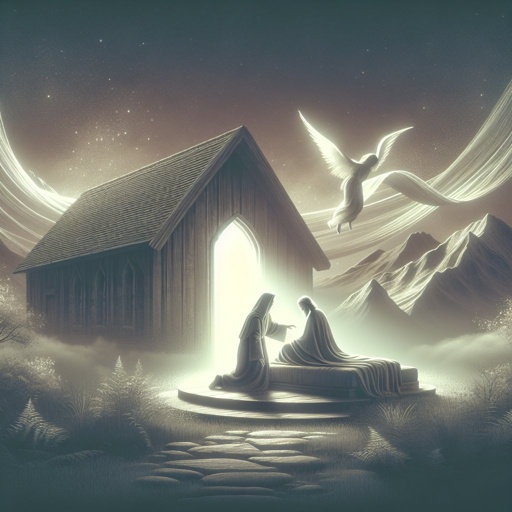
Luke 14:4 - "And they held their peace. And he took him, and healed him, and let him go;"

Luke 21:14 - "Settle it therefore in your hearts, not to meditate before what ye shall answer:"