What does Luke 1:10 mean?
"And the whole multitude of the people were praying without at the time of incense." - Luke 1:10
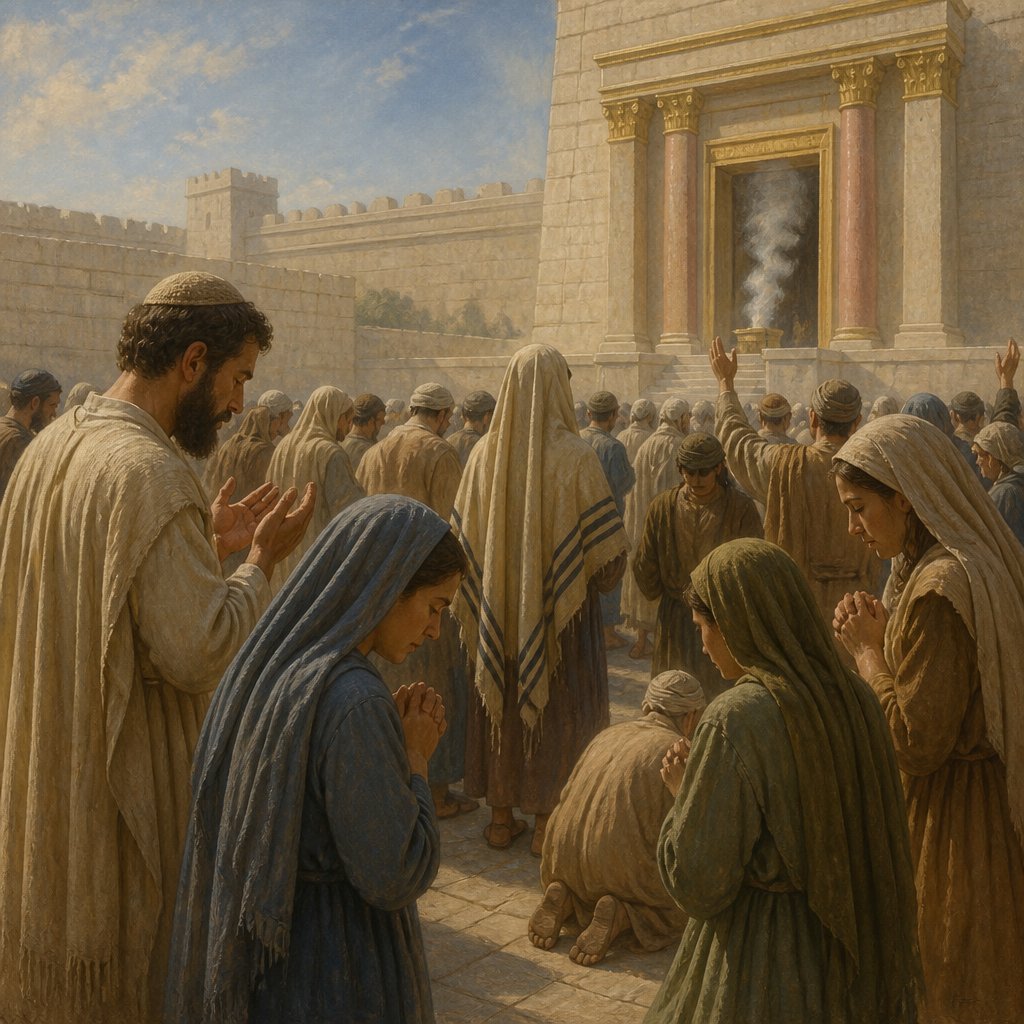
The Bible verse Luke 1:10 from the King James Version (KJV) states, "And the whole multitude of the people were praying without at the time of incense." This verse is part of the opening chapter of the Gospel of Luke, which is a foundational text in the New Testament, written by the physician and companion of the Apostle Paul, Luke.
In order to fully understand the meaning and significance of this verse, it is important to delve into the context and background in which it is situated. The Gospel of Luke is characterized by its emphasis on the benevolence of Jesus towards the poor, marginalized, and outcasts of society, and the inclusion of women and Gentiles. It is also renowned for its focus on prayer, the Holy Spirit, and the role of Mary, the mother of Jesus.
Within this particular verse, we find the setting of the Temple in Jerusalem, where the people were gathered outside in prayer while the incense was being offered within the sanctuary. The offering of incense was a significant ritual in the religious practices of the Jewish people and held symbolic meaning in their worship. The act of incense was seen as a form of communication between the earthly realm and the divine realm, representing the prayers and petitions of the people rising up to God.
The key theme in this verse is prayer, which is depicted as a communal and unified activity. The fact that the "whole multitude of the people" were engaged in prayer signifies the collective faith and devotion of the community. This communal aspect of prayer highlights the importance of unity and solidarity in seeking divine intervention and guidance. It also emphasizes the idea of shared spiritual experiences and the power of intercession for one another.
The context of the verse also holds profound symbolic significance. The act of offering incense within the Temple represents the intercession of the priests on behalf of the people before God. The incense symbolizes the prayers of the people, and the priests act as mediators between the people and God. This is reminiscent of the role of Jesus Christ as the ultimate mediator between humanity and God, as he intercedes for believers before the heavenly Father.
Furthermore, the setting of the Temple evokes the sacred and holy atmosphere where the divine presence was believed to dwell. The Temple was the central place of worship and encounter with God, and the act of prayer within this setting reflects the deep spiritual longing and reverence of the people. It also underscores the significance of the spiritual discipline of prayer and its connection to the divine.
In interpreting this verse, it is also essential to consider its relevance and application to our lives today. The emphasis on communal prayer reminds us of the importance of joining together with fellow believers in seeking God's will and provision. It speaks to the power of united prayer and the strength that comes from standing together in faith.
Additionally, the symbolism of the incense as representing the prayers of the people serves as a poignant reminder of the sacred nature of our communication with God. It encourages us to approach prayer with reverence and sincerity, understanding that our prayers are lifted up before the throne of God.
Overall, Luke 1:10 from the King James Version offers a rich and profound portrayal of the themes of communal prayer, spiritual unity, and the sacred act of intercession. It conveys a message of the significance of prayer in the life of believers and the divine connection that it fosters. As we reflect on this verse, may we be inspired to cultivate a deeper sense of community in prayer and to approach God with the reverence and faith that the act of incense represents.
Have questions about Luke 1:10?
Dive deeper into this scripture with Bible Chat — an AI-powered tool for exploring God's Word through conversation. Ask questions, get context, and grow in your understanding of the Bible.
Get Our Apps


Luke 1:10 Artwork

Luke 1:10 - "And the whole multitude of the people were praying without at the time of incense."
"And the whole multitude of the people were praying without at the time of incense." - Luke 1:10

Luke 19:1-10

Luke 19:1-10
Luke 10:5

Luke 10:5

Luke 10:5

Luke 10:18-19

Luke 10:18-19

Luke 10:18-19

Luke 10:17-19

Luke 10:18-19

Luke 10:18-19

Luke 10:18-19

Luke 10:17-19

Luke 19:10

Luke 2:10

Luke 10:27

Luke 15:10

Luke 12:10

Luke 17:10

Luke 10:1 - "After these things the Lord appointed other seventy also, and sent them two and two before his face into every city and place, whither he himself would come."

Luke 10:18-19

Luke 11:9-10

Luke 10:10 - "But into whatsoever city ye enter, and they receive you not, go your ways out into the streets of the same, and say,"

Luke 13:10 - "And he was teaching in one of the synagogues on the sabbath."

african american luke 10:30

Luke 19:10 - "For the Son of man is come to seek and to save that which was lost."

Luke 23:10 - "And the chief priests and scribes stood and vehemently accused him."

Luke 3:10 - "And the people asked him, saying, What shall we do then?"