What does Luke 1:1 mean?
"Forasmuch as many have taken in hand to set forth in order a declaration of those things which are most surely believed among us," - Luke 1:1

“FORASMUCH as many have taken in hand to set forth in order a declaration of those things which are most surely believed among us,” is Luke’s opening line, and in the King James Bible it functions like a solemn doorway into everything that follows. It tells you, before any angel speaks to Zacharias, before Mary is told of her conceiving, before the manger and the songs, that what you are about to read is not presented as a private dream or a scattered collection of pious tales, but as an ordered witness to realities already confessed and held with settled certainty in the Christian community.
The verse begins with “Forasmuch,” a word that signals connection and cause. Luke is not writing in a vacuum. His Gospel stands in relation to what has already been spoken and written, and in relation to an existing body of faith. The phrase “as many have taken in hand” acknowledges that others have already attempted to write accounts. This is not said as a rebuke. It is an admission that the life and work of Christ immediately generated testimony, and that there was a recognized need to gather that testimony into coherent form. Luke’s Gospel therefore enters a living stream of proclamation, where many voices have been bearing witness, and where written records have already begun to circulate.
“To set forth in order” points to Luke’s aim: arrangement, clarity, sequence, and intelligibility. The wording suggests more than merely putting events on paper; it suggests careful composition. Luke is presenting a narrative that is meant to be followed, weighed, remembered, and taught. In a world where oral reporting could be fragmented and where stories could be repeated in different forms, “in order” signals a concern that the reader receive a connected account rather than disconnected sayings. It is the language of someone who wants the truth not only proclaimed but also responsibly conveyed.
“A declaration” indicates that Luke is making a formal statement of matters that carry public weight. This is not entertainment; it is testimony. In the KJV’s diction, “declaration” has the feel of something set forth with intention and gravity, as though Luke is laying evidence before the mind and conscience. It frames the Gospel as a document that speaks into history, not merely into private spirituality.
The heart of the verse rests on “those things which are most surely believed among us.” Luke is describing a settled conviction, not a tentative guess. “Most surely believed” is the language of certainty, of assurance that has been tested by communal confession and sustained by witness. It also tells you something about the posture Luke expects from his reader: these are not presented as rumors, but as realities that the community of believers holds as firm. “Among us” is important as well. Luke places himself within a fellowship that believes these things. He is not an outsider analyzing a movement from a distance; he is speaking as one within the circle of those who have received and embraced the message.
In context, Luke 1:1 begins a carefully constructed prologue that sets the tone for the Gospel’s reliability and purpose. Before Luke narrates miraculous births and angelic announcements, he frames the entire account as anchored in orderly reporting and shared conviction. That is significant because the early chapters of Luke contain events that could easily be dismissed as incredible if detached from a broader claim to trustworthy testimony. By beginning the way he does, Luke is, in effect, saying that the wonders to come are not offered as fanciful mythology, but as part of a coherent declaration rooted in what the believers know and confess.
Themes emerge immediately. One is the theme of providential remembrance. The Gospel is an act of preserving what God has done, so that it is not lost to forgetfulness or distorted by time. Another theme is the unity of faith and history: what is “believed among us” is not mere opinion but is tied to “things,” to acts and fulfillments, to events that are recounted and ordered. There is also the theme of continuity: “many have taken in hand” implies a chorus of witnesses, and Luke’s work participates in that chorus, not as an isolated voice but as a harmonizing and clarifying testimony.
Even the verse’s subtle symbolism is worth noticing. It depicts truth as something that can be “set forth,” as though the acts of God can be laid out before the reader like a path to walk or like a record to examine. “In order” suggests a kind of moral and spiritual order as well: the Gospel does not merely tell you what happened; it implies that what happened has meaning, structure, and divine intention. The “declaration” functions like a herald’s proclamation—news announced with authority. And “most surely believed among us” evokes the image of a community stabilized by conviction, standing together around a shared confession.
The significance of Luke 1:1, then, is that it introduces Luke’s Gospel as purposeful testimony: a written, ordered declaration of divine acts that the Christian community holds with firm certainty. It invites the reader to approach the narrative not as scattered anecdotes, but as a coherent witness to the saving work of God, set before the world as something to be known, trusted, and passed on.
Have questions about Luke 1:1?
Dive deeper into this scripture with Bible Chat — an AI-powered tool for exploring God's Word through conversation. Ask questions, get context, and grow in your understanding of the Bible.
Get Our Apps


Luke 1:1 Artwork

Luke 1:1

Luke 1:1 - "Forasmuch as many have taken in hand to set forth in order a declaration of those things which are most surely believed among us,"

"Forasmuch as many have taken in hand to set forth in order a declaration of those things which are most surely believed among us," - Luke 1:1

Luke 1:31

Luke 1:26

luke 1:26

Luke 1:13

luke 1:26

luke 1:27

luke 1:29

Luke 2:1-20

Luke 19:1-10

Luke 19:1-10
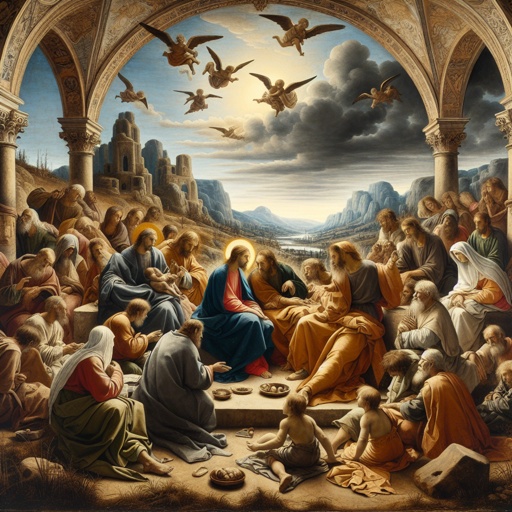
Luke:1

Luke 2.12

Luke 1:32

Luke 1:32

Luke 1:32

Luke 1:32

Luke 1:32

Luke 1:32

Luke 8:13

Luke 21:24

Luke 5:39

Luke 8:13

Luke 8:13

Luke 2:37

Luke 7:50

Luke 7:50

Luke 24:35