What does Luke 19:31 mean?
"And if any man ask you, Why do ye loose him? thus shall ye say unto him, Because the Lord hath need of him." - Luke 19:31
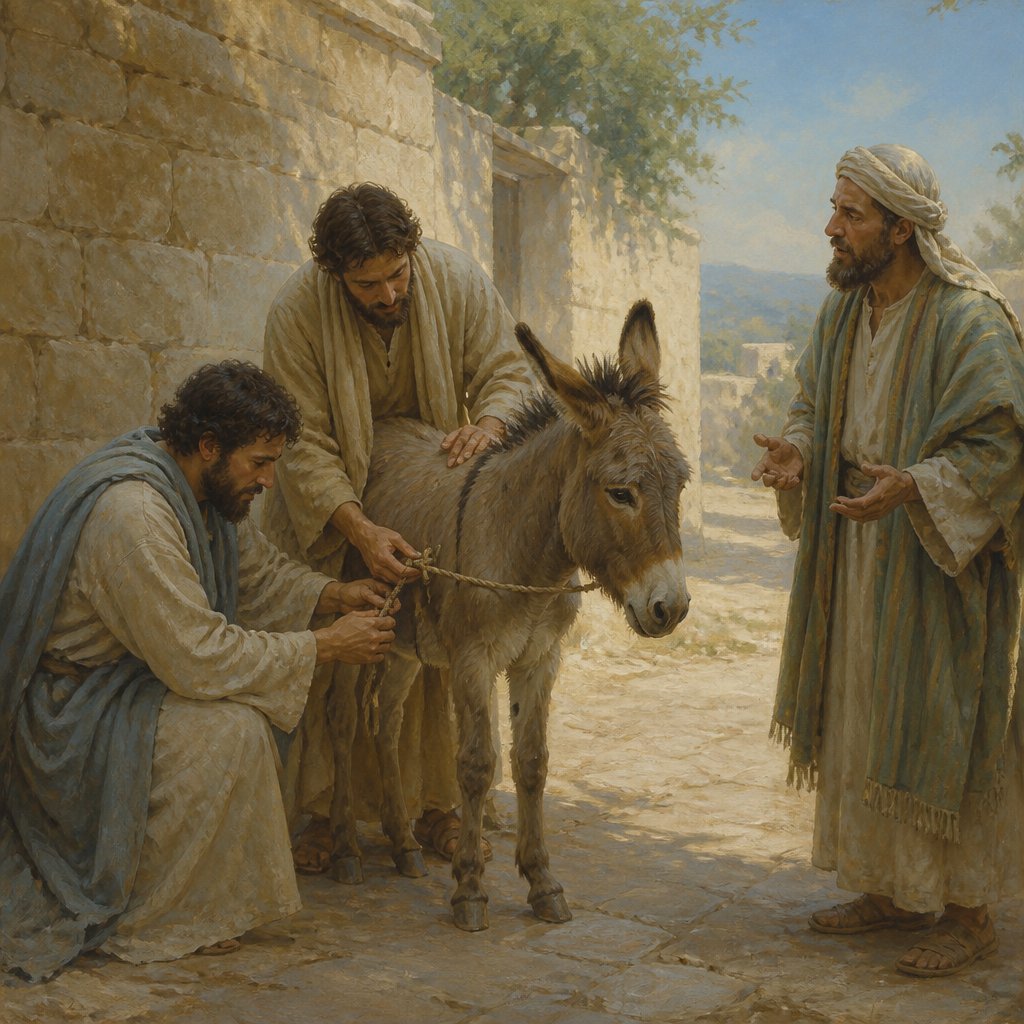
The Bible verse Luke 19:31 from the King James Version (KJV) reads, "And if any man ask you, Why do ye loose him? thus shall ye say unto him, Because the Lord hath need of him." This verse is part of the story of Jesus' triumphal entry into Jerusalem, where he sends his disciples to bring a colt to him. This event is often celebrated on Palm Sunday, which marks the beginning of Holy Week in the Christian calendar. This verse holds deep meanings and significance not only within its immediate context but also in its broader implications for Christian theology and spirituality.
The context of this verse takes place as Jesus approaches Jerusalem and instructs his disciples to find a colt tied up in a nearby village. He tells them that if anyone asks why they are untying it, they should respond with the words, "Because the Lord hath need of him." This instruction sets the stage for Jesus' entry into Jerusalem, where he is hailed as the Messiah and King.
One important theme in this verse is the concept of divine authority and purpose. In instructing his disciples to fetch the colt, Jesus demonstrates his authority as the Lord who has the power to requisition the animal for his use. This act highlights the sovereignty and divine mission of Jesus as the Son of God. It also emphasizes the divine purpose behind his entry into Jerusalem, indicating that everything is happening according to a divine plan.
Another theme present in this verse is the fulfillment of prophecy. The act of Jesus riding into Jerusalem on a colt echoes the prophecy found in Zechariah 9:9, which states, "Rejoice greatly, O daughter of Zion! Shout, O daughter of Jerusalem! Behold, your King is coming to you; He is just and having salvation, Lowly and riding on a donkey, A colt, the foal of a donkey." This fulfillment of prophecy further emphasizes Jesus' identity as the promised Messiah, affirming his divine role and mission.
The symbolism in this verse is profound and multifaceted. The colt itself symbolizes humility and peace. In ancient times, a king would typically ride into a city on a horse, symbolizing conquest and war. However, Jesus deliberately chooses to ride on a donkey, displaying humility and signaling his message of peace. This act conveys the idea of a different kind of kingship, one that is characterized by servanthood and compassion rather than domination and power.
Furthermore, the act of untying the colt and bringing it to Jesus symbolizes the disciples' obedience and submission to his authority. This act highlights the importance of following Jesus' instructions and recognizing his divine authority. It also serves as a reminder for believers to align their will with God's will and to be responsive to his call.
In a broader theological sense, this verse points to the redemptive mission of Jesus. The colt being "loosed" and brought to Jesus can be seen as a symbol of liberation and freedom. This imagery is reflective of the larger narrative of Jesus' ministry, where he comes to seek and save the lost, to release those bound by sin and to bring about spiritual freedom and restoration.
Overall, Luke 19:31 holds rich theological and spiritual significance, conveying profound themes of divine authority, fulfillment of prophecy, humility, obedience, and redemption. It serves as a powerful reminder of the nature of Jesus' kingship and his ultimate mission to bring about salvation and reconciliation to humanity. As Christians reflect on this verse, they are encouraged to embrace the teachings and example of Jesus, recognizing his authority and submitting to his divine purpose in their lives.
Have questions about Luke 19:31?
Dive deeper into this scripture with Bible Chat — an AI-powered tool for exploring God's Word through conversation. Ask questions, get context, and grow in your understanding of the Bible.
Get Our Apps


Luke 19:31 Artwork

Luke 19:31 - "And if any man ask you, Why do ye loose him? thus shall ye say unto him, Because the Lord hath need of him."
"And if any man ask you, Why do ye loose him? thus shall ye say unto him, Because the Lord hath need of him." - Luke 19:31

Luke 1:31

Genesis 19-31

Luke 22:31-32 - "Luke 22:31-32: And the Lord said, Simon, Simon, behold, Satan hath desired to have you, that he may sift you as wheat: But I have prayed for thee, that thy faith fail not: and when thou art converted, strengthen thy brethren."

Luke 10:18-19

Luke 13:18-19

Luke 10:18-19

Luke 10:18-19

Luke 10:17-19

Luke 13:18-19

Luke 23:31 - "For if they do these things in a green tree, what shall be done in the dry?"

Luke 2:31 - "Which thou hast prepared before the face of all people;"

Luke 10:18-19

Luke 10:18-19

Luke 10:18-19

Luke 10:17-19

Luke 24:31 - "And their eyes were opened, and they knew him; and he vanished out of their sight."

Luke 8:31 - "And they besought him that he would not command them to go out into the deep."

Luke 5:31 - "And Jesus answering said unto them, They that are whole need not a physician; but they that are sick."

Luke 19:23

Luke 1:19

Luke 19:23

Luke 4:31 - "And came down to Capernaum, a city of Galilee, and taught them on the sabbath days."

Luke 19:19 - "And he said likewise to him, Be thou also over five cities."

Joshua 19:31 - "This is the inheritance of the tribe of the children of Asher according to their families, these cities with their villages."

Luke 19:10

Luke 19:28

Luke 1:19
Luke 1:19