What does Luke 19:29 mean?
"And it came to pass, when he was come nigh to Bethphage and Bethany, at the mount called the mount of Olives, he sent two of his disciples," - Luke 19:29
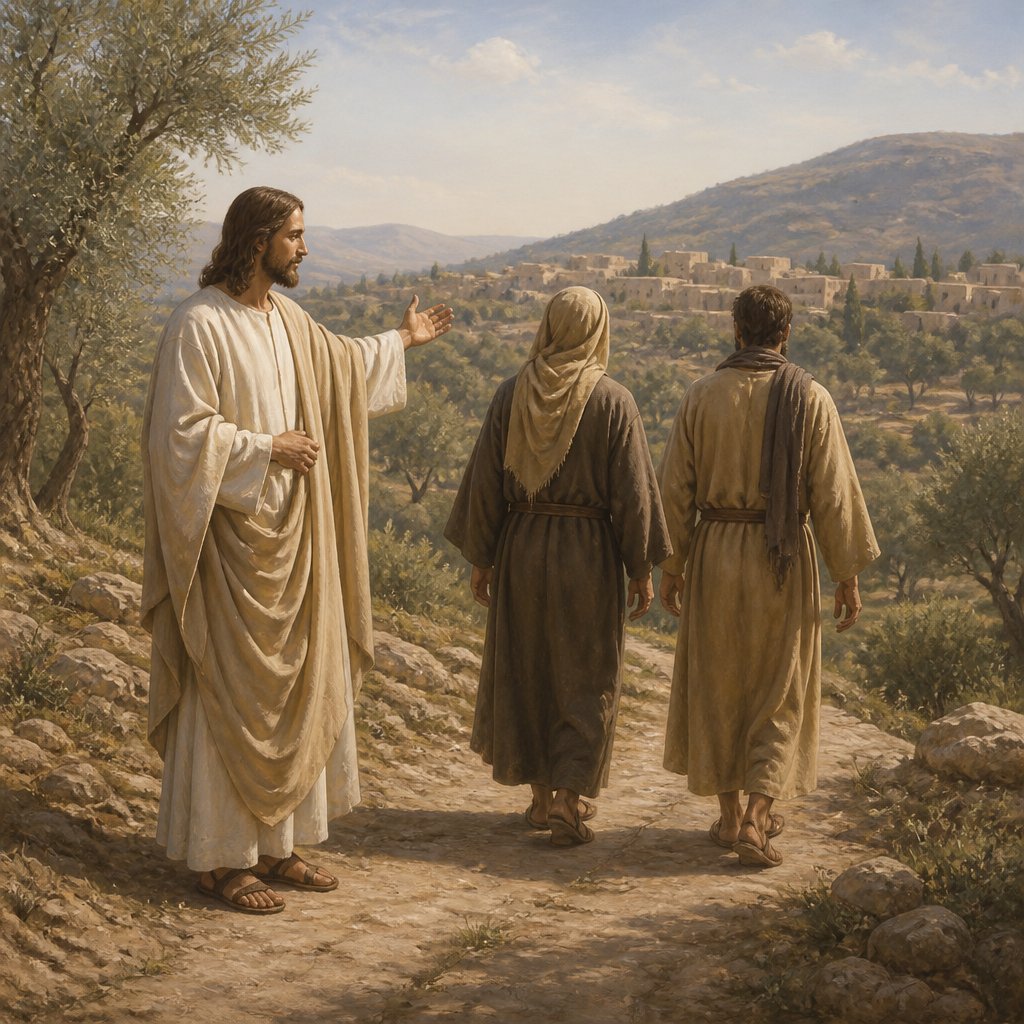
Luke 19:29 KJV: "And it came to pass, when he was come nigh to Bethphage and Bethany, at the mount called the mount of Olives, he sent two of his disciples,"
This verse is part of the account of Jesus' triumphant entry into Jerusalem, also known as Palm Sunday, which is a significant event in the Christian tradition. The verse takes place at a pivotal moment in the Gospel narrative, and it serves as a precursor to the events that will unfold in the days leading up to Jesus' crucifixion. In this passage, Jesus is on his way to Jerusalem, where he will ultimately fulfill his purpose and lay down his life for the sins of humanity.
The setting of the verse is important for understanding its context. Bethphage and Bethany were two villages located on the eastern slope of the Mount of Olives, just outside of Jerusalem. The Mount of Olives holds significant symbolic importance in Jewish and Christian traditions, and it is a location where many important events in the Bible take place. For example, it is the location where Jesus is said to have ascended to heaven after his resurrection.
When Jesus sends two of his disciples ahead to acquire a donkey, he is fulfilling the prophecy found in Zechariah 9:9, which states, "Rejoice greatly, O daughter of Zion! Shout, O daughter of Jerusalem! Behold, your King is coming to you; He is just and having salvation, Lowly and riding on a donkey, a colt, the foal of a donkey." This prophecy is significant because it foreshadows Jesus' role as the King who comes in peace, rather than as a conqueror on a warhorse. It also underscores the humility and gentleness of Jesus' nature, as he does not seek to assert his authority through earthly power and might.
The use of the donkey in this event also holds symbolic meaning. In biblical times, a king would ride into a city on a horse if he was going to war, and on a donkey if he was coming in peace. By choosing to ride on a donkey, Jesus is deliberately presenting himself as a peaceful and humble leader, in contrast to the expectations of the people who were hoping for a political savior who would overthrow the Roman occupation.
Furthermore, the fact that Jesus sent two of his disciples to obtain the donkey demonstrates his authority and knowledge of future events. This action illustrates Jesus' divine foreknowledge and control over the circumstances of his life, as well as his willingness to involve and empower his followers in the fulfillment of prophecy.
The themes present in this verse are crucial to understanding the broader message of the Gospel. Jesus' entry into Jerusalem is a moment of both triumph and sadness. The crowd welcomes him with enthusiasm, waving palm branches and laying their cloaks on the road to honor him, shouting "Hosanna!" Yet, at the same time, Jesus knows that his arrival in Jerusalem will ultimately lead to his arrest, trial, and crucifixion. This juxtaposition underscores the complex nature of Jesus' mission on earth, and it foreshadows the paradox of his death and resurrection, which are at the heart of the Christian faith.
In conclusion, Luke 19:29 captures a significant moment in the life of Jesus as he approaches Jerusalem. The verse is rich in symbolism and foreshadows the events that will soon transpire. It underscores the themes of humility, peace, and divine sovereignty, and it invites readers to reflect on the nature of Jesus' mission and the profound sacrifice he will soon make for the salvation of humanity. As Christians, this verse offers an opportunity to meditate on the true nature of Christ's kingship and our response to his invitation to follow him into the city and the events that will follow.
Have questions about Luke 19:29?
Dive deeper into this scripture with Bible Chat — an AI-powered tool for exploring God's Word through conversation. Ask questions, get context, and grow in your understanding of the Bible.
Get Our Apps


Luke 19:29 Artwork

Luke 19:29 - "And it came to pass, when he was come nigh to Bethphage and Bethany, at the mount called the mount of Olives, he sent two of his disciples,"
"And it came to pass, when he was come nigh to Bethphage and Bethany, at the mount called the mount of Olives, he sent two of his disciples," - Luke 19:29

luke 1:29

Luke 4:29

Genesis 19-29

luke 9:29- 30

Luke 10:18-19

Luke 13:18-19

Luke 10:18-19

Luke 10:18-19

Luke 10:17-19

Luke 13:18-19

Luke 10:18-19

Luke 10:18-19

Luke 10:18-19

Luke 10:17-19

Proverbs 19:29 - "Judgments are prepared for scorners, and stripes for the back of fools."

Luke 19:23

Luke 1:19

Luke 19:23

Luke 19:19 - "And he said likewise to him, Be thou also over five cities."

Luke 19:10

Luke 19:28

Luke 1:19
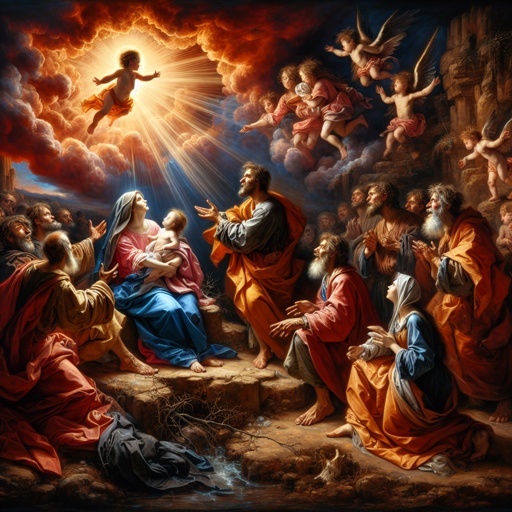
Luke 1:19

Luke 21:29 - "And he spake to them a parable; Behold the fig tree, and all the trees;"

Proverbs 29:19 - "A servant will not be corrected by words: for though he understand he will not answer."

luke 21:5-19

Luke 19:1-10

Luke 9:29 - "And as he prayed, the fashion of his countenance was altered, and his raiment was white and glistering."