What does Luke 19:19 mean?
"And he said likewise to him, Be thou also over five cities." - Luke 19:19
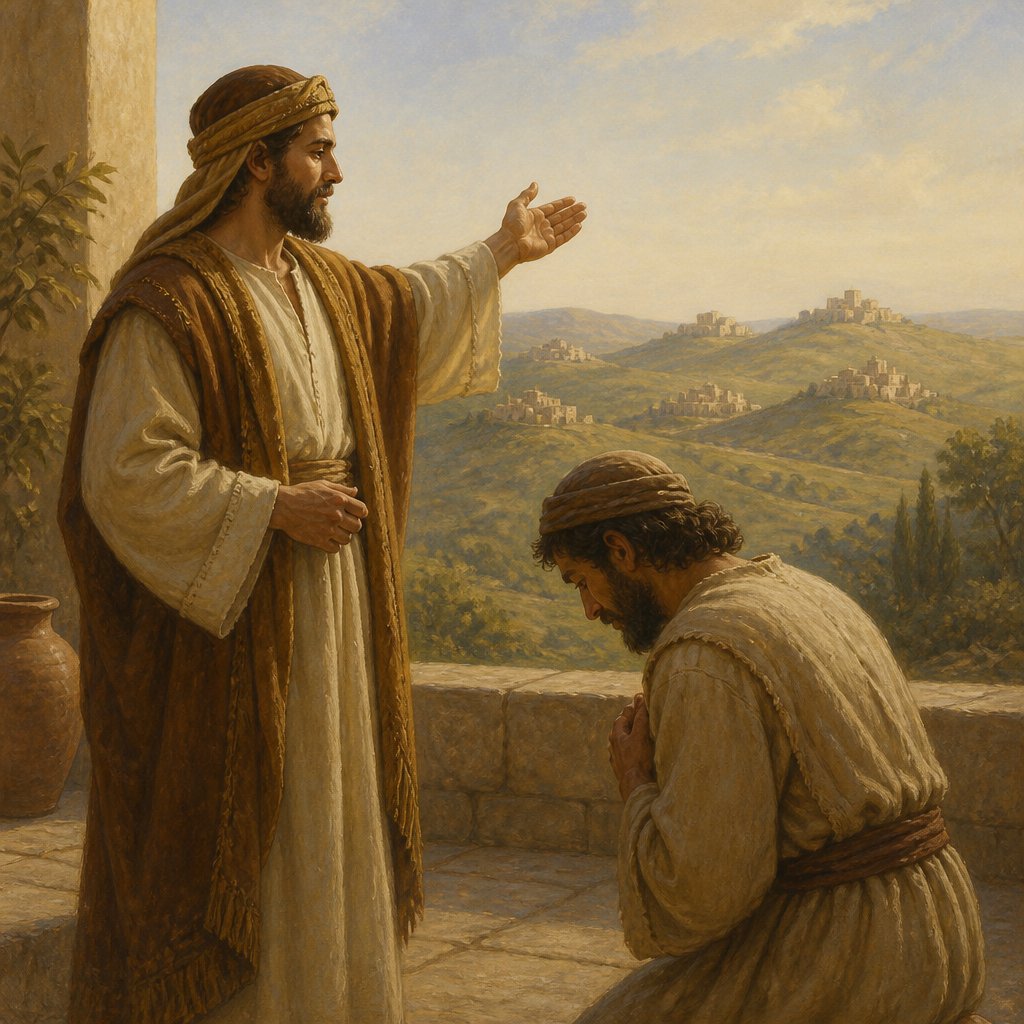
Luke 19:19 in the King James Version of the Bible reads: "And he said likewise to him, Be thou also over five cities." This verse is part of a larger passage that tells the story of Jesus' interaction with a chief tax collector named Zacchaeus. This story takes place in the town of Jericho, and it is one of the many parables and miracles that Jesus performed during his time on earth.
To truly understand the meaning and significance of this verse, it is important to examine the context in which it appears. In the preceding verses, Jesus tells a parable about a nobleman who goes away to receive a kingdom and then returns to reward his servants based on how they have invested the resources he had given them. The nobleman represents Jesus, and the servants represent his followers.
In Luke 19:17, the nobleman praises a servant for his faithfulness and tells him, "Well, thou good servant: because thou hast been faithful in a very little, have thou authority over ten cities." Then, in verse 19, the nobleman gives a similar reward to another servant: "And he said likewise to him, Be thou also over five cities."
This parable speaks to the theme of stewardship and accountability. It emphasizes the importance of using the gifts and resources that God has given us to further his kingdom and glorify his name. The verse also highlights the idea of rewards in heaven for those who are faithful and obedient to God's will on earth.
The significance of the number five in this verse is also worth noting. In Biblical numerology, the number five is often associated with God's grace and favor. It can represent the unmerited blessings and mercy that God bestows upon his people. So, when Jesus tells the servant, "Be thou also over five cities," it conveys the idea that God's grace is not just a personal benefit, but also a commission to serve and lead others.
The larger cultural and historical context of this verse is also important. In Jesus' time, the people of Israel were under Roman occupation, and there was an expectation that the Messiah would come to establish a kingdom and overthrow the oppressive Roman rule. This parable may have been a way for Jesus to address this expectation and to teach his followers about the true nature of his kingdom.
The symbolism in this verse is rich and meaningful. The nobleman represents Jesus, who went away to receive his kingdom in heaven and will one day return to judge and reward his followers. The cities over which the servants are appointed to rule can be seen as a metaphor for the responsibilities and opportunities that God gives to his people to serve and lead others.
In conclusion, Luke 19:19 is a verse that carries powerful themes of stewardship, accountability, grace, and the rewards of faithfulness. Its message reminds believers of the importance of using their gifts and resources to advance God's kingdom and the promise of heavenly rewards for those who are faithful. It also challenges us to consider our attitudes towards leadership and service, and to approach them with humility and a desire to honor God. This verse ultimately points us towards the hope and assurance of being entrusted with greater responsibilities in God's kingdom for those who are faithful in little.
Have questions about Luke 19:19?
Dive deeper into this scripture with Bible Chat — an AI-powered tool for exploring God's Word through conversation. Ask questions, get context, and grow in your understanding of the Bible.
Get Our Apps


Luke 19:19 Artwork

Luke 19:19 - "And he said likewise to him, Be thou also over five cities."
"And he said likewise to him, Be thou also over five cities." - Luke 19:19

Luke 10:18-19

Luke 13:18-19

Luke 10:18-19

Luke 10:18-19

Luke 13:18-19

Luke 10:17-19

Luke 10:18-19

Luke 10:18-19

Luke 10:18-19

Luke 10:17-19

Luke 19:23

Luke 1:19

Luke 19:23

Luke 19:10

Luke 1:19

Luke 19:28

Luke 1:19

luke 21:5-19

Luke 19:1-10

Luke 4:19 - "To preach the acceptable year of the Lord."

Luke 10:18-19

Luke 19:1-10

Luke 21:15-19

Luke 19:34 - "And they said, The Lord hath need of him."

Luke 19:36 - "And as he went, they spread their clothes in the way."

Luke 19:1 - "And Jesus entered and passed through Jericho."

Luke 21:19 - "In your patience possess ye your souls."

Luke 19:10 - "For the Son of man is come to seek and to save that which was lost."