What does Luke 19:10 mean?
"For the Son of man is come to seek and to save that which was lost." - Luke 19:10

Luke 19:10 in the King James Version reads, “For the Son of man is come to seek and to save that which was lost.” In a single sentence it gathers up the purpose of Christ’s earthly mission, the character of His grace, and the kind of people His mercy deliberately goes after. It is not merely a comforting saying; it is a conclusion Christ speaks at a decisive moment, explaining why He has acted in a way that offended the religious expectations of many who watched Him.
The immediate setting is the account of Zacchæus in Luke 19:1–10. Jesus passes through Jericho, and Zacchæus, “which was the chief among the publicans, and he was rich,” seeks to see Him. Being of small stature, he climbs into a sycomore tree. When Jesus comes to the place, He calls him by name and says, “make haste, and come down; for to day I must abide at thy house.” The crowd “all murmured, saying, That he was gone to be guest with a man that is a sinner.” Zacchæus then stands and speaks of repentance and restitution: “Behold, Lord, the half of my goods I give to the poor; and if I have taken any thing from any man by false accusation, I restore him fourfold.” Jesus responds, “This day is salvation come to this house, forsomuch as he also is a son of Abraham.” Then comes Luke 19:10, which functions like the divine explanation for the whole scene: Christ’s fellowship with a despised man is not moral carelessness, but the very strategy of salvation. The verse is the key that interprets the narrative.
When Jesus calls Himself “the Son of man,” He uses a title that is both humble and majestic. It emphasizes His true participation in human life, not approaching the lost at a distance but entering their world. In Luke’s Gospel, the phrase often carries the sense of authority joined to lowliness: He is near enough to be rejected and wounded, yet He is the appointed One who acts with God’s saving right. The title also fits the scene: the One who seeks is not simply a teacher offering advice; He is the One sent with a mission, moving deliberately toward those who cannot heal themselves.
The verbs “is come,” “to seek,” and “to save” are saturated with movement and purpose. “Is come” presents His arrival as intentional, not accidental. Christ does not merely appear and wait for worthy people to approach; His coming has direction. “To seek” portrays active pursuit. Zacchæus sought to see Jesus, but Jesus sought Zacchæus first and more deeply: He looked up, called him by name, and entered his house. The seeking is not only geographical—passing through Jericho—but spiritual, involving knowledge, summons, and personal engagement. “To save” shows that the seeking is not curiosity or mere association; it is rescue. Saving in this setting is not reduced to social acceptance. Zacchæus’ changed posture toward money, the poor, and restitution displays that salvation has reached his life, producing repentance and fruit. Jesus does not announce that Zacchæus has become “not so bad”; He announces salvation.
The object of this mission is “that which was lost.” The wording is striking. It is not “those who are lost,” but “that which was lost,” a phrase that can encompass persons viewed as things cast away, mislaid, or written off. It communicates value as well as peril: something lost is something that belongs somewhere, something meant to be found. In the story, Zacchæus is “lost” socially and spiritually in the eyes of the people. As a publican, he would be associated with collaboration and extortion, and his riches would appear as evidence of injustice. The crowd’s murmur—“a man that is a sinner”—represents a settled verdict. Yet Jesus speaks as the Finder and Rescuer, treating the lost not as disposable but as the proper objects of His search.
Luke 19:10 also carries a theme of reversal that runs throughout Luke. Those considered near may actually be far, and those thought far may be brought near. Zacchæus is rich, yet spiritually needy; despised, yet addressed by name; excluded, yet received; judged by the crowd, yet justified by Christ’s declaration that he is “a son of Abraham.” That phrase does not merely mark his ethnicity; in context it functions as a restoration of identity and covenant standing. Jesus publicly contradicts the crowd’s assumption that a man like this cannot belong among God’s people. Luke 19:10 grounds that restoration in Jesus’ mission: He seeks and saves the lost, and therefore He goes where the lost are.
The symbolism of Zacchæus in the tree is also suggestive in light of the verse. The sycomore tree becomes a picture of a man straining to see but hindered by his limitations and by the press of the crowd. The crowd can represent obstacles created by society, shame, or religious contempt—forces that keep the “lost” at a distance. Jesus stopping “at the place,” looking up, and calling down is an enacted parable of Luke 19:10. The Savior’s seeking reaches above the crowd’s barriers and below the man’s desperate attempts at self-elevation. Zacchæus must “come down,” because salvation is not attained by climbing high enough to see; it is received by responding to Christ’s call and welcoming Him.
The verse also clarifies the meaning of holiness in Jesus’ ministry. The murmuring assumes that holiness avoids sinners, that purity is preserved by separation from the morally compromised. Jesus reveals a different holiness: a holiness that does not fear contamination because it comes as saving power. He does not enter Zacchæus’ house to endorse sin, but to overthrow it by mercy that calls forth repentance. Thus Luke 19:10 shows the heart of the gospel in Luke: grace is not the reward for the cleaned-up; it is the invasion of God’s mercy into the life of the unclean to make them new.
In the wider flow of Luke 18–19, Luke 19:10 stands beside other scenes where Jesus receives the lowly and confronts self-assured righteousness. Not long before, a publican stands afar off, smiting upon his breast, crying, “God be merciful to me a sinner,” and Jesus says that man went down “justified.” A rich ruler, by contrast, goes away sorrowful, unable to part with his riches. Then Zacchæus, also rich, is transformed into a giver and restorer. The point is not that riches alone condemn or save, but that the Son of man can seek and save even where bondage seems strongest. Luke 19:10 gathers these threads: Christ’s mission reaches the humbled sinner, breaks the power of idols, and brings salvation where human judgment expects none.
The significance of Luke 19:10, then, is that it states Christ’s purpose as a rescue mission aimed at the lost, and it interprets His actions—His call, His table fellowship, His welcome of the despised—as the very work of salvation. It tells the reader that Jesus is not primarily reacting to human seeking; He is the One who comes seeking. It tells the sinner that being “lost” is precisely the condition that draws the Savior’s saving pursuit. And it tells the onlooker who murmurs that the scandal of grace is not a deviation from God’s plan but the fulfillment of it: “For the Son of man is come to seek and to save that which was lost.”
Have questions about Luke 19:10?
Dive deeper into this scripture with Bible Chat — an AI-powered tool for exploring God's Word through conversation. Ask questions, get context, and grow in your understanding of the Bible.
Get Our Apps


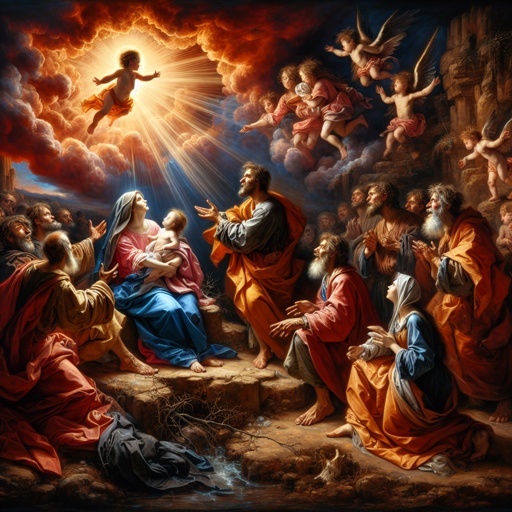
Luke 19:10 Artwork

Luke 19:10

Luke 19:10 - "For the Son of man is come to seek and to save that which was lost."

"For the Son of man is come to seek and to save that which was lost." - Luke 19:10

"For the Son of man is come to seek and to save that which was lost." - Luke 19:10

Luke 10:18-19

Luke 10:18-19

Luke 10:18-19

Luke 10:17-19

Luke 10:18-19

Luke 10:18-19

Luke 10:18-19

Luke 10:17-19

Luke 19:1-10

Luke 10:18-19

Luke 19:1-10

Luke 10:19 - "Behold, I give unto you power to tread on serpents and scorpions, and over all the power of the enemy: and nothing shall by any means hurt you."

Luke 19:9-10 - "And Jesus said unto him, This day is salvation come to this house, forsomuch as he also is a son of Abraham. For the Son of man is come to seek and to save that which was lost."

Luke 13:18-19

Luke 13:18-19

Luke 19:23

Luke 1:19

Luke 19:23

Luke 19:19 - "And he said likewise to him, Be thou also over five cities."

Luke 19:28

Luke 1:19
Luke 1:19

Luke 10:5

luke 21:5-19

Luke 10:5

Luke 10:5