What does Luke 18:38 mean?
"And he cried, saying, Jesus, thou Son of David, have mercy on me." - Luke 18:38
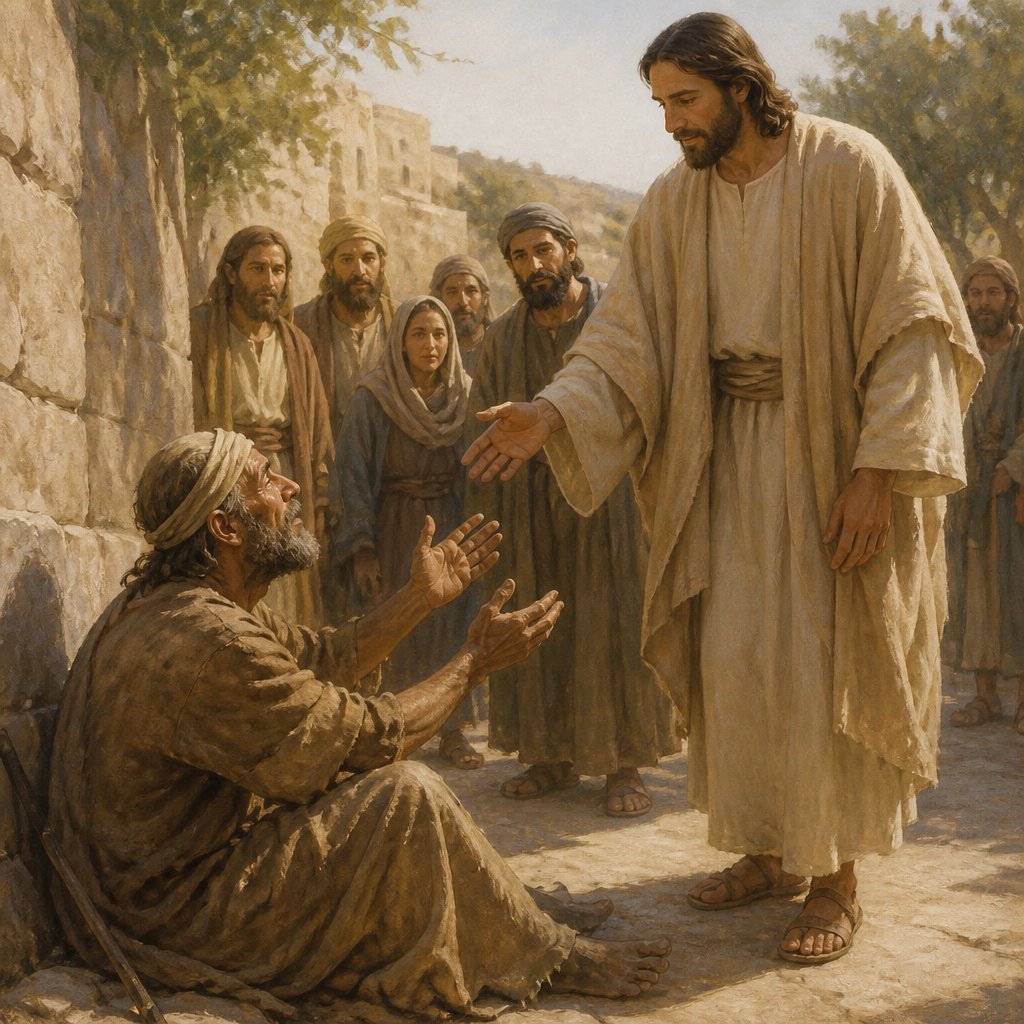
The Bible verse Luke 18:38 from the King James Version (KJV) reads, "And he cried, saying, Jesus, thou Son of David, have mercy on me." This verse comes from a passage in the book of Luke that tells the story of a blind man who hears a commotion and asks what is happening. When he learns that Jesus is passing by, he cries out for mercy, pleading for healing.
This verse holds several layers of meaning and symbolism within the context of the larger biblical narrative. At its core, the verse demonstrates the blind man's faith and belief in Jesus as the Son of David, a title that references the messianic lineage of Jesus. By addressing Jesus as the Son of David, the blind man acknowledges Jesus' royal lineage and his role as the promised deliverer of Israel. This declaration reveals the blind man's understanding and acceptance of Jesus as the long-awaited Messiah.
The blind man's plea for mercy is also a powerful expression of humility and dependence on Jesus for healing. Despite his physical disability, the blind man demonstrates spiritual sight by recognizing Jesus as the source of mercy and restoration. His earnest cry for help illustrates the universal human need for God's compassion and grace, positioning him as a relatable figure for anyone faced with their own vulnerabilities and desperate need for divine intervention.
Furthermore, the blind man's boldness in calling out to Jesus amidst the crowd signifies his unwavering determination and persistence in seeking Jesus' attention. Even when those around him rebuke him and tell him to be silent, he continues to cry out, refusing to be silenced. This persistence highlights the blind man's unwavering faith and unwavering belief in Jesus' ability to heal him, despite the doubts or dismissals of others. It serves as a powerful example of the kind of faith that Jesus commends throughout the gospels, a faith that perseveres in the face of obstacles and opposition.
In terms of broader themes, this verse encapsulates the overarching message of the Gospel of Luke, which emphasizes Jesus' ministry to the marginalized and oppressed. The blind man, as a member of a social outcast group in ancient society, represents those who are often overlooked or excluded. In responding to the blind man's plea, Jesus demonstrates his compassion for the marginalized and his willingness to extend mercy to those society deems unworthy. This embodies the larger theme of Jesus' mission to bring healing and salvation to all people, regardless of their social status or circumstance.
Overall, Luke 18:38 from the KJV presents a profound and multi-faceted portrait of faith, humility, and the transformative power of encountering Jesus. It highlights the blind man's recognition of Jesus as the Son of David and his courageous plea for mercy as a powerful symbol of the human longing for spiritual healing and restoration. In its broader context, this verse also aligns with the larger themes of Jesus' compassionate ministry to the marginalized, underscoring the universal relevance and timeless relevance of the Gospel message.
Have questions about Luke 18:38?
Dive deeper into this scripture with Bible Chat — an AI-powered tool for exploring God's Word through conversation. Ask questions, get context, and grow in your understanding of the Bible.
Get Our Apps


Luke 18:38 Artwork

Luke 18:38 - "And he cried, saying, Jesus, thou Son of David, have mercy on me."
"And he cried, saying, Jesus, thou Son of David, have mercy on me." - Luke 18:38

1kings 18:38

Luke 6:27-38

Luke 6: 27-38

Luke 6:38 Give, and it will be given to you

Luke 5:38 - "But new wine must be put into new bottles; and both are preserved."

Luke 20:38 - "For he is not a God of the dead, but of the living: for all live unto him."

Luke 21:38 - "And all the people came early in the morning to him in the temple, for to hear him."

Luke 20:27-38. All people of color.

Luke 19:38 - "Saying, Blessed be the King that cometh in the name of the Lord: peace in heaven, and glory in the highest."

Psalms 38:18 - "For I will declare mine iniquity; I will be sorry for my sin."

Luke 22:38 - "And they said, Lord, behold, here are two swords. And he said unto them, It is enough."

Luke 23:38 - "And a superscription also was written over him in letters of Greek, and Latin, and Hebrew, THIS IS THE KING OF THE JEWS."

Luke 11:38 - "And when the Pharisee saw it, he marvelled that he had not first washed before dinner."

Job 38:18 - "Hast thou perceived the breadth of the earth? declare if thou knowest it all."

Elijah in the scene 1 Kings 18:36–38

Luke 3:38 - "Which was the son of Enos, which was the son of Seth, which was the son of Adam, which was the son of God."

Luke 24:38 - "And he said unto them, Why are ye troubled? and why do thoughts arise in your hearts?"

Psalms 18:38 - "I have wounded them that they were not able to rise: they are fallen under my feet."

Luke 1:38 - "And Mary said, Behold the handmaid of the Lord; be it unto me according to thy word. And the angel departed from her."

Luke 12:38 - "And if he shall come in the second watch, or come in the third watch, and find them so, blessed are those servants."

Luke 10:18-19

Luke 13:18-19

Luke 10:18-19

Luke 10:18-19

Luke 13:18-19

Luke 10:18-19

Luke 10:18-19

Luke 10:18-19