What does Luke 18:19 mean?
"And Jesus said unto him, Why callest thou me good? none is good, save one, that is, God." - Luke 18:19

The Bible verse Luke 18:19 from the King James Version (KJV) states, "And Jesus said unto him, Why callest thou me good? none is good, save one, that is, God."
This verse is part of a larger narrative in which Jesus is approached by a rich young ruler who asks him what he must do to inherit eternal life. In response, Jesus tells him to keep the commandments, to which the young man replies that he has kept them since his youth. Jesus then challenges him to sell all his possessions and give the proceeds to the poor, but the young man walks away feeling sorrowful because he is very wealthy.
In this context, Luke 18:19 is a significant statement made by Jesus. The question "Why callest thou me good?" may seem puzzling at first, especially coming from one who is often referred to as "good teacher" in the Gospels. However, Jesus follows up this question with a profound assertion about the nature of goodness, stating "none is good, save one, that is, God."
This verse carries several layers of meaning and can be understood in various contexts. One of the central themes of this verse is the nature of goodness and the recognition of God as the ultimate source of goodness. It challenges the assumption that human beings can attain goodness on their own merit. By questioning why the young ruler calls him "good," Jesus is pointing to the fact that true goodness and perfection can only be attributed to God himself. This challenges the ruler's understanding of goodness and righteousness as something that can be achieved through adherence to the law, wealth, or personal merit.
Furthermore, this verse serves as a reminder of the divine nature of Jesus himself. By emphasizing that only God is good, Jesus is subtly implying his own divinity. In the Gospel of John, Jesus declares, "I and the Father are one" (John 10:30), highlighting his identity with God. This statement is echoed in Luke 18:19, reinforcing the belief in the deity of Christ.
Moreover, Luke 18:19 highlights the inadequacy of human efforts to achieve goodness and righteousness on their own. The rich ruler's question about inheriting eternal life reflects a common belief during that time that one's righteousness and standing before God could be earned through personal efforts and adherence to religious laws. However, Jesus' response challenges this notion by pointing to the ultimate source of goodness and righteousness, which is God himself. This aligns with the broader theme in the Gospels that salvation and righteousness come through faith in Christ, rather than through human achievement.
The symbolism in this verse is also significant. By affirming that only God is good, Jesus is pointing to the need for a divine source of righteousness and goodness. This further emphasizes the Christian belief in the fallen nature of humanity and the need for divine intervention for salvation and redemption.
In conclusion, Luke 18:19 is a profound and multi-layered verse that challenges human assumptions about goodness and righteousness. It emphasizes the divine nature of Jesus, the inadequacy of human efforts to attain righteousness, and the ultimate source of goodness in God. This verse serves as a reminder of the central Christian belief in the need for divine grace and intervention for salvation and points to the deity of Christ. It offers a powerful message about the nature of goodness and the source of true righteousness, ultimately pointing to God as the ultimate standard of goodness and perfection.
Have questions about Luke 18:19?
Dive deeper into this scripture with Bible Chat — an AI-powered tool for exploring God's Word through conversation. Ask questions, get context, and grow in your understanding of the Bible.
Get Our Apps


Luke 18:19 Artwork

Luke 18:19 - "And Jesus said unto him, Why callest thou me good? none is good, save one, that is, God."

"And Jesus said unto him, Why callest thou me good? none is good, save one, that is, God." - Luke 18:19

Luke 10:18-19

Luke 13:18-19

Luke 10:18-19

Luke 10:18-19

Luke 13:18-19

Luke 10:18-19

Luke 10:18-19

Luke 10:18-19

Luke 10:18-19

Luke 19:18 - "And the second came, saying, Lord, thy pound hath gained five pounds."

Luke 18:18-19 - "And a certain ruler asked him, saying, Good Master, what shall I do to inherit eternal life? And Jesus said unto him, Why callest thou me good? None is good, save one, that is, God."
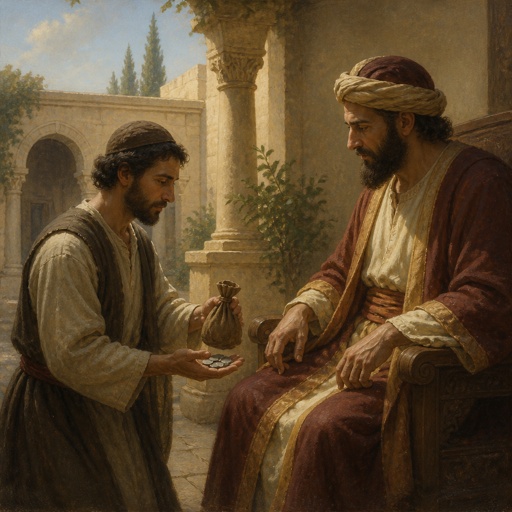
"And the second came, saying, Lord, thy pound hath gained five pounds." - Luke 19:18

Luke 4:18-19 - "The Spirit of the Lord is on me, because he has anointed me to proclaim good news to the poor. He has sent me to proclaim freedom for the prisoners and recovery of sight for the blind, to set the oppressed free, to proclaim the year of the Lord’s favor."
![Luke 4:18-19 NKJV
"The Spirit of the LORD is upon Me, Because He has anointed Me To preach the gospel to the poor; He has sent Me to heal the brokenhearted, To proclaim liberty to the captives And recovery of sight to the blind, To set at liberty those who are oppressed; [19] To proclaim the acceptable year of the LORD."](https://media.bible.art/42afcc8b-2cc5-4606-a8a4-fd874b5bffcb-thumbnail.jpg)
Luke 4:18-19 NKJV "The Spirit of the LORD is upon Me, Because He has anointed Me To preach the gospel to the poor; He has sent Me to heal the brokenhearted, To proclaim liberty to the captives And recovery of sight to the blind, To set at liberty those who are oppressed; [19] To proclaim the acceptable year of the LORD."

Luke 10:17-19

Luke 10:17-19
![Ethereal image of Luke 4:18-19 NKJV
"The Spirit of the LORD is upon Me, Because He has anointed Me To preach the gospel to the poor; He has sent Me to heal the brokenhearted, To proclaim liberty to the captives And recovery of sight to the blind, To set at liberty those who are oppressed; [19] To proclaim the acceptable year of the LORD."](https://media.bible.art/5e886594-b1b1-4642-afe6-428cfa26fab2-thumbnail.jpg)
Ethereal image of Luke 4:18-19 NKJV "The Spirit of the LORD is upon Me, Because He has anointed Me To preach the gospel to the poor; He has sent Me to heal the brokenhearted, To proclaim liberty to the captives And recovery of sight to the blind, To set at liberty those who are oppressed; [19] To proclaim the acceptable year of the LORD."

Luke 19:23

Luke 1:19

Luke 19:23

Luke 19:19 - "And he said likewise to him, Be thou also over five cities."

Luke 19:10
Luke 1:19

Luke 19:28

Luke 1:19

Luke 4:18

Luke 4:18

luke 21:5-19