What does Luke 15:7 mean?
"I say unto you, that likewise joy shall be in heaven over one sinner that repenteth, more than over ninety and nine just persons, which need no repentance." - Luke 15:7
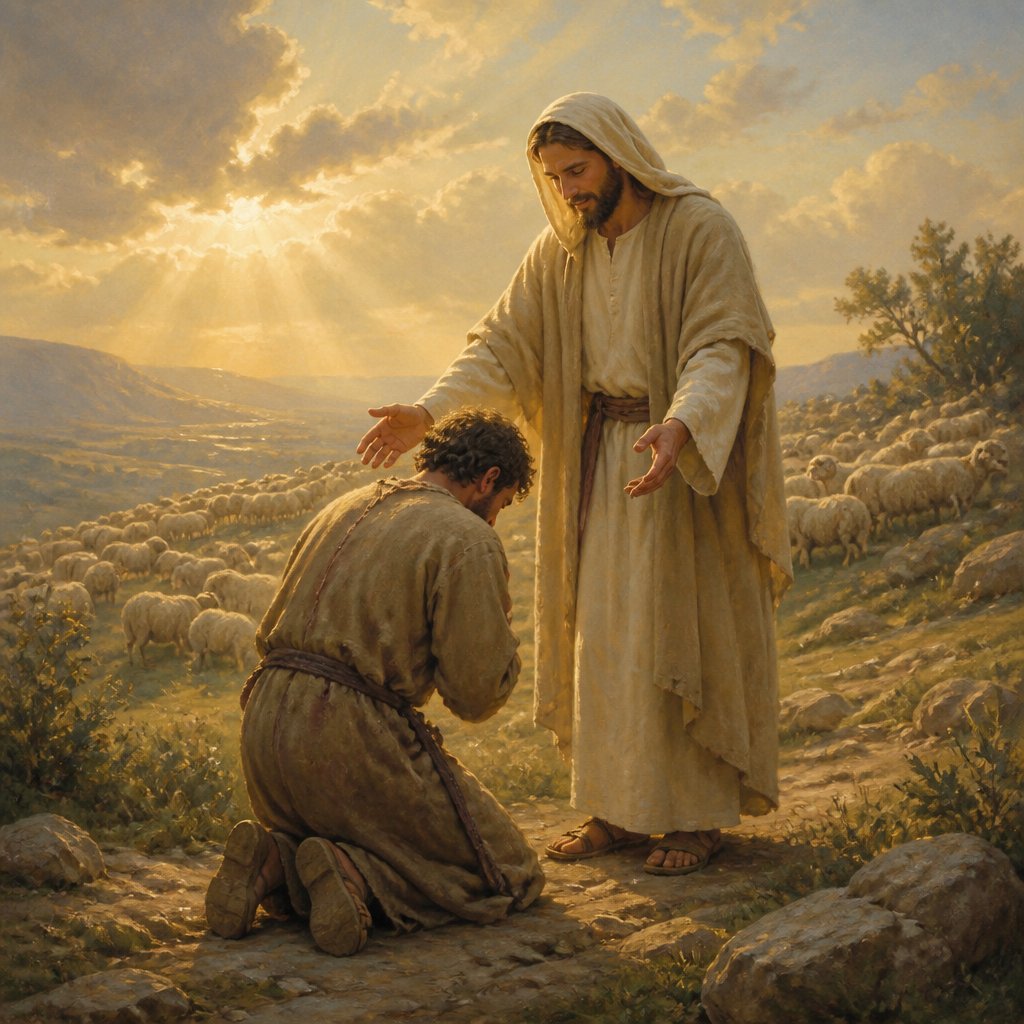
Luke 15:7 from the King James Version states, "I say unto you, that likewise joy shall be in heaven over one sinner that repenteth, more than over ninety and nine just persons, which need no repentance."
This verse is part of the larger passage in the Gospel of Luke known as the Parable of the Lost Sheep, which includes verses 4-7. In this parable, Jesus uses the metaphor of a shepherd leaving his flock of ninety-nine sheep to search for the one lost sheep. When he finds it, he rejoices and calls together his friends and neighbors to celebrate.
The verse carries several significant themes, including the importance of repentance, the boundless love and mercy of God, and the value of each individual soul. It also addresses the attitude of the Pharisees and scribes towards sinners and the need for every person to acknowledge their need for repentance.
One of the central themes of Luke 15:7 is the importance of repentance. Jesus emphasizes that there is great joy in heaven when a sinner repents and turns away from their sinful ways. This highlights the significance of personal repentance for salvation and the restoration of fellowship with God. It also reflects the compassionate nature of God, who eagerly awaits the return of those who have gone astray.
Another key theme in this verse is the boundless love and mercy of God. The image of a shepherd leaving the ninety-nine sheep to search for the one lost sheep illustrates God's relentless pursuit of those who have strayed from Him. It conveys the message that no one is beyond His reach, and He is willing to go to great lengths to bring them back into His fold. This demonstrates God's unconditional love and desire for reconciliation with His people.
Furthermore, the verse underscores the value of each individual soul. It contrasts the joy in heaven over one repentant sinner with the lack of need for celebration over the ninety-nine righteous individuals who have not strayed. This emphasizes the notion that God values every single person, regardless of their past mistakes or sins. It serves as a reminder that no one is insignificant or unimportant in the eyes of God, and He desires for all to come to repentance and experience His grace.
The context of Luke 15:7 is crucial for a deeper understanding of its meaning. It is part of a series of parables that Jesus tells in response to the criticism of the Pharisees and scribes, who grumble about Jesus eating and associating with sinners. These religious leaders considered themselves righteous and looked down upon those they deemed as sinners. In response, Jesus uses these parables to challenge their self-righteousness and to illustrate God's overwhelming love and compassion for those who are lost.
The symbolism in this verse is apparent in the shepherd, who represents Jesus, and the lost sheep, which symbolizes sinful humanity. The ninety-nine sheep that do not stray are symbolic of the self-righteous attitudes of the Pharisees and scribes. The celebration in heaven over the repentant sinner conveys the image of God's joy over each person who turns to Him, underscoring His desire for a restored relationship with all people.
In conclusion, Luke 15:7 holds profound significance in its portrayal of the importance of repentance, the boundless love and mercy of God, and the value of each individual soul. It challenges the self-righteous attitudes of the religious leaders and invites everyone to acknowledge their need for repentance and to experience God's unwavering love and grace. This verse serves as a powerful reminder of God's relentless pursuit of those who are lost and His desire for all to experience the joy of reconciliation with Him.
Have questions about Luke 15:7?
Dive deeper into this scripture with Bible Chat — an AI-powered tool for exploring God's Word through conversation. Ask questions, get context, and grow in your understanding of the Bible.
Get Our Apps


Luke 15:7 Artwork

Luke 15:7 - "I say unto you, that likewise joy shall be in heaven over one sinner that repenteth, more than over ninety and nine just persons, which need no repentance."
"I say unto you, that likewise joy shall be in heaven over one sinner that repenteth, more than over ninety and nine just persons, which need no repentance." - Luke 15:7

Luke 15: 4-7

Luke 7:15 - "And he that was dead sat up, and began to speak. And he delivered him to his mother."

"And he that was dead sat up, and began to speak. And he delivered him to his mother." - Luke 7:15
Luke 15:23

Luke 15:10

Luke 15:21

Luke 15:21

Luke 11:14-15

Luke 21:15-19

Luke 15:11-32

Luke 7:33

Luke 7:50

Luke 7:50

Luke 15:15 - "And he went and joined himself to a citizen of that country; and he sent him into his fields to feed swine."

John 15:7

Luke 4:15 - "And he taught in their synagogues, being glorified of all."

Luke 15:3 - "¶ And he spake this parable unto them, saying,"

Luke 7:36-50

John 15:7

Luke 7:41-47

Luke 7:36–50

Luke 15:11 - "¶ And he said, A certain man had two sons:"

Luke 9:15 - "And they did so, and made them all sit down."

Luke 20:7 - "And they answered, that they could not tell whence it was."

Luke 6:15 - "Matthew and Thomas, James the son of Alphaeus, and Simon called Zelotes,"

Luke 15:26 - "And he called one of the servants, and asked what these things meant."

Luke 7:35 - "But wisdom is justified of all her children."

Luke 15:2 - "And the Pharisees and scribes murmured, saying, This man receiveth sinners, and eateth with them."