What does Luke 15:11-32 mean?
"And he said, A certain man had two sons: And the younger of them said to his father, Father, give me the portion of goods that falleth to me. And he divided unto them his living. And not many days after the younger son gathered all together, and took his journey into a far country, and there wasted his substance with riotous living. And when he had spent all, there arose a mighty famine in that land; and he began to be in want. And he went and joined himself to a citizen of that country; and he sent him into his fields to feed swine. And he would fain have filled his belly with the husks that the swine did eat: and no man gave unto him. And when he came to himself, he said, How many hired servants of my father's have bread enough and to spare, and I perish with hunger! I will arise and go to my father, and will say unto him, Father, I have sinned against heaven, and before thee, And am no more worthy to be called thy son: make me as one of thy hired servants. And he arose, and came to his father. But when he was yet a great way off, his father saw him, and had compassion, and ran, and fell on his neck, and kissed him. And the son said unto him, Father, I have sinned against heaven, and in thy sight, and am no more worthy to be called thy son. But the father said to his servants, Bring forth the best robe, and put it on him; and put a ring on his hand, and shoes on his feet: And bring hither the fatted calf, and kill it; and let us eat, and be merry: For this my son was dead, and is alive again; he was lost, and is found. And they began to be merry. Now his elder son was in the field: and as he came and drew nigh to the house, he heard musick and dancing. And he called one of the servants, and asked what these things meant. And he said unto him, Thy brother is come; and thy father hath killed the fatted calf, because he hath received him safe and sound. And he was angry, and would not go in: therefore came his father out, and intreated him. And he answering said to his father, Lo, these many years do I serve thee, neither transgressed I at any time thy commandment: and yet thou never gavest me a kid, that I might make merry with my friends: But as soon as this thy son was come, which hath devoured thy living with harlots, thou hast killed for him the fatted calf. And he said unto him, Son, thou art ever with me, and all that I have is thine. It was meet that we should make merry, and be glad: for this thy brother was dead, and is alive again; and was lost, and is found." - Luke 15:11-32

Luke 15:11-32 in the King James Version of the Bible is a well-known parable often referred to as the Parable of the Prodigal Son. This parable has deep and rich meaning and provides important insights into the nature of forgiveness, repentance, and the transformative power of God's love.
The Parable of the Prodigal Son begins with a man who has two sons. The younger son asks his father for his share of the inheritance, essentially demanding his father's wealth while his father is still alive. In Jewish culture, this would have been seen as highly disrespectful and shameful. Despite this, the father grants his son's request, and the son goes off into a distant country where he squanders his wealth in wild living. This represents the son's rejection of his father and his family's values.
The son soon finds himself in dire circumstances, and he is forced to find work feeding pigs, a task that would have been considered unclean and degrading for a Jewish person. He is so impoverished that he desires to eat the food given to the pigs, symbolizing his deep despair and hunger. At this low point, he comes to his senses and realizes that even his father's hired servants have more than enough bread while he is dying of hunger.
Filled with shame and humility, the son decides to return to his father and confess his sins. He plans to ask for forgiveness and to ask to be treated as a hired servant rather than a son. He recognizes the gravity of his mistakes and is willing to accept any consequences for his actions.
As the son returns home, his father sees him from a distance and runs out to meet him. This response is significant because in Jewish culture, it was considered undignified for an elder to run. The father's actions reflect his overwhelming love and compassion for his son, as well as the restoration of the son's honor and dignity. The father embraces him and orders a celebration, declaring, "For this my son was dead, and is alive again; he was lost, and is found" (Luke 15:24, KJV).
Meanwhile, the elder son, who has been faithful and obedient, is angered by the father's extravagant forgiveness and celebration of his brother's return. He feels slighted and unappreciated despite his years of loyalty and hard work. The father explains that they should rejoice because his lost son has returned, and he was once lost but is now found, symbolizing the transformative power of repentance and forgiveness.
The themes of the Parable of the Prodigal Son are numerous and profound. Firstly, it illustrates the unconditional love and forgiveness of God. Despite his son's mistakes and disrespectful behavior, the father never gives up hope or stops loving his wayward child. This is a powerful representation of God's love for humanity, as He continually seeks to bring sinners back into a relationship with Him.
The parable also highlights the theme of repentance and restoration. The younger son's journey from rebellion and arrogance to humility and contrition shows the power of repentance and the desire for a renewed relationship with God. His father's response demonstrates the grace and mercy that God extends to those who genuinely seek His forgiveness.
In addition, the parable addresses the dangers of self-righteousness and judgement. The elder son's attitude reflects the resentment and lack of compassion that can develop in those who believe they are more deserving of God's favor. This serves as a warning against pride and serves as a reminder of the importance of empathy and forgiveness.
Overall, the Parable of the Prodigal Son is a powerful and deeply moving story that serves as a reminder of God's boundless love, the transformative power of repentance, and the danger of self-righteousness. It encourages believers to approach others with compassion and to recognize the value of forgiveness and reconciliation. This timeless message continues to resonate with readers and has been a source of hope and inspiration for countless individuals throughout the ages.
Have questions about Luke 15:11-32?
Dive deeper into this scripture with Bible Chat — an AI-powered tool for exploring God's Word through conversation. Ask questions, get context, and grow in your understanding of the Bible.
Get Our Apps


Luke 15:11-32 Artwork

Luke 15:11-32

Luke 15:11-32 - "And he said, A certain man had two sons: And the younger of them said to his father, Father, give me the portion of goods that falleth to me. And he divided unto them his living. And not many days after the younger son gathered all together, and took his journey into a far country, and there wasted his substance with riotous living. And when he had spent all, there arose a mighty famine in that land; and he began to be in want. And he went and joined himself to a citizen of that country; and he sent him into his fields to feed swine. And he would fain have filled his belly with the husks that the swine did eat: and no man gave unto him. And when he came to himself, he said, How many hired servants of my father's have bread enough and to spare, and I perish with hunger! I will arise and go to my father, and will say unto him, Father, I have sinned against heaven, and before thee, And am no more worthy to be called thy son: make me as one of thy hired servants. And he arose, and came to his father. But when he was yet a great way off, his father saw him, and had compassion, and ran, and fell on his neck, and kissed him. And the son said unto him, Father, I have sinned against heaven, and in thy sight, and am no more worthy to be called thy son. But the father said to his servants, Bring forth the best robe, and put it on him; and put a ring on his hand, and shoes on his feet: And bring hither the fatted calf, and kill it; and let us eat, and be merry: For this my son was dead, and is alive again; he was lost, and is found. And they began to be merry. Now his elder son was in the field: and as he came and drew nigh to the house, he heard musick and dancing. And he called one of the servants, and asked what these things meant. And he said unto him, Thy brother is come; and thy father hath killed the fatted calf, because he hath received him safe and sound. And he was angry, and would not go in: therefore came his father out, and intreated him. And he answering said to his father, Lo, these many years do I serve thee, neither transgressed I at any time thy commandment: and yet thou never gavest me a kid, that I might make merry with my friends: But as soon as this thy son was come, which hath devoured thy living with harlots, thou hast killed for him the fatted calf. And he said unto him, Son, thou art ever with me, and all that I have is thine. It was meet that we should make merry, and be glad: for this thy brother was dead, and is alive again; and was lost, and is found."

Luke 11:14-15
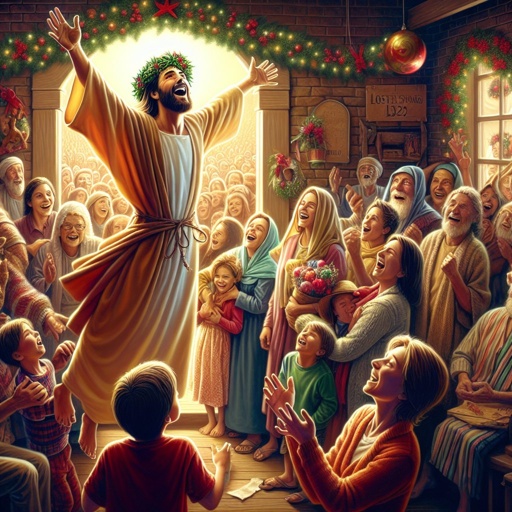
Luke 15:32 - "It was meet that we should make merry, and be glad: for this thy brother was dead, and is alive again; and was lost, and is found."

Luke 15:11 - "¶ And he said, A certain man had two sons:"

Luke 11:32 (KJVA) 32 The men of Nineve shall rise up in the judgment with this generation, and shall condemn it: for they repented at the preaching of Jonas; and, behold, a greater than Jonas is here.

Luke 11:32 - "The men of Nineve shall rise up in the judgment with this generation, and shall condemn it: for they repented at the preaching of Jonas; and, behold, a greater than Jonas is here."

"¶ And he said, A certain man had two sons:" - Luke 15:11

Luke 11:15 - "But some of them said, He casteth out devils through Beelzebub the chief of the devils."

"And he said, A certain man had two sons: And the younger of them said to his father, Father, give me the portion of goods that falleth to me. And he divided unto them his living. And not many days after the younger son gathered all together, and took his journey into a far country, and there wasted his substance with riotous living. And when he had spent all, there arose a mighty famine in that land; and he began to be in want. And he went and joined himself to a citizen of that country; and he sent him into his fields to feed swine. And he would fain have filled his belly with the husks that the swine did eat: and no man gave unto him. And when he came to himself, he said, How many hired servants of my father's have bread enough and to spare, and I perish with hunger! I will arise and go to my father, and will say unto him, Father, I have sinned against heaven, and before thee, And am no more worthy to be called thy son: make me as one of thy hired servants. And he arose, and came to his father. But when he was yet a great way off, his father saw him, and had compassion, and ran, and fell on his neck, and kissed him. And the son said unto him, Father, I have sinned against heaven, and in thy sight, and am no more worthy to be called thy son. But the father said to his servants, Bring forth the best robe, and put it on him; and put a ring on his hand, and shoes on his feet: And bring hither the fatted calf, and kill it; and let us eat, and be merry: For this my son was dead, and is alive again; he was lost, and is found. And they began to be merry. Now his elder son was in the field: and as he came and drew nigh to the house, he heard musick and dancing. And he called one of the servants, and asked what these things meant. And he said unto him, Thy brother is come; and thy father hath killed the fatted calf, because he hath received him safe and sound. And he was angry, and would not go in: therefore came his father out, and intreated him. And he answering said to his father, Lo, these many years do I serve thee, neither transgressed I at any time thy commandment: and yet thou never gavest me a kid, that I might make merry with my friends: But as soon as this thy son was come, which hath devoured thy living with harlots, thou hast killed for him the fatted calf. And he said unto him, Son, thou art ever with me, and all that I have is thine. It was meet that we should make merry, and be glad: for this thy brother was dead, and is alive again; and was lost, and is found." - Luke 15:11-32

Luke 15: 4-7

Luke 1:32

Luke 1:32
Luke 1:32

Luke 1:32

Luke 1:32

Luke 1:32

Luke 1:32

"It was meet that we should make merry, and be glad: for this thy brother was dead, and is alive again; and was lost, and is found." - Luke 15:32

Luke 17:32 - "Remember Lot's wife."

Luke 17:32-37

Luke 20:32 - "Last of all the woman died also."

Luke 5:32 - "I came not to call the righteous, but sinners to repentance."

Luke 22:31-32 - "Luke 22:31-32: And the Lord said, Simon, Simon, behold, Satan hath desired to have you, that he may sift you as wheat: But I have prayed for thee, that thy faith fail not: and when thou art converted, strengthen thy brethren."

"But some of them said, He casteth out devils through Beelzebub the chief of the devils." - Luke 11:15

Luke 2:32 - "A light to lighten the Gentiles, and the glory of thy people Israel."

Luke 4:32 - "And they were astonished at his doctrine: for his word was with power."

John 1:1-5

John 1:1-5

"Remember Lot's wife." - Luke 17:32