What does Luke 15:11 mean?
"¶ And he said, A certain man had two sons:" - Luke 15:11

The Bible verse Luke 15:11 from the King James Version (KJV) reads, "And he said, A certain man had two sons." This verse is the opening line of the parable known as the Parable of the Prodigal Son.
The Parable of the Prodigal Son is one of the most well-known and beloved stories in the New Testament. It is a powerful illustration of God's unconditional love and forgiveness for those who repent and return to Him. The parable is found in the Gospel of Luke, and it is part of a series of parables that Jesus told to illustrate the depth of God's love for sinners.
The context of this verse is important for understanding its full meaning. In Luke 15, Jesus is speaking to a mixed audience of Pharisees, scribes, tax collectors, and sinners. The Pharisees and scribes were critical of Jesus for associating with sinners, while Jesus was showing compassion and love to those who were considered outcasts in society. In response to their criticism, Jesus tells three parables—the Parable of the Lost Sheep, the Parable of the Lost Coin, and the Parable of the Prodigal Son—to illustrate the joyful response of God when a sinner repents and returns to Him.
In the Parable of the Prodigal Son, the father in the story represents God, and the two sons represent different attitudes towards God and sin. The younger son asks for his share of the inheritance and leaves his father's house to live a life of self-indulgence and rebellion. He squanders his inheritance and eventually finds himself in a desperate situation, longing for the food and care that he once took for granted in his father's house. When he comes to his senses, he decides to return to his father, confess his sins, and ask for forgiveness. The father welcomes him back with open arms, celebrating his return and showing him unconditional love and forgiveness.
The older son, on the other hand, represents the self-righteous and judgmental attitudes of the Pharisees and scribes. He is resentful of the attention and forgiveness that his younger brother receives and refuses to join the celebration. The father pleads with him to come in and rejoice, but the older son's bitterness and pride prevent him from experiencing the joy of reconciliation and forgiveness.
The themes of the Parable of the Prodigal Son are profound and timeless. It speaks to the reality of human sin, rebellion, and the consequences of our choices. It also reveals the depth of God's love and grace, as well as the importance of repentance and humility. The parable shows that God is always ready to welcome back those who have strayed, regardless of their past mistakes or failures.
The symbolism in this verse and the parable as a whole is rich and evocative. The father's unconditional love and forgiveness represent God's character and His desire for reconciliation with His children. The younger son's journey of repentance and return symbolizes the process of spiritual awakening and restoration. The older son's resentment and self-righteousness reveal the dangers of pride and judgmental attitudes. The father's response to both sons reflects God's heart for all people, regardless of their past or present circumstances.
In conclusion, the Bible verse Luke 15:11 and the Parable of the Prodigal Son carry a profound message of hope, redemption, and the boundless love of God. It reminds us that no matter how far we have strayed, we can always return to God and be received with open arms. It also challenges us to examine our attitudes towards others and cultivate a spirit of compassion, forgiveness, and humility. This parable continues to be a source of encouragement and inspiration for believers throughout the ages, offering a glimpse of the unfathomable depths of God's love for all His children.
Have questions about Luke 15:11?
Dive deeper into this scripture with Bible Chat — an AI-powered tool for exploring God's Word through conversation. Ask questions, get context, and grow in your understanding of the Bible.
Get Our Apps


Luke 15:11 Artwork

Luke 15:11 - "¶ And he said, A certain man had two sons:"

Luke 15:11-32

"¶ And he said, A certain man had two sons:" - Luke 15:11

Luke 15:11-32 - "And he said, A certain man had two sons: And the younger of them said to his father, Father, give me the portion of goods that falleth to me. And he divided unto them his living. And not many days after the younger son gathered all together, and took his journey into a far country, and there wasted his substance with riotous living. And when he had spent all, there arose a mighty famine in that land; and he began to be in want. And he went and joined himself to a citizen of that country; and he sent him into his fields to feed swine. And he would fain have filled his belly with the husks that the swine did eat: and no man gave unto him. And when he came to himself, he said, How many hired servants of my father's have bread enough and to spare, and I perish with hunger! I will arise and go to my father, and will say unto him, Father, I have sinned against heaven, and before thee, And am no more worthy to be called thy son: make me as one of thy hired servants. And he arose, and came to his father. But when he was yet a great way off, his father saw him, and had compassion, and ran, and fell on his neck, and kissed him. And the son said unto him, Father, I have sinned against heaven, and in thy sight, and am no more worthy to be called thy son. But the father said to his servants, Bring forth the best robe, and put it on him; and put a ring on his hand, and shoes on his feet: And bring hither the fatted calf, and kill it; and let us eat, and be merry: For this my son was dead, and is alive again; he was lost, and is found. And they began to be merry. Now his elder son was in the field: and as he came and drew nigh to the house, he heard musick and dancing. And he called one of the servants, and asked what these things meant. And he said unto him, Thy brother is come; and thy father hath killed the fatted calf, because he hath received him safe and sound. And he was angry, and would not go in: therefore came his father out, and intreated him. And he answering said to his father, Lo, these many years do I serve thee, neither transgressed I at any time thy commandment: and yet thou never gavest me a kid, that I might make merry with my friends: But as soon as this thy son was come, which hath devoured thy living with harlots, thou hast killed for him the fatted calf. And he said unto him, Son, thou art ever with me, and all that I have is thine. It was meet that we should make merry, and be glad: for this thy brother was dead, and is alive again; and was lost, and is found."

Luke 11:14-15

Luke 11:15 - "But some of them said, He casteth out devils through Beelzebub the chief of the devils."

Luke 15: 4-7

"But some of them said, He casteth out devils through Beelzebub the chief of the devils." - Luke 11:15

John 1:1-5

John 1:1-5
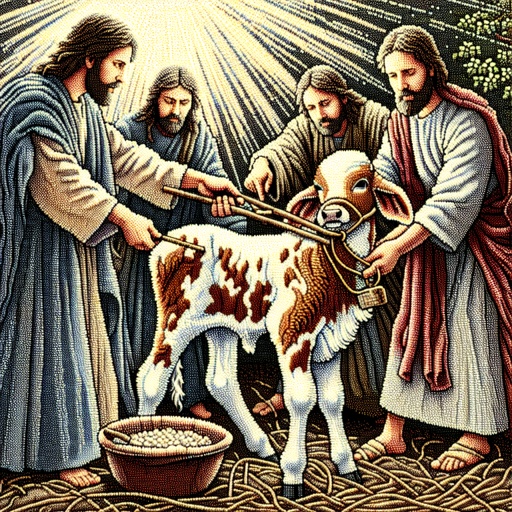
Luke 15:23

Luke 15:10

Luke 15:21

Luke 15:21
Luke 11:9

luke 11:23

luke 11:23

luke 11:23

Luke 8:11

luke 11:23

Luke 11:9

Luke 21:15-19

Exodus 4:1-5

1 Timothy 1:5

Luke 15:15 - "And he went and joined himself to a citizen of that country; and he sent him into his fields to feed swine."

Luke 1:11-12

Luke 11:1-14

Luke 11:9-10

Luke 11:1-14

Luke 5:1-11