What does Luke 15:1 mean?
"Then drew near unto him all the publicans and sinners for to hear him." - Luke 15:1
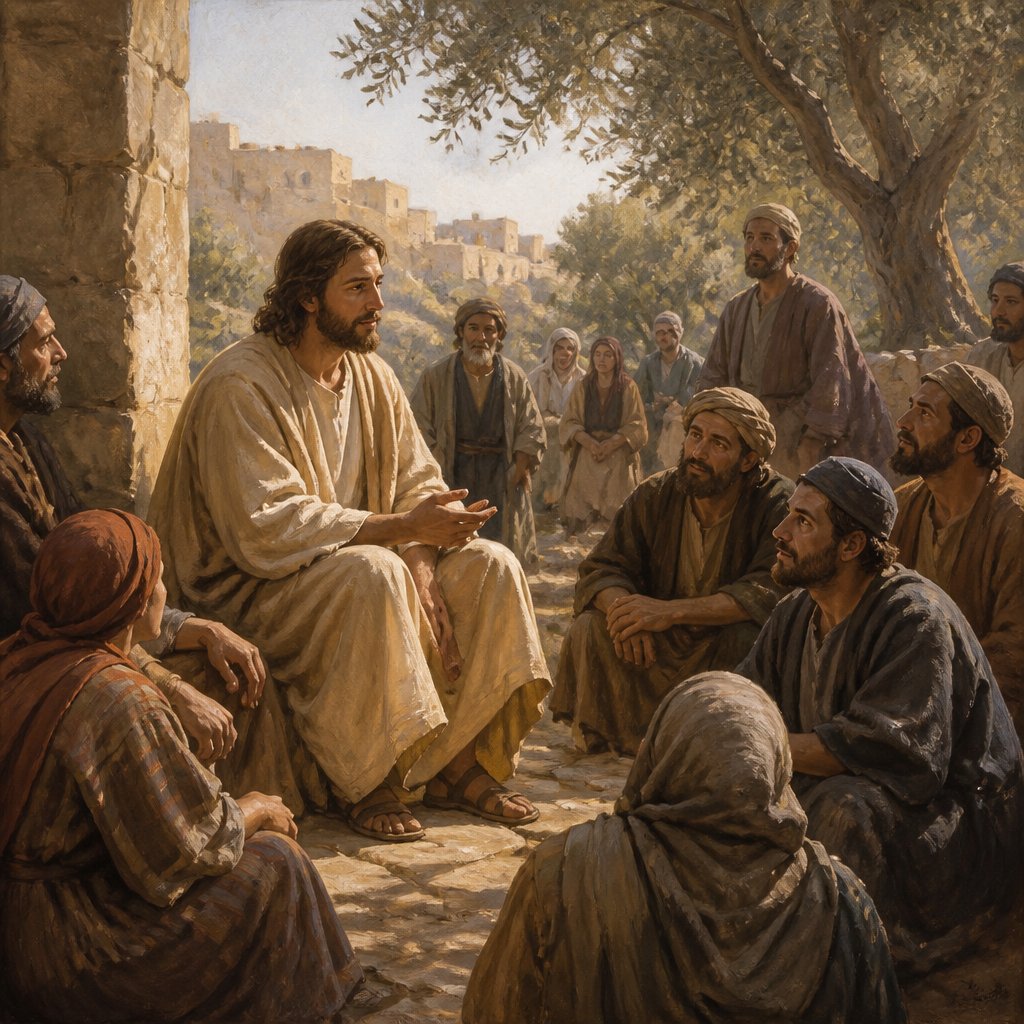
Luke 15:1 in the King James Version of the Bible states: "Then drew near unto him all the publicans and sinners for to hear him." This verse is the opening of a chapter that contains three parables of Jesus: the Lost Sheep, the Lost Coin, and the Prodigal Son. These parables are some of the most well-known and beloved teachings of Jesus, and they all revolve around the theme of God's mercy and the joy in heaven over repentant sinners.
The verse begins with "Then drew near unto him," which refers to the fact that Jesus was attracting a certain crowd. The people who were drawn to Jesus were "all the publicans and sinners," which refers to the tax collectors and those who were considered to be the worst of sinners in Jewish society at the time. These individuals were not well-regarded by the religious leaders and were often cast out and looked down upon. Yet, despite their low social standing, they were the ones who were drawn to Jesus, eager to hear His words.
In this verse, Jesus is depicted as a magnetic figure, attracting those who were considered social outcasts and sinners. This theme runs throughout the entire chapter of Luke 15, where Jesus emphasizes the value of every individual and the immense joy in heaven over one sinner who repents. This stands in stark contrast to the attitude of the Pharisees and scribes, who grumbled about Jesus associating with sinners. Their murmuring led Jesus to tell three parables about lost things being found, emphasizing the great value God places on bringing back those who have gone astray.
This verse highlights the inclusivity of Jesus' ministry and the radical message of God's love and mercy. Jesus did not discriminate or turn away those who were considered undesirable by society; rather, He welcomed them and showed them compassion. His actions challenged the norms of the time and portrayed a God who sought out the lost and the marginalized.
The context of this verse is important in understanding the significance of Jesus' actions. In the cultural and religious context of first-century Judaism, it was uncommon for a religious figure to associate with sinners and tax collectors. The religious leaders of the time often set themselves apart from those they considered unclean or unworthy. But Jesus breaks down these barriers, intentionally seeking out those who were ignored and rejected by society. This is a powerful demonstration of God's love for all people, regardless of their past or social status.
The symbolism in this verse is rich and meaningful. The act of sinners and tax collectors drawing near to Jesus symbolizes the longing for acceptance and redemption. It also symbolizes the inclusive nature of Jesus' ministry, where everyone is invited to come and hear His teachings. The fact that Jesus willingly engaged with these individuals represents His compassion and desire for all to come to repentance.
In conclusion, Luke 15:1 is a powerful verse that sets the stage for the profound teachings of Jesus found in the following parables. This verse communicates the radical inclusivity of Jesus' ministry and the immense value and joy in heaven over repentant sinners. It challenges societal norms and emphasizes God's relentless pursuit of those who are lost. The themes of acceptance, mercy, and redemption are central to this verse and the entire chapter, conveying the transformative and universal nature of God's love.
Have questions about Luke 15:1?
Dive deeper into this scripture with Bible Chat — an AI-powered tool for exploring God's Word through conversation. Ask questions, get context, and grow in your understanding of the Bible.
Get Our Apps


Luke 15:1 Artwork

Luke 15:1 - "Then drew near unto him all the publicans and sinners for to hear him."

Luc 15:1-2

Luc 15:1-2

Luc 15:1-2
"Then drew near unto him all the publicans and sinners for to hear him." - Luke 15:1

Luc 15:1-2
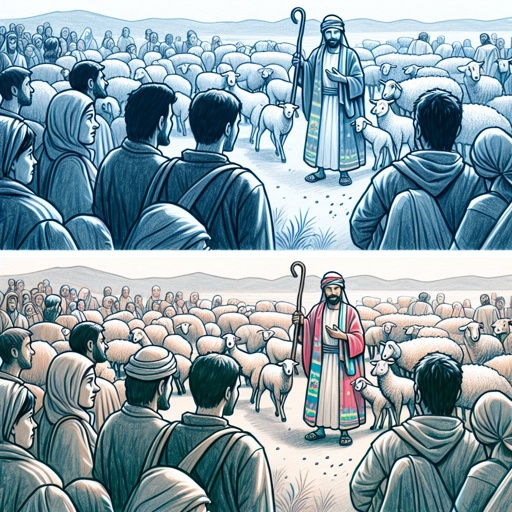
Luke 15:1-7 - "Now the tax collectors and sinners were all gathering around to hear Jesus. But the Pharisees and the teachers of the law muttered, “This man welcomes sinners and eats with them.” Then Jesus told them this parable: “Suppose one of you has a hundred sheep and loses one of them. Doesn’t he leave the ninety-nine in the open country and go after the lost sheep until he finds it? And when he finds it, he joyfully puts it on his shoulders and goes home. Then he calls his friends and neighbors together and says, ‘Rejoice with me; I have found my lost sheep.’ I tell you that in the same way there will be more rejoicing in heaven over one sinner who repents than over ninety-nine righteous persons who do not need to repent."
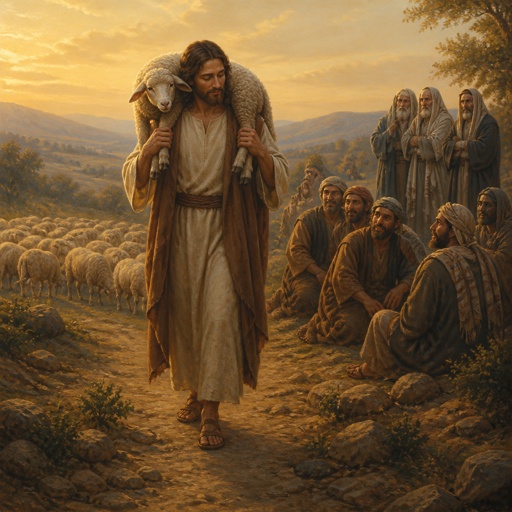
"Now the tax collectors and sinners were all gathering around to hear Jesus. But the Pharisees and the teachers of the law muttered, “This man welcomes sinners and eats with them.” Then Jesus told them this parable: “Suppose one of you has a hundred sheep and loses one of them. Doesn’t he leave the ninety-nine in the open country and go after the lost sheep until he finds it? And when he finds it, he joyfully puts it on his shoulders and goes home. Then he calls his friends and neighbors together and says, ‘Rejoice with me; I have found my lost sheep.’ I tell you that in the same way there will be more rejoicing in heaven over one sinner who repents than over ninety-nine righteous persons who do not need to repent." - Luke 15:1-7

Luke 15: 4-7

Luke 11:14-15

Luke 21:15-19
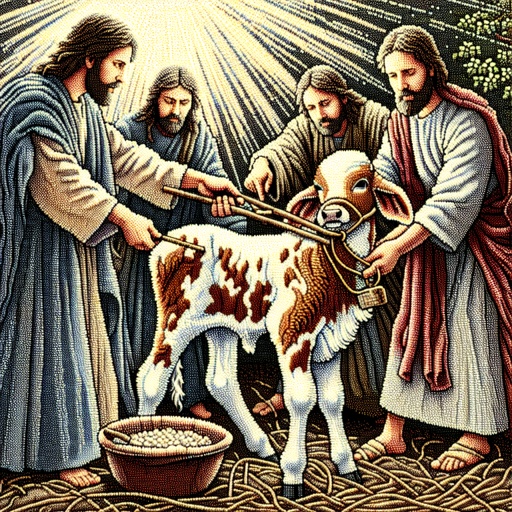
Luke 15:23

Luke 15:10

Luke 15:21

Luke 15:21

Luke 1:15 - "For he shall be great in the sight of the Lord, and shall drink neither wine nor strong drink; and he shall be filled with the Holy Ghost, even from his mother's womb."

Luke 15:11-32

Luke 15:15 - "And he went and joined himself to a citizen of that country; and he sent him into his fields to feed swine."

Luke 4:15 - "And he taught in their synagogues, being glorified of all."

Luke 15:3 - "¶ And he spake this parable unto them, saying,"

Luke 15:11 - "¶ And he said, A certain man had two sons:"

Luke 9:15 - "And they did so, and made them all sit down."

Luke 6:15 - "Matthew and Thomas, James the son of Alphaeus, and Simon called Zelotes,"

Luke 15:26 - "And he called one of the servants, and asked what these things meant."

Luke 15:2 - "And the Pharisees and scribes murmured, saying, This man receiveth sinners, and eateth with them."

Luke 15:23 - "And bring hither the fatted calf, and kill it; and let us eat, and be merry:"

Luke 15:5 - "And when he hath found it, he layeth it on his shoulders, rejoicing."

Luke 10:15 - "And thou, Capernaum, which art exalted to heaven, shalt be thrust down to hell."

Luke 15:24 - "For this my son was dead, and is alive again; he was lost, and is found. And they began to be merry."

Luke 11:15 - "But some of them said, He casteth out devils through Beelzebub the chief of the devils."