What does Luke 14:7-14 mean?
"And he put forth a parable to those which were bidden, when he marked how they chose out the chief rooms; saying unto them, When thou art bidden of any man to a wedding, sit not down in the highest room; lest a more honourable man than thou be bidden of him; And he that bade thee and him come and say to thee, Give this man place; and thou begin with shame to take the lowest room. But when thou art bidden, go and sit down in the lowest room; that when he that bade thee cometh, he may say unto thee, Friend, go up higher: then shalt thou have worship in the presence of them that sit at meat with thee. For whosoever exalteth himself shall be abased; and he that humbleth himself shall be exalted. Then said he also to him that bade him, When thou makest a feast, call the poor, the maimed, the lame, the blind: And thou shalt be blessed; for they cannot recompense thee: for thou shalt be recompensed at the resurrection of the just." - Luke 14:7-14
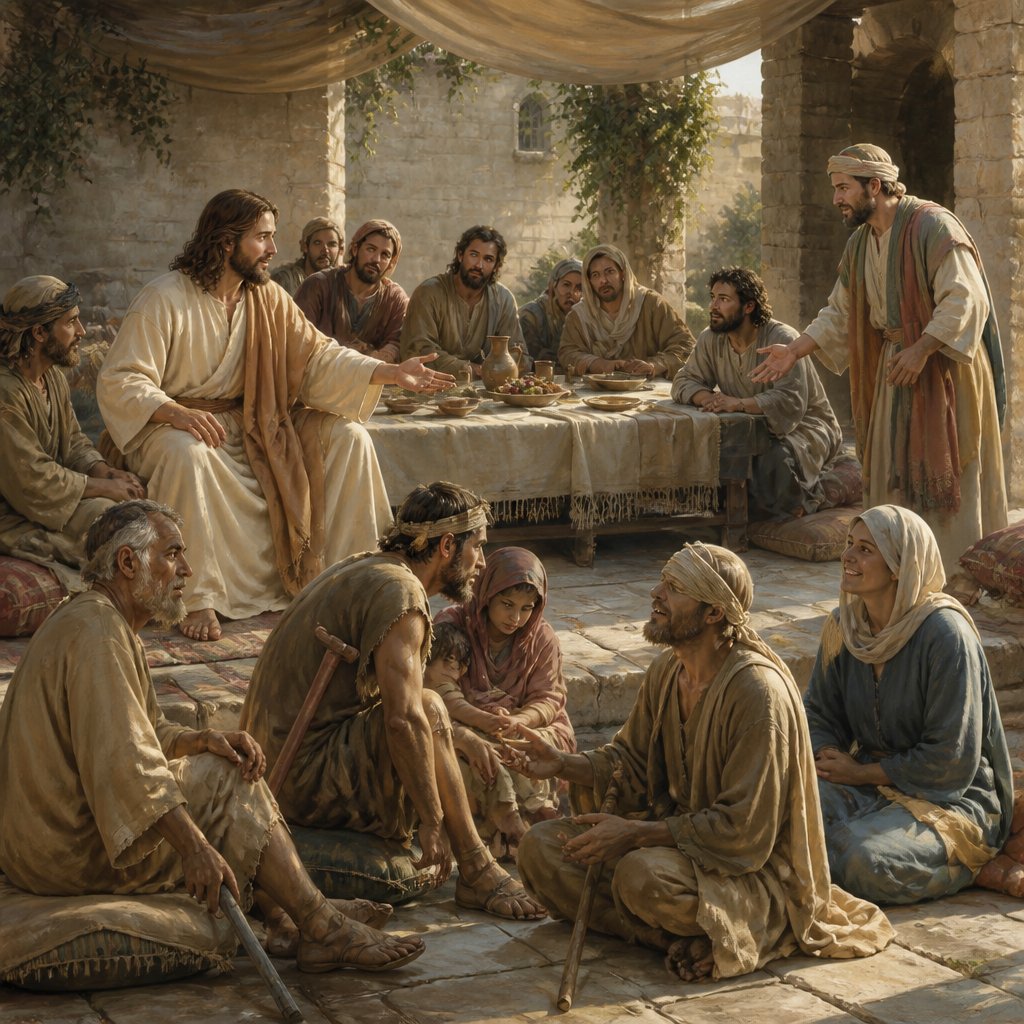
In the Gospel of Luke, the verse Luke 14:7-14 from the King James Version (KJV) reads:
"And he put forth a parable to those which were bidden, when he marked how they chose out the chief rooms; saying unto them, When thou art bidden of any man to a wedding, sit not down in the highest room; lest a more honourable man than thou be bidden of him; And he that bade thee and him come and say to thee, Give this man place; and thou begin with shame to take the lowest room. But when thou art bidden, go and sit down in the lowest room; that when he that bade thee cometh, he may say unto thee, Friend, go up higher: then shalt thou have worship in the presence of them that sit at meat with thee. For whosoever exalteth himself shall be abased; and he that humbleth himself shall be exalted. Then said he also to him that bade him, When thou makest a dinner or a supper, call not thy friends, nor thy brethren, neither thy kinsmen, nor thy rich neighbors; lest they also bid thee again, and a recompense be made thee. But when thou makest a feast, call the poor, the maimed, the lame, the blind: And thou shalt be blessed; for they cannot recompense thee: for thou shalt be recompensed at the resurrection of the just."
This passage holds significant meaning and wisdom, as it encompasses themes of humility, hospitality, and righteousness. Jesus, in this passage, offers a parable addressing the behavior of those who were invited to a wedding feast, as well as the behavior of the host.
The parable begins with Jesus observing how invited guests choose the best places of honor at the table, highlighting the prevalent desire for prestige and recognition. Instead, Jesus advises to take a humble position to avoid potential embarrassment when the host asks someone of greater honor to take the seat you have assumed. This reminds the listeners to set aside their pride and to prioritize the needs and honor of others above their own.
By suggesting to take the lowest place at the table, Jesus emphasizes the virtue of humility and selflessness. This teaching reflects the broader theme in the New Testament of prioritizing others over oneself, as seen in Philippians 2:3-4: "Do nothing from selfish ambition or conceit, but in humility count others more significant than yourselves. Let each of you look not only to his own interests, but also to the interests of others."
Furthermore, Jesus teaches that those who exalt themselves will be humbled, while those who humble themselves will be exalted. This principle is echoed throughout the Bible and serves as a reminder of the divine principle of justice and righteousness. Proverbs 11:2 states, "When pride comes, then comes disgrace, but with the humble is wisdom."
In the latter part of the passage, Jesus addresses the behavior of the host, advising against inviting friends, family, and rich neighbors who can repay the favor. Instead, the host is encouraged to invite the poor, the maimed, the lame, and the blind – those who cannot repay the kindness. This reflects the overarching theme of generosity, compassion, and caring for the marginalized in society.
The passage suggests that true hospitality lies in reaching out to those in need, rather than seeking to gain favor and reciprocation from those who are in a position to repay hospitality. This idea aligns with the value of selfless giving found in other parts of the New Testament, as seen in 2 Corinthians 9:7: "Each of you should give what you have decided in your heart to give, not reluctantly or under compulsion, for God loves a cheerful giver."
Moreover, the passage carries the symbolic meaning of the heavenly banquet where the poor, the maimed, the lame, and the blind are representative of those who are spiritually impoverished, broken, and marginalized. Jesus assures that those who show hospitality to the less fortunate will be blessed and rewarded in the kingdom of heaven.
In conclusion, Luke 14:7-14 provides valuable lessons on humility, hospitality, and righteousness. It serves as a reminder to prioritize the honor and well-being of others, to practice humility, and to show compassion and generosity to those in need. The passage encapsulates the essence of Jesus' teachings on love, righteousness, and the kingdom of God, and it serves as a guiding principle for Christian living.
Have questions about Luke 14:7-14?
Dive deeper into this scripture with Bible Chat — an AI-powered tool for exploring God's Word through conversation. Ask questions, get context, and grow in your understanding of the Bible.
Get Our Apps


Luke 14:7-14 Artwork
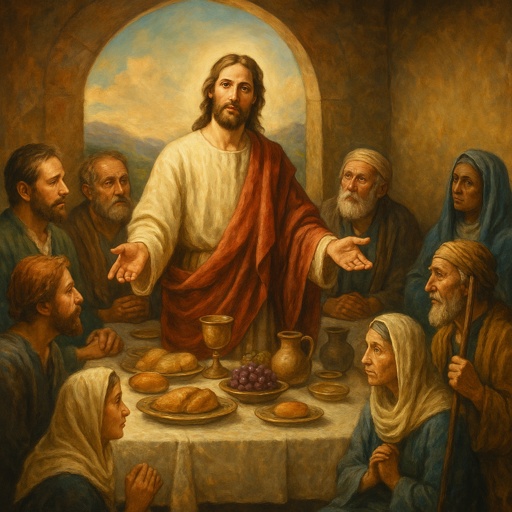
"And he put forth a parable to those which were bidden, when he marked how they chose out the chief rooms; saying unto them, When thou art bidden of any man to a wedding, sit not down in the highest room; lest a more honourable man than thou be bidden of him; And he that bade thee and him come and say to thee, Give this man place; and thou begin with shame to take the lowest room. But when thou art bidden, go and sit down in the lowest room; that when he that bade thee cometh, he may say unto thee, Friend, go up higher: then shalt thou have worship in the presence of them that sit at meat with thee. For whosoever exalteth himself shall be abased; and he that humbleth himself shall be exalted. Then said he also to him that bade him, When thou makest a feast, call the poor, the maimed, the lame, the blind: And thou shalt be blessed; for they cannot recompense thee: for thou shalt be recompensed at the resurrection of the just." - Luke 14:7-14

Luke 14:7-14 - "And he put forth a parable to those which were bidden, when he marked how they chose out the chief rooms; saying unto them, When thou art bidden of any man to a wedding, sit not down in the highest room; lest a more honourable man than thou be bidden of him; And he that bade thee and him come and say to thee, Give this man place; and thou begin with shame to take the lowest room. But when thou art bidden, go and sit down in the lowest room; that when he that bade thee cometh, he may say unto thee, Friend, go up higher: then shalt thou have worship in the presence of them that sit at meat with thee. For whosoever exalteth himself shall be abased; and he that humbleth himself shall be exalted. Then said he also to him that bade him, When thou makest a feast, call the poor, the maimed, the lame, the blind: And thou shalt be blessed; for they cannot recompense thee: for thou shalt be recompensed at the resurrection of the just."
"And he put forth a parable to those which were bidden, when he marked how they chose out the chief rooms; saying unto them, When thou art bidden of any man to a wedding, sit not down in the highest room; lest a more honourable man than thou be bidden of him; And he that bade thee and him come and say to thee, Give this man place; and thou begin with shame to take the lowest room. But when thou art bidden, go and sit down in the lowest room; that when he that bade thee cometh, he may say unto thee, Friend, go up higher: then shalt thou have worship in the presence of them that sit at meat with thee. For whosoever exalteth himself shall be abased; and he that humbleth himself shall be exalted. Then said he also to him that bade him, When thou makest a feast, call the poor, the maimed, the lame, the blind: And thou shalt be blessed; for they cannot recompense thee: for thou shalt be recompensed at the resurrection of the just." - Luke 14:7-14

Luke 7:14 - "And he came and touched the bier: and they that bare him stood still. And he said, Young man, I say unto thee, Arise."

Luke 14:7 - "¶ And he put forth a parable to those which were bidden, when he marked how they chose out the chief rooms; saying unto them,"

Luke 14:14 - "And thou shalt be blessed; for they cannot recompense thee: for thou shalt be recompensed at the resurrection of the just."

Luke 11:14-15

Luke 18:9-14

Luke 11:1-14

Luke 14:25 - 33

Luke 11:1-14

Luke 2:13-14

Luke 18: 9-14

Luke 2:13-14

Matthew 7:13-14

Matthew 7:13-14

Matthew 7:13-14

Matthew 7:13-14

Luke 14:6 - "And they could not answer him again to these things."

Matthew 7:13-14

Matthew 7:13-14

Matthew 7:13-14

Matthew 7:13-14

Matthew 7:13-14

Matthew 7:13-14

Matthew 7:13-14

Colossians 4:14 - "Luke, the beloved physician, and Demas, greet you."

Luke 14:30 - "Saying, This man began to build, and was not able to finish."

Acts 14:7 - "And there they preached the gospel."

Luke 24:14 - "And they talked together of all these things which had happened."