What does Luke 14:2 mean?
"And, behold, there was a certain man before him which had the dropsy." - Luke 14:2
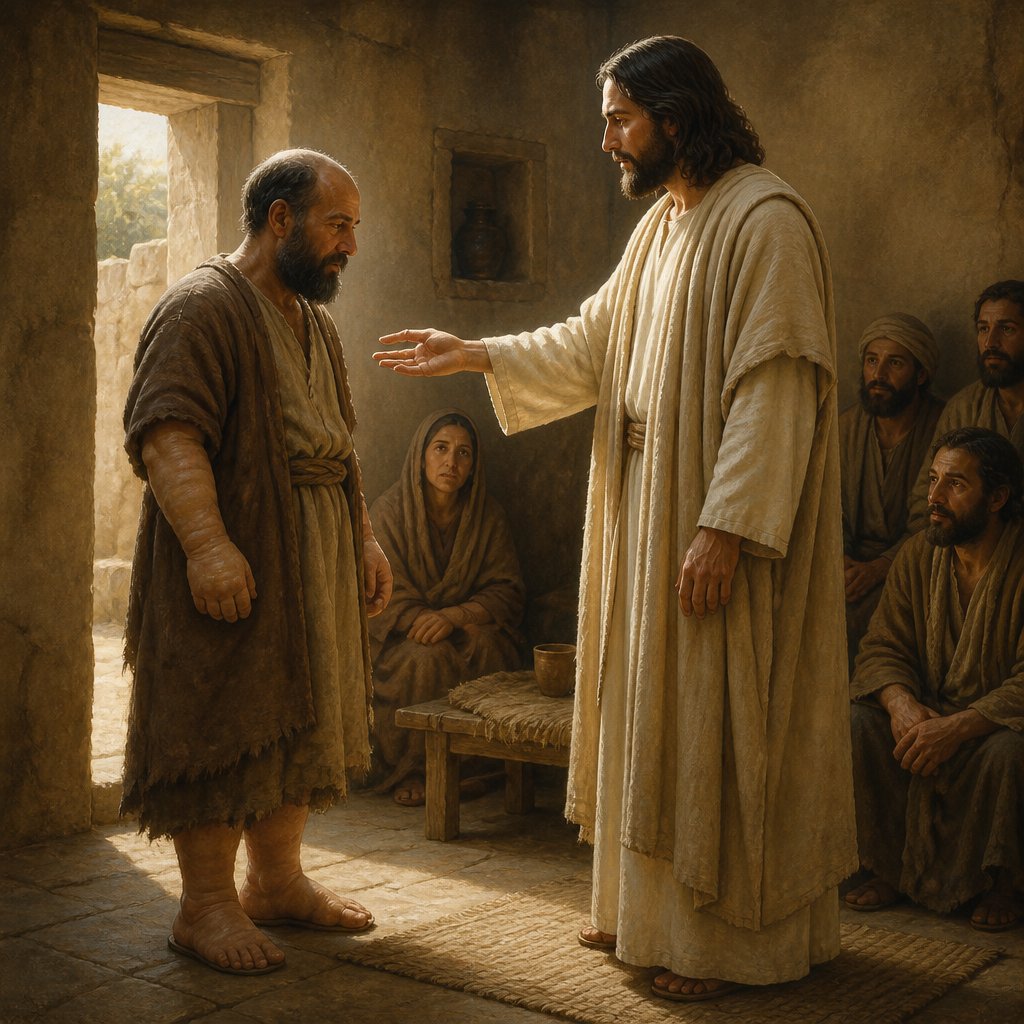
The verse Luke 14:2 from the King James Version of the Bible reads, "And, behold, there was a certain man before him which had the dropsy." At first glance, this verse may seem simple and straightforward, but upon closer examination, there are many layers of meaning and symbolism that can be unpacked.
To understand the context of this verse, it is important to look at the larger passage in which it appears. In Luke 14, Jesus is invited to eat at the house of a prominent Pharisee on the Sabbath. The Pharisees were known for closely observing the religious laws and traditions, and this gathering would have been a significant event. As Jesus enters the house, he is immediately confronted by a man suffering from dropsy, a condition characterized by abnormal swelling in the body due to an accumulation of fluids. This man, likely an outcast or marginalized member of society due to his condition, is placed before Jesus as if he were a spectacle or a test for Jesus to demonstrate his compassion and power.
The dropsy can be seen as a symbol of the spiritual condition of the man, and by extension, humanity as a whole. The swelling and distortion caused by dropsy can be likened to the effects of sin and the brokenness of human nature. In this sense, the man's physical ailment serves as a metaphor for the spiritual sickness that afflicts all people. By placing the man with dropsy before Jesus, the Pharisees may have been intending to challenge Jesus and test his authority as a healer and teacher.
Furthermore, the presence of the man with dropsy in this setting highlights the contrast between the Pharisees' self-righteousness and Jesus' compassion. The Pharisees, who were quick to judge and exclude those deemed unworthy or unclean, are confronted with a man in need of healing and mercy. Jesus, in contrast, responds to the man with compassion and addresses his physical ailment. This interaction serves as a powerful illustration of Jesus' teachings about humility, mercy, and the true nature of righteousness.
The placement of this story within the larger narrative of Jesus' ministry also speaks to the theme of social and moral inversion. Throughout the book of Luke, Jesus consistently challenges societal norms and expectations, turning them upside down in order to reveal deeper spiritual truths. The presence of the man with dropsy at the Pharisee's table is a striking example of this theme, as it disrupts the usual power dynamics and social hierarchies.
Ultimately, the story of the man with dropsy in Luke 14:2 serves as a powerful reminder of Jesus' compassion and healing power, as well as a challenge to the self-righteousness and exclusionary attitudes of the religious leaders of his time. It also speaks to the universal human need for healing and redemption, pointing to Jesus as the source of true wholeness and restoration. As readers of this passage, we are invited to examine our own attitudes towards those who are marginalized or in need, and to embody the same compassion and mercy that Jesus demonstrated.
Have questions about Luke 14:2?
Dive deeper into this scripture with Bible Chat — an AI-powered tool for exploring God's Word through conversation. Ask questions, get context, and grow in your understanding of the Bible.
Get Our Apps


Luke 14:2 Artwork

Luke 14:2 - "And, behold, there was a certain man before him which had the dropsy."

"And, behold, there was a certain man before him which had the dropsy." - Luke 14:2

Luke 2:13-14

Luke 2:13-14

Luke 2:14 - "Glory to God in the highest, and on earth peace, good will toward men."

Luke 2:13-14 fine pointillism sytle

Luke 2:14 - "Glory to God in the highest, and on earth peace, good will toward men."

Luke 2:13-14 - "And suddenly there was with the angel a multitude of the heavenly host praising God, and saying, Glory to God in the highest, and on earth peace, good will toward men."

Luke 2:14 - "Glory to God in the highest, and on earth peace, good will toward men."

"Glory to God in the highest, and on earth peace, good will toward men." - Luke 2:14

Luke 14:14 - "And thou shalt be blessed; for they cannot recompense thee: for thou shalt be recompensed at the resurrection of the just."

Luke 11:14-15

Luke 18:9-14

Luke 11:1-14

Luke 14:25 - 33

Luke 11:1-14

Luke 18: 9-14

Luke 14:6 - "And they could not answer him again to these things."

Colossians 4:14 - "Luke, the beloved physician, and Demas, greet you."

Luke 14:30 - "Saying, This man began to build, and was not able to finish."

Luke 24:14 - "And they talked together of all these things which had happened."

Luke 10:14 - "But it shall be more tolerable for Tyre and Sidon at the judgment, than for you."

Luke 14:22 - "And the servant said, Lord, it is done as thou hast commanded, and yet there is room."

Luke 2:2

Luke 14:13 - "But when thou makest a feast, call the poor, the maimed, the lame, the blind:"

Luke 14:25 - "¶ And there went great multitudes with him: and he turned, and said unto them,"

Luke 22:14 - "And when the hour was come, he sat down, and the twelve apostles with him."
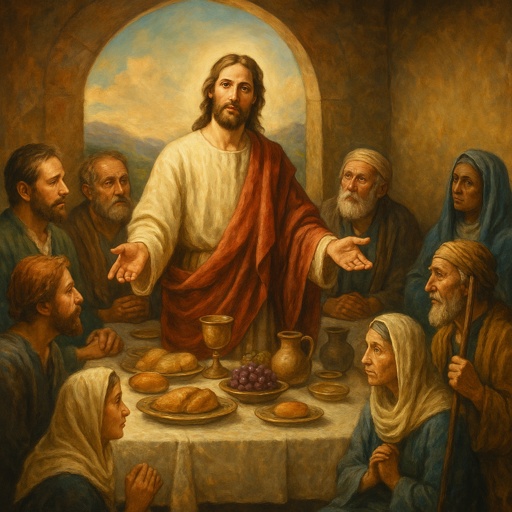
"And he put forth a parable to those which were bidden, when he marked how they chose out the chief rooms; saying unto them, When thou art bidden of any man to a wedding, sit not down in the highest room; lest a more honourable man than thou be bidden of him; And he that bade thee and him come and say to thee, Give this man place; and thou begin with shame to take the lowest room. But when thou art bidden, go and sit down in the lowest room; that when he that bade thee cometh, he may say unto thee, Friend, go up higher: then shalt thou have worship in the presence of them that sit at meat with thee. For whosoever exalteth himself shall be abased; and he that humbleth himself shall be exalted. Then said he also to him that bade him, When thou makest a feast, call the poor, the maimed, the lame, the blind: And thou shalt be blessed; for they cannot recompense thee: for thou shalt be recompensed at the resurrection of the just." - Luke 14:7-14

Luke 14:4 - "And they held their peace. And he took him, and healed him, and let him go;"

Luke 21:14 - "Settle it therefore in your hearts, not to meditate before what ye shall answer:"