What does Luke 12:59 mean?
"I tell thee, thou shalt not depart thence, till thou hast paid the very last mite." - Luke 12:59
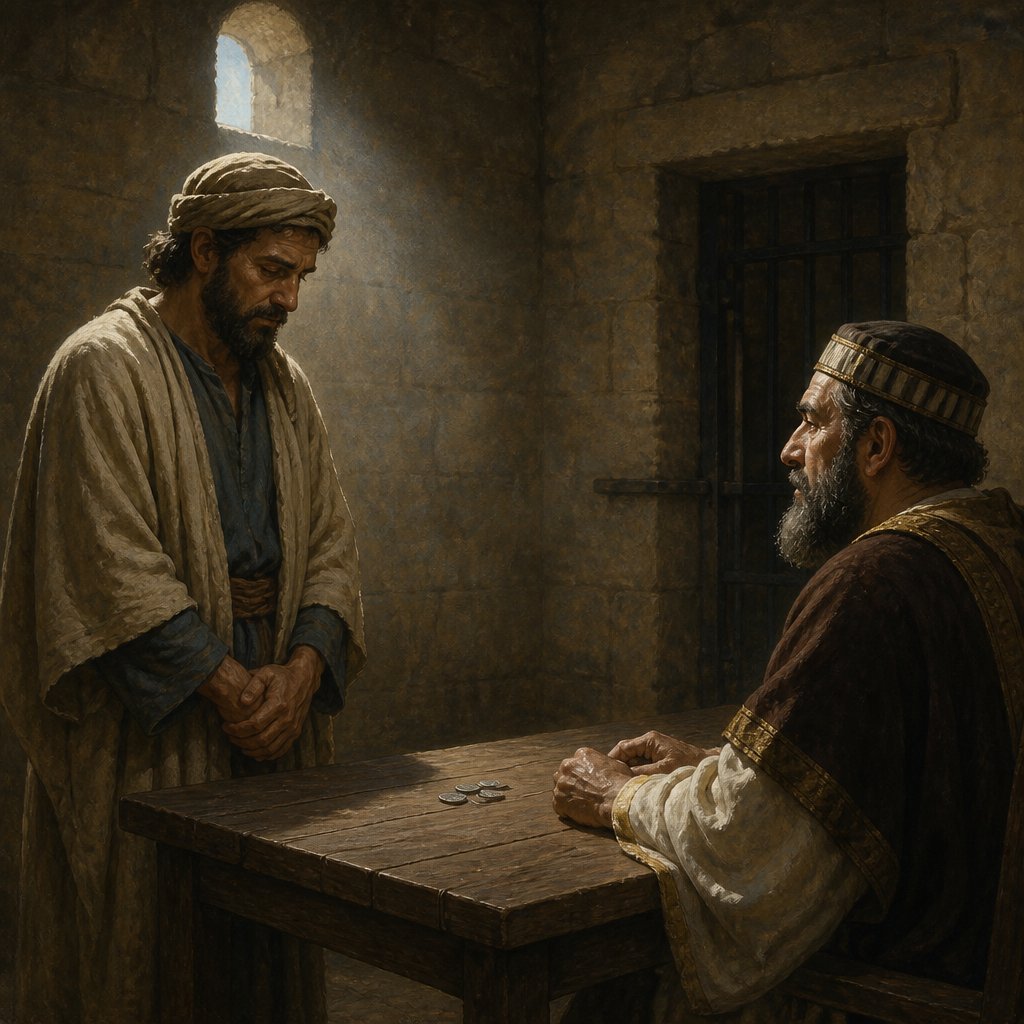
Luke 12:59 in the King James Version (KJV) of the Bible reads, "I tell thee, thou shalt not depart thence, till thou hast paid the very last mite." This verse is part of a larger passage in which Jesus is teaching his disciples and followers about the consequences of not repenting and being reconciled with God. In this specific verse, Jesus is using a legal analogy to emphasize the importance of settling matters with God before it is too late.
The context of this verse is important in understanding its meaning. In the preceding verses, Jesus is speaking about the importance of being prepared for the coming judgment. He uses the illustration of a legal dispute to emphasize the urgency of making things right with God. In Jewish culture, the concept of settling legal matters was taken very seriously, and Jesus uses this familiar example to reinforce the seriousness of the spiritual consequences of failing to reconcile with God.
One of the key themes in this verse is the idea of accountability and responsibility. Jesus is highlighting the fact that each individual is responsible for their own spiritual condition and must take action to make things right with God. The phrase "till thou hast paid the very last mite" underscores the idea that there is a cost to be paid for sin, and it must be fully settled before one can leave the judgment of God.
Another theme present in this verse is the idea of justice and judgment. Jesus is reminding his audience that God is a just and righteous judge who will hold each person accountable for their actions. The language of "paying the very last mite" conveys the idea that every action, word, and thought will be weighed and accounted for in the final judgment. This serves as a sobering reminder to take spiritual matters seriously and not to delay in seeking reconciliation with God.
The symbolism in this verse is rich and meaningful. The use of the legal analogy speaks to the cultural context of Jesus' audience and helps to drive home the seriousness of the message. The concept of the "very last mite" alludes to the smallest and most insignificant unit of currency, emphasizing the idea that every aspect of our lives will be taken into account in the final judgment.
Overall, Luke 12:59 in the KJV serves as a powerful reminder of the importance of reconciliation with God and the urgent need to address spiritual matters before it is too late. It is a call to personal responsibility and accountability, and a sobering reflection on the justice and judgment of God. This verse challenges readers to consider their own spiritual condition and to take steps to make amends with God before it is too late. It is a powerful and thought-provoking message that resonates across cultures and time periods, continuing to compel individuals to take their spiritual lives seriously.
Have questions about Luke 12:59?
Dive deeper into this scripture with Bible Chat — an AI-powered tool for exploring God's Word through conversation. Ask questions, get context, and grow in your understanding of the Bible.
Get Our Apps


Luke 12:59 Artwork

Luke 12:59 - "I tell thee, thou shalt not depart thence, till thou hast paid the very last mite."
"I tell thee, thou shalt not depart thence, till thou hast paid the very last mite." - Luke 12:59

Luke 1:59 - "And it came to pass, that on the eighth day they came to circumcise the child; and they called him Zacharias, after the name of his father."

Luke 22:59 - "And about the space of one hour after another confidently affirmed, saying, Of a truth this fellow also was with him: for he is a Galilaean."

Luke 9:59 - "And he said unto another, Follow me. But he said, Lord, suffer me first to go and bury my father."

Psalms 59:12 - "For the sin of their mouth and the words of their lips let them even be taken in their pride: and for cursing and lying which they speak."

Isaiah 59:12 - "For our transgressions are multiplied before thee, and our sins testify against us: for our transgressions are with us; and as for our iniquities, we know them;"
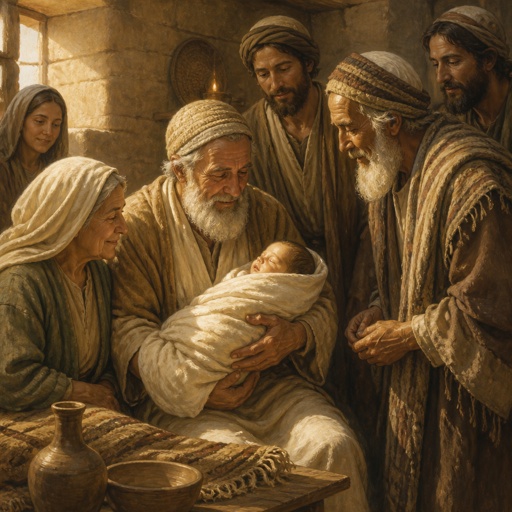
"And it came to pass, that on the eighth day they came to circumcise the child; and they called him Zacharias, after the name of his father." - Luke 1:59
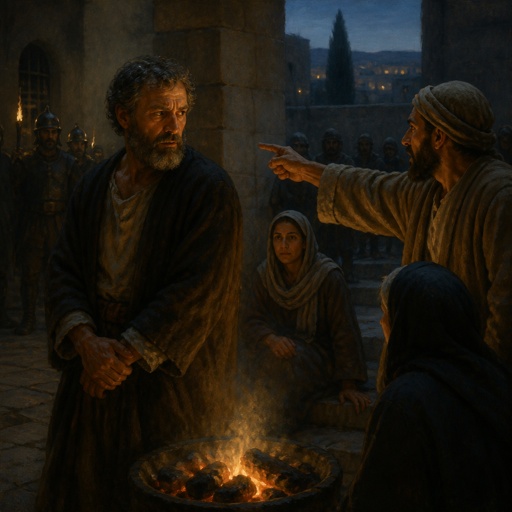
"And about the space of one hour after another confidently affirmed, saying, Of a truth this fellow also was with him: for he is a Galilaean." - Luke 22:59
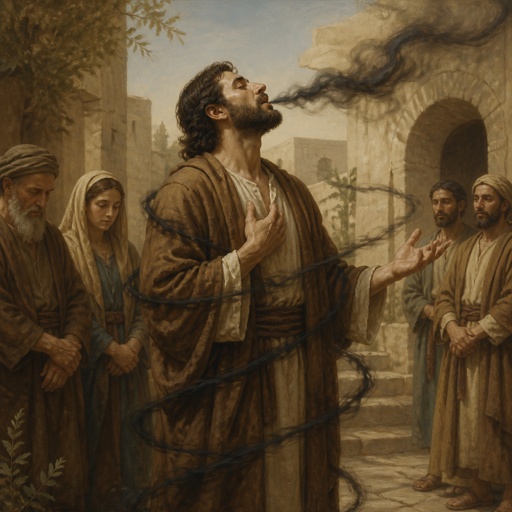
"For the sin of their mouth and the words of their lips let them even be taken in their pride: and for cursing and lying which they speak." - Psalms 59:12
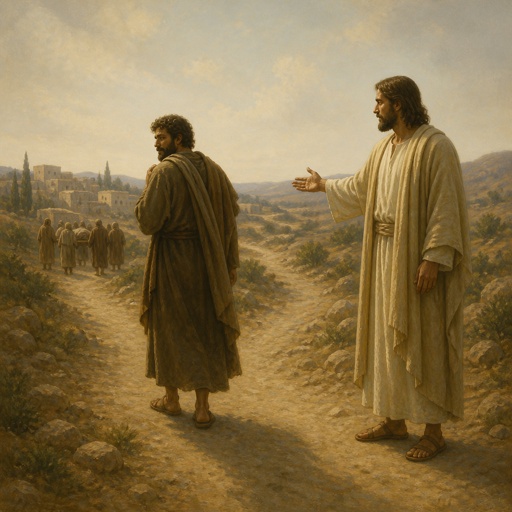
"And he said unto another, Follow me. But he said, Lord, suffer me first to go and bury my father." - Luke 9:59

Luke 12:25
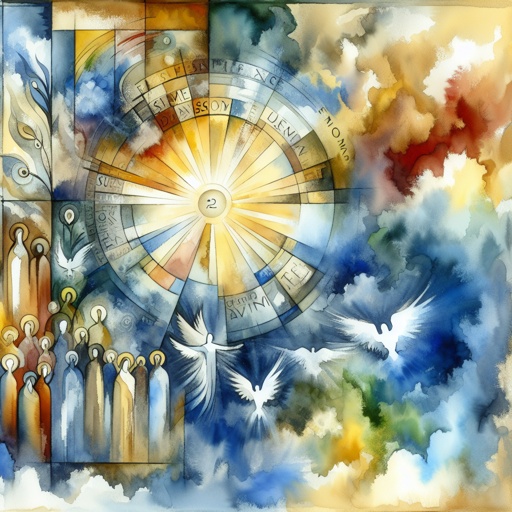
Luke 12:25

Luke 12: 49

Luke 12:34

Luke 12:10

Luke 12:50

Luke 12:12 - "For the Holy Ghost shall teach you in the same hour what ye ought to say."

Luke 1:11-12

Luke 12:25-26

Luke 12:25-26

Luke 12:25-26

Luke 12:25-26

Luke 12:25-26
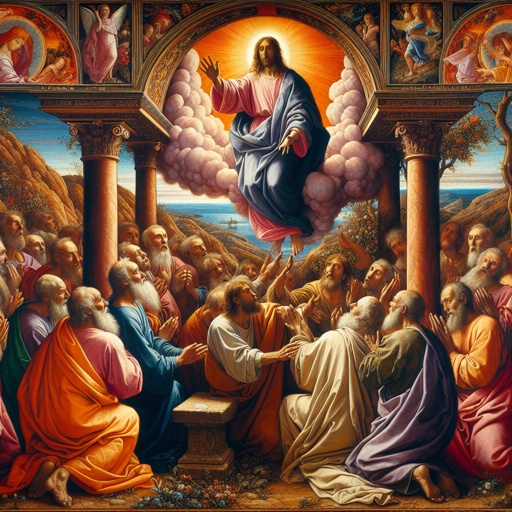
Luke 12:25-26

Luke 1:11-12

Luke 12:25-26

Luke 1:11-12

Luke 1:11-12

"For our transgressions are multiplied before thee, and our sins testify against us: for our transgressions are with us; and as for our iniquities, we know them;" - Isaiah 59:12