What does Luke 11:9 mean?
"And I say unto you, Ask, and it shall be given you; seek, and ye shall find; knock, and it shall be opened unto you." - Luke 11:9

Luke 11:9 in the King James Version reads, “And I say unto you, Ask, and it shall be given you; seek, and ye shall find; knock, and it shall be opened unto you.” In its plain sense, the verse is a promise from the mouth of the Lord Jesus Christ that God is not distant or unwilling, but ready to answer those who come to Him. Yet the verse is not a blank check for any desire; it is part of a larger instruction on prayer, set in a context that defines what kind of asking Jesus is commending, what kind of seeking is in view, and what sort of door is being opened.
The immediate setting is crucial. Luke places these words directly after the disciples’ request, “Lord, teach us to pray, as John also taught his disciples” (Luke 11:1). Jesus then gives what is often called the Lord’s Prayer, beginning, “Our Father which art in heaven, Hallowed be thy name. Thy kingdom come. Thy will be done, as in heaven, so in earth” (Luke 11:2). That opening shapes everything that follows: prayer is first about God as Father, God’s name being hallowed, God’s kingdom coming, and God’s will being done. Only then does it move to daily bread, forgiveness, and deliverance from temptation (Luke 11:3–4). Luke 11:9 sits downstream of that pattern. It assumes prayer that is oriented toward God’s glory and God’s reign, not merely toward self-indulgence. When Jesus says, “Ask,” He is not severing request from reverence; He is inviting persistent, childlike dependence on a Father whose name is holy and whose purposes are good.
Jesus reinforces this invitation with a brief parable of persistence: a man goes to his friend at midnight asking for bread to feed a traveler, and though the friend does not want to rise, he will do so “because of his importunity” (Luke 11:8). Luke 11:9 then functions as the moral and encouragement of that parable. The point is not that God is reluctant like the sleepy neighbor, but the opposite: if even a reluctant friend can be moved by continual asking, how much more should the believer expect an answer from God, who is neither irritated nor begrudging in His care. The verse therefore carries a theme of perseverance. “Ask… seek… knock” are not presented as momentary actions but as a continuing posture, a refusal to abandon prayer simply because the hour is late or the need feels urgent.
The threefold rhythm—ask, seek, knock—also suggests depth and progression. To ask is to speak one’s need plainly to God, acknowledging dependence. To seek is to go beyond a single request into an earnest pursuit, implying that what is sought matters enough to be pursued and that God Himself is the ultimate object of that pursuit. To knock introduces the image of a closed door, not as a final denial but as an invitation to approach, to wait, and to continue until access is granted. The symbolism of the door is especially important. A door can represent entry into fellowship, provision, safety, and welcome. In Luke 11:9, the door is not depicted as locked forever but as something that “shall be opened.” The believer is pictured not as an intruder but as one who is allowed to come and is received.
The verse also emphasizes the personal address of Christ: “And I say unto you.” Jesus is not offering a vague proverb; He is authoritatively speaking as the one who reveals the Father and teaches the life of the kingdom. The certainty of the promise is expressed in the repeated “shall.” “It shall be given… ye shall find… it shall be opened.” The language is meant to steady faith. Prayer is not an empty ritual; it operates within a relationship where God hears. Luke immediately amplifies this certainty with a father-and-child comparison: “If a son shall ask bread of any of you that is a father, will he give him a stone? or if he ask a fish, will he for a fish give him a serpent?” (Luke 11:11). The point is that even flawed human fathers recognize the difference between nourishment and harm. God’s answers, then, are not merely answers; they are good answers—wise, fatherly answers.
This is where the significance of Luke’s particular continuation matters. The passage culminates with, “If ye then, being evil, know how to give good gifts unto your children: how much more shall your heavenly Father give the Holy Spirit to them that ask him?” (Luke 11:13). That statement governs the meaning of “Ask… seek… knock.” The greatest gift held out in this section is not merely circumstantial relief but God’s own presence and empowering through “the Holy Spirit.” Luke 11:9 is therefore not only about receiving things from God; it is about receiving God’s best gift and being drawn deeper into the life of His kingdom. Many particular requests may be included—daily bread, forgiveness, deliverance—but the crowning aim is communion with the Father and the gift that fits the kingdom prayer Jesus has just taught.
The themes running through Luke 11:9 include dependence, persistence, and confidence grounded in God’s fatherhood. Dependence is seen in the simple act of asking; persistence is seen in seeking and knocking; confidence is seen in the assurance that giving, finding, and opening will follow. It also carries a theme of alignment with God’s will. Because the context begins with “Thy kingdom come. Thy will be done,” the promise of answered prayer is framed by submission. The believer does not approach God as a customer demanding service, but as a child trusting a Father, and as a subject seeking the King’s reign.
There is also an implicit invitation to intimacy. Asking is relational speech; seeking implies nearness and desire; knocking implies there is a household to which one may be admitted. Jesus is teaching His disciples that prayer is entrance into a living relationship, not a technique for controlling outcomes. In that light, the verse becomes both exhortation and comfort: exhortation, because it calls the believer to actually pray—to ask instead of only wishing, to seek instead of drifting, to knock instead of retreating; comfort, because it declares that God is not unreachable, and that the one who perseveres in prayer does not pray into silence.
In sum, Luke 11:9, in the KJV, is Christ’s strong encouragement to a praying life marked by holy boldness and patient endurance. It rests on the character of God as “Father,” interprets persistence through the parable of “importunity,” and reaches its highest meaning in the promise that the heavenly Father gives “the Holy Spirit” to those who ask. It teaches that the kingdom life Jesus describes is sustained by continual coming to God, confident that He hears, wise in what He gives, and ready to open what seems closed in His time and for His glory.
Have questions about Luke 11:9?
Dive deeper into this scripture with Bible Chat — an AI-powered tool for exploring God's Word through conversation. Ask questions, get context, and grow in your understanding of the Bible.
Get Our Apps


Luke 11:9 Artwork
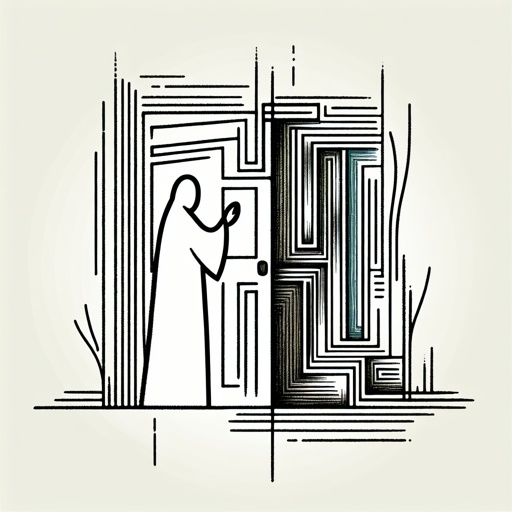
Luke 11:9

Luke 11:9

Luke 11:9-10

Black and white illustration Luke 11:9

Black and white illustration Luke 11:9

Black and white illustration Luke 11:9

Luke 11:9 - "And I say unto you, Ask, and it shall be given you; seek, and ye shall find; knock, and it shall be opened unto you."

"And I say unto you, Ask, and it shall be given you; seek, and ye shall find; knock, and it shall be opened unto you." - Luke 11:9

Luke 11:9-10 - "And I say unto you, Ask, and it shall be given you; seek, and ye shall find; knock, and it shall be opened unto you. For every one that asketh receiveth; and he that seeketh findeth; and to him that knocketh it shall be opened."

"And I say unto you, Ask, and it shall be given you; seek, and ye shall find; knock, and it shall be opened unto you." - Luke 11:9

"And I say unto you, Ask, and it shall be given you; seek, and ye shall find; knock, and it shall be opened unto you." - Luke 11:9

"And I say unto you, Ask, and it shall be given you; seek, and ye shall find; knock, and it shall be opened unto you. For every one that asketh receiveth; and he that seeketh findeth; and to him that knocketh it shall be opened." - Luke 11:9-10

luke 11:23

Luke 9:11 - "And the people, when they knew it, followed him: and he received them, and spake unto them of the kingdom of God, and healed them that had need of healing."

Luke 11:14-15

luke 11:23

luke 11:23

luke 11:23

Luke 8:11

luke 9:30

luke 9:35

luke 9:35

Luke 9:51

Luke 1:11-12

Luke 11:1-14

Luke 11:1-14

Luke 5:1-11

Luke 15:11-32

Luke 1:11-12

Luke 5:1-11