What does Leviticus 8:35 mean?
"Therefore shall ye abide at the door of the tabernacle of the congregation day and night seven days, and keep the charge of the LORD, that ye die not: for so I am commanded." - Leviticus 8:35
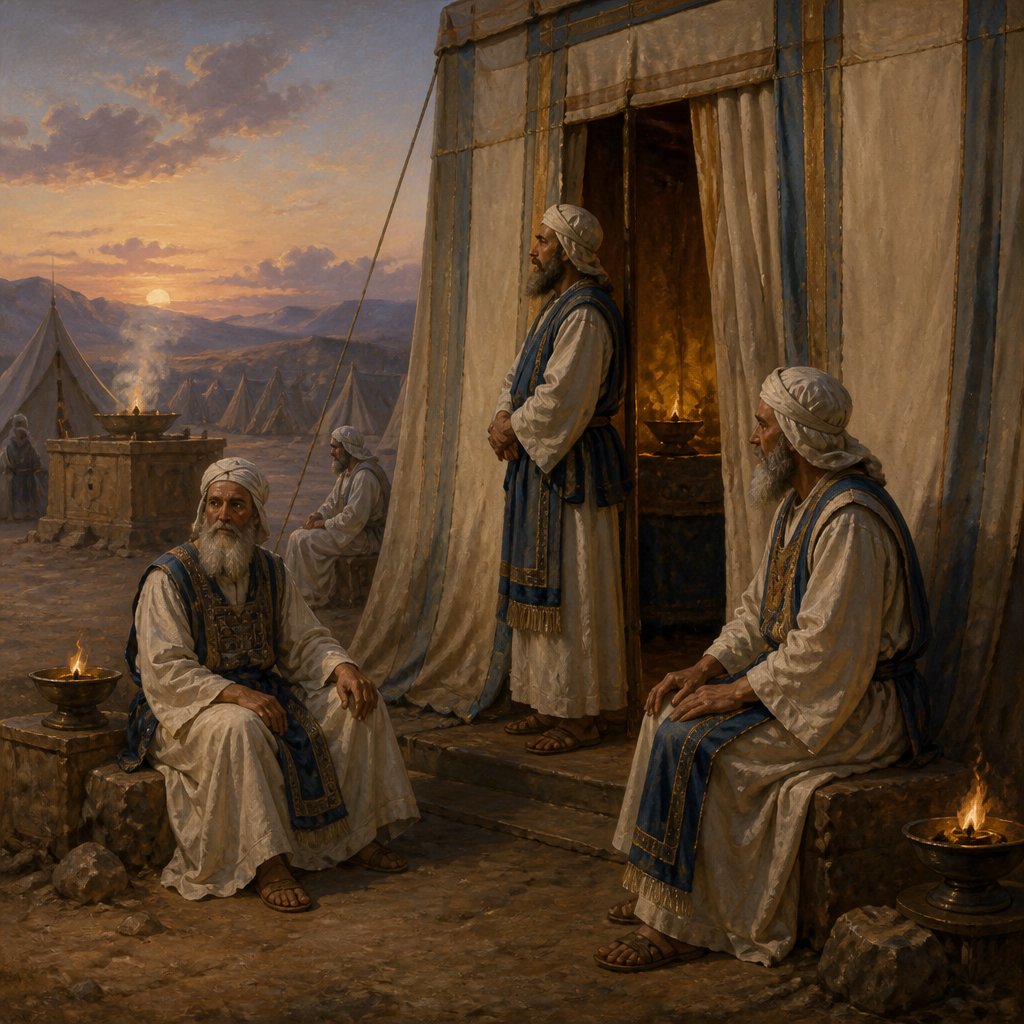
The verse Leviticus 8:35 from the King James Version of the Bible reads, "Therefore shall ye abide at the door of the tabernacle of the congregation day and night seven days, and keep the charge of the Lord, that ye die not: for so I am commanded." This verse is part of the instructions given by God to Moses for the consecration of Aaron and his sons as priests.
Leviticus is the third book of the Bible and is often referred to as the "Book of the Priests." It contains detailed laws and regulations for the Israelites, particularly concerning their worship and religious practices. This verse is found in the context of the consecration of Aaron and his sons as priests, a significant moment in the history of the Israelite people.
The verse begins with the instruction for Aaron and his sons to "abide at the door of the tabernacle of the congregation day and night seven days." This period of time is significant, as it represents a period of complete dedication and consecration. The number seven is often associated with completeness and perfection in the Bible, and the idea of staying at the door of the tabernacle day and night emphasizes the seriousness and importance of the consecration process.
The verse continues with the admonition to "keep the charge of the Lord, that ye die not." This underscores the importance of obeying God's commandments and fulfilling the duties of the priesthood with reverence and diligence. In the Old Testament, the consequences of disobeying God's commands were often severe, and the language used here serves as a reminder of the seriousness of the priestly responsibilities.
The verse concludes with the explanation, "for so I am commanded." This phrase emphasizes that these instructions are not of human origin, but rather come directly from God. The priests are reminded that they are carrying out the will of God and must do so with faithfulness and obedience.
One of the key themes of this verse is the concept of consecration. Consecration is the act of dedicating oneself to a sacred purpose or service, often through a process of purification and preparation. In the context of the priesthood, consecration was a necessary step in order to fulfill the duties and responsibilities of the role. The period of seven days signifies a complete dedication to the process, and the emphasis on obeying God's commands underscores the importance of approaching the role of priest with reverence and humility.
Another important theme in this verse is the idea of obedience to God's commands. The priests are reminded that their duties are not to be carried out according to their own preferences or desires, but according to the specific instructions given to them by God. This reflects a broader theme found throughout the Bible, emphasizing the importance of submitting to God's will and following His commandments.
In terms of symbolism, the "door of the tabernacle of the congregation" represents the entrance to the sacred space where God's presence was believed to dwell among the Israelites. By instructing Aaron and his sons to abide at the door day and night, the verse emphasizes the significance of their role as mediators between the people and God. The door serves as a symbolic boundary between the sacred and the profane, and by remaining there, the priests are symbolically placing themselves in a position of access to God's presence.
In conclusion, Leviticus 8:35 provides important insight into the process of consecration and the responsibilities of the priesthood in the Old Testament. The verse emphasizes the themes of dedication, obedience, and the symbolic significance of the tabernacle door. It serves as a reminder of the importance of approaching the worship of God with reverence and humility, and of fulfilling one's duties with faithfulness and obedience to His commands.
Have questions about Leviticus 8:35?
Dive deeper into this scripture with Bible Chat — an AI-powered tool for exploring God's Word through conversation. Ask questions, get context, and grow in your understanding of the Bible.
Get Our Apps


Leviticus 8:35 Artwork

Leviticus 8:35 - "Therefore shall ye abide at the door of the tabernacle of the congregation day and night seven days, and keep the charge of the LORD, that ye die not: for so I am commanded."
"Therefore shall ye abide at the door of the tabernacle of the congregation day and night seven days, and keep the charge of the LORD, that ye die not: for so I am commanded." - Leviticus 8:35

Leviticus 13:35 - "But if the scall spread much in the skin after his cleansing;"

Leviticus 19:35 - "¶ Ye shall do no unrighteousness in judgment, in meteyard, in weight, or in measure."

Leviticus 23:35 - "On the first day shall be an holy convocation: ye shall do no servile work therein."

Mark 8:35

Mark 8:35

Mark 8:35

Mark 8:35

Romans 8:35

Leviticus 14:35 - "And he that owneth the house shall come and tell the priest, saying, It seemeth to me there is as it were a plague in the house:"

Leviticus 26:35 - "As long as it lieth desolate it shall rest; because it did not rest in your sabbaths, when ye dwelt upon it."

Mark 8:27 - 35

Mark 8:27 - 35

Mark 8:27 - 35

Mark 8:27 - 35

Mark 8:27 - 35

"But if the scall spread much in the skin after his cleansing;" - Leviticus 13:35

Leviticus 16:8

Leviticus 8:30

Exodus 35:8 - "And oil for the light, and spices for anointing oil, and for the sweet incense,"

"¶ Ye shall do no unrighteousness in judgment, in meteyard, in weight, or in measure." - Leviticus 19:35

John 8:35 - "And the servant abideth not in the house for ever: but the Son abideth ever."

1 Chronicles 8:35 - "And the sons of Micah were, Pithon, and Melech, and Tarea, and Ahaz."
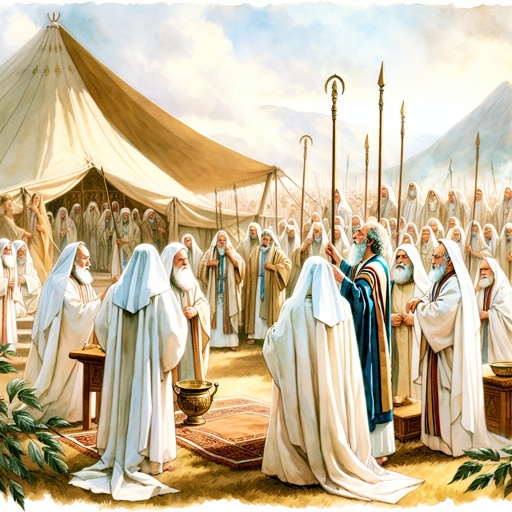
Leviticus 8:1-12

Leviticus 8:8 - "And he put the breastplate upon him: also he put in the breastplate the Urim and the Thummim."

Leviticus 25:35 - "¶ And if thy brother be waxen poor, and fallen in decay with thee; then thou shalt relieve him: yea, though he be a stranger, or a sojourner; that he may live with thee."

Proverbs 8:35 - "For whoso findeth me findeth life, and shall obtain favour of the LORD."

Leviticus 7:35 - "¶ This is the portion of the anointing of Aaron, and of the anointing of his sons, out of the offerings of the LORD made by fire, in the day when he presented them to minister unto the LORD in the priest's office;"

Leviticus 11:35 - "And every thing whereupon any part of their carcase falleth shall be unclean; whether it be oven, or ranges for pots, they shall be broken down: for they are unclean, and shall be unclean unto you."