What does Leviticus 8:30 mean?
"And Moses took of the anointing oil, and of the blood which was upon the altar, and sprinkled it upon Aaron, and upon his garments, and upon his sons, and upon his sons' garments with him; and sanctified Aaron, and his garments, and his sons, and his sons' garments with him." - Leviticus 8:30

Leviticus 8:30 (KJV) states, "And Moses took of the anointing oil, and of the blood which was upon the altar, and sprinkled it upon Aaron, and upon his garments, and upon his sons, and upon his sons' garments with him; and sanctified Aaron, and his garments, and his sons, and his sons' garments with him."
This verse comes from the Book of Leviticus in the Old Testament of the Bible. In this chapter, Moses is commanded by God to anoint Aaron and his sons as priests of the Israelite community. The anointing process involves several rituals, including the sacrifice of animals and the application of blood and anointing oil. This verse specifically describes how Moses took some of the anointing oil and the blood from the altar and used it to sanctify Aaron and his sons, as well as their garments.
The act of anointing with oil and blood is symbolic and carries deep spiritual significance within the context of Leviticus. It represents the consecration and purification of Aaron and his sons, setting them apart for their holy duties as priests in service to God. The anointing oil was a special mixture made according to God's instructions, containing spices and olive oil, and was used to signify the empowerment and enablement by the Holy Spirit for the priestly office.
The use of blood in the anointing process is also significant in the context of Leviticus, as it symbolizes the atonement for sins and the covering of impurities. The blood of the sacrifices was considered holy and had the power to cleanse and purify, making it an essential element in the consecration of the priests.
The act of sprinkling the anointing oil and blood on Aaron, his sons, and their garments serves as a visual and tactile representation of the setting apart and sanctification of the priests. It signifies their purification from sin and their readiness to serve in their sacred roles. This act also symbolizes the transmission of sanctity from the sacrifices and the altar to the priests and their clothing, demonstrating the interconnectedness of the sacred rituals and the individuals involved in them.
The themes present in Leviticus 8:30 revolve around holiness, consecration, and the mediation between God and humanity through the priesthood. The anointing of Aaron and his sons marks the establishment of a special and intimate relationship between the chosen priests and God, as they are entrusted with the responsibility of representing the people before the divine presence. The symbolism of the anointing oil and blood underscores the importance of purity and atonement in approaching God, highlighting the need for spiritual cleansing and dedication in the service of the Lord.
Furthermore, the context of this verse within the larger narrative of Leviticus emphasizes the meticulous observance of God's commandments and the reverence for His holiness. The detailed instructions for the anointing ritual reflect the divine authority and the sacredness of the priesthood, emphasizing the importance of following God's prescribed methods for approaching Him and fulfilling one's religious duties.
In a broader theological sense, Leviticus 8:30 foreshadows the ultimate atonement and consecration that is fulfilled in the person of Jesus Christ, who is described as the ultimate High Priest in the New Testament. The use of blood and oil in the consecration of Aaron and his sons points towards the sacrificial and atoning work of Jesus, who offers Himself as the perfect sacrifice for the forgiveness of sins and the empowerment of believers through the Holy Spirit.
In conclusion, Leviticus 8:30 offers a rich and complex tapestry of symbolism and theological significance. It provides insight into the ancient Israelite priesthood, the rituals of consecration, and the themes of holiness and atonement that are central to the Judeo-Christian tradition. It also points towards the fulfillment of these symbols in the person of Jesus Christ, who embodies the ultimate High Priest and the perfect sacrifice for the redemption and sanctification of humanity.
Have questions about Leviticus 8:30?
Dive deeper into this scripture with Bible Chat — an AI-powered tool for exploring God's Word through conversation. Ask questions, get context, and grow in your understanding of the Bible.
Get Our Apps


Leviticus 8:30 Artwork

Leviticus 8:30

Leviticus 8:30 - "And Moses took of the anointing oil, and of the blood which was upon the altar, and sprinkled it upon Aaron, and upon his garments, and upon his sons, and upon his sons' garments with him; and sanctified Aaron, and his garments, and his sons, and his sons' garments with him."

"And Moses took of the anointing oil, and of the blood which was upon the altar, and sprinkled it upon Aaron, and upon his garments, and upon his sons, and upon his sons' garments with him; and sanctified Aaron, and his garments, and his sons, and his sons' garments with him." - Leviticus 8:30

Leviticus 11:30 - "And the ferret, and the chameleon, and the lizard, and the snail, and the mole."

Leviticus 14:30 - "And he shall offer the one of the turtledoves, or of the young pigeons, such as he can get;"

Leviticus 19:30 - "¶ Ye shall keep my sabbaths, and reverence my sanctuary: I am the LORD."

Leviticus 16:8

Leviticus 27:30 - "And all the tithe of the land, whether of the seed of the land, or of the fruit of the tree, is the LORD'S: it is holy unto the LORD."

"And the ferret, and the chameleon, and the lizard, and the snail, and the mole." - Leviticus 11:30
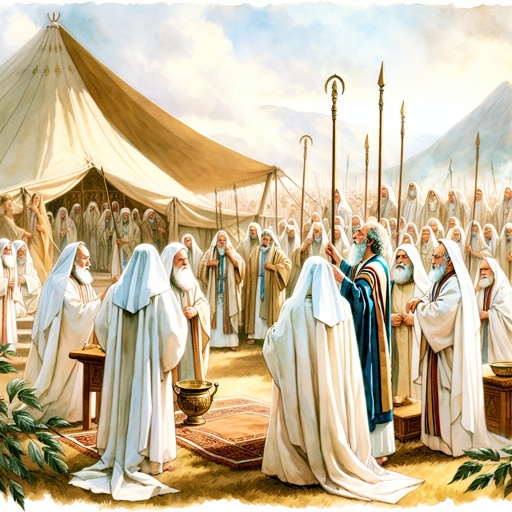
Leviticus 8:1-12

Leviticus 22:30 - "On the same day it shall be eaten up; ye shall leave none of it until the morrow: I am the LORD."

Leviticus 8:8 - "And he put the breastplate upon him: also he put in the breastplate the Urim and the Thummim."

Leviticus 23:30 - "And whatsoever soul it be that doeth any work in that same day, the same soul will I destroy from among his people."

Leviticus 6:8 - "¶ And the LORD spake unto Moses, saying,"
Leviticus 10:8 - "¶ And the LORD spake unto Aaron, saying,"

Leviticus 8:1 - "And the LORD spake unto Moses, saying,"

Leviticus 16:30 - "For on that day shall the priest make an atonement for you, to cleanse you, that ye may be clean from all your sins before the LORD."

Leviticus 6:30 - "And no sin offering, whereof any of the blood is brought into the tabernacle of the congregation to reconcile withal in the holy place, shall be eaten: it shall be burnt in the fire."

ACTS 8:30 Philip and the Ethiopian

John 8:30 - "As he spake these words, many believed on him."

Leviticus 8:32 - "And that which remaineth of the flesh and of the bread shall ye burn with fire."

Leviticus 15:30 - "And the priest shall offer the one for a sin offering, and the other for a burnt offering; and the priest shall make an atonement for her before the LORD for the issue of her uncleanness."

Mark 8:30 - "And he charged them that they should tell no man of him."

Exodus 8:30 - "And Moses went out from Pharaoh, and intreated the LORD."

Leviticus 25:30 - "And if it be not redeemed within the space of a full year, then the house that is in the walled city shall be established for ever to him that bought it throughout his generations: it shall not go out in the jubile."

Leviticus 8:6 - "And Moses brought Aaron and his sons, and washed them with water."

Leviticus 8:19 - "And he killed it; and Moses sprinkled the blood upon the altar round about."

Leviticus 8:3 - "And gather thou all the congregation together unto the door of the tabernacle of the congregation."

Leviticus 8:5 - "And Moses said unto the congregation, This is the thing which the LORD commanded to be done."

Leviticus 4:30 - "And the priest shall take of the blood thereof with his finger, and put it upon the horns of the altar of burnt offering, and shall pour out all the blood thereof at the bottom of the altar."