What does Leviticus 8:28 mean?
"And Moses took them from off their hands, and burnt them on the altar upon the burnt offering: they were consecrations for a sweet savour: it is an offering made by fire unto the LORD." - Leviticus 8:28
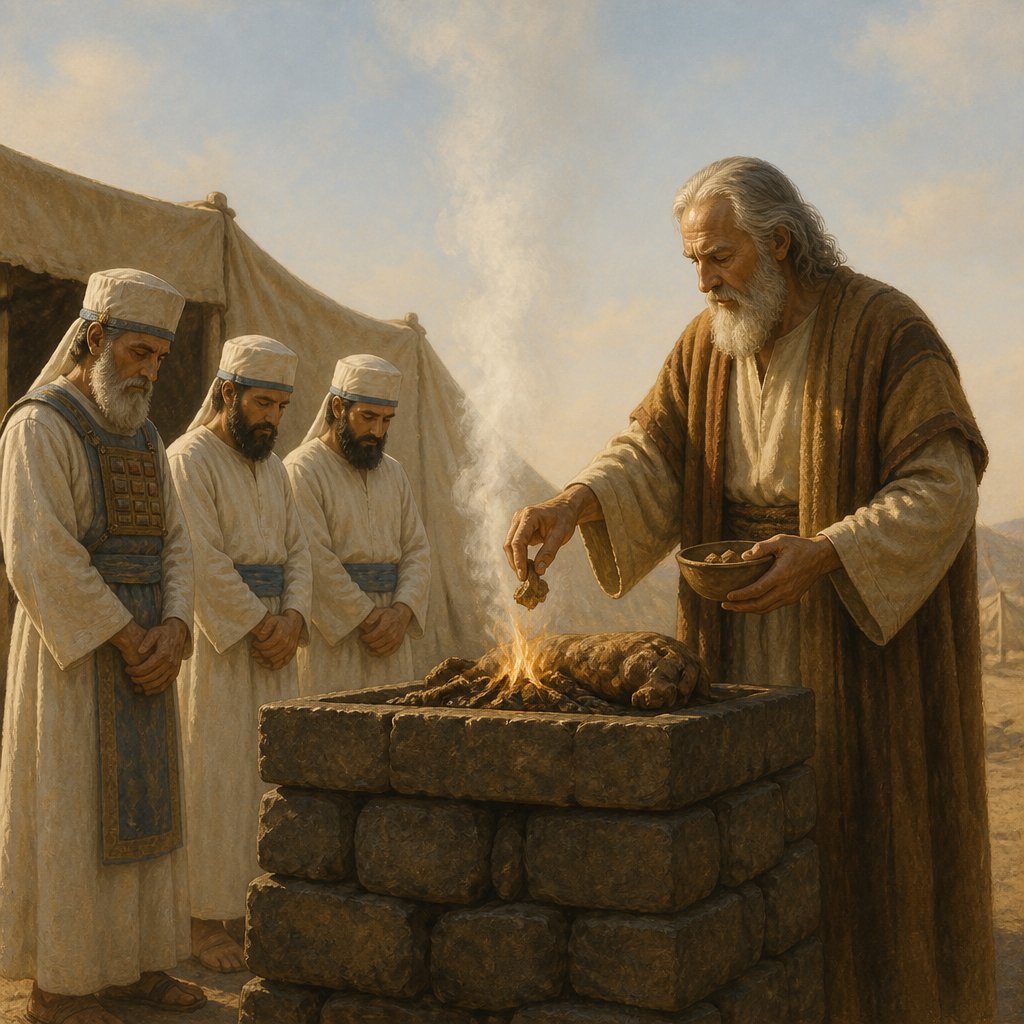
Leviticus 8:28 in the King James Version of the Bible reads, "And Moses took them from off their hands, and burnt them on the altar upon the burnt offering: they were consecrations for a sweet savour: it is an offering made by fire unto the Lord." This verse comes from the book of Leviticus, which is the third book of the Hebrew Bible and the third book of the Old Testament. The book of Leviticus focuses on the rituals and regulations for the Israelites, particularly in relation to their worship and their interactions with God.
In this particular verse, Moses is performing a consecration ritual for Aaron and his sons, who have been chosen to serve as priests for the Israelites. As part of the consecration process, various offerings are made, including a burnt offering. The burnt offering was a ritual in which an animal, usually a young bull, lamb, or goat, was sacrificed and then completely burned on the altar. This act symbolized the complete surrender and dedication of the offering to God.
The verse highlights the significance of the burnt offering as a means of consecration and atonement for the priests. It emphasizes the idea that these offerings are pleasing to God, described as "a sweet savour." This phrase indicates that the sacrifices offered with a pure heart and genuine devotion are pleasing and acceptable to God.
The context of this verse is important to understanding its significance. The book of Leviticus was written during a time when the Israelites were establishing themselves as a nation and forming their identity as God's chosen people. The rituals and regulations outlined in Leviticus were meant to serve as a way for the Israelites to maintain a close relationship with God and to reflect their commitment to living in accordance with His will.
The symbolism in this verse is multifaceted. Firstly, the burnt offering symbolizes the complete surrender and dedication of the priests to God in their role as mediators between the Israelites and God. By surrendering the offering completely to be consumed by fire, the priests demonstrated their willingness to fully commit themselves to their sacred duties.
Additionally, the act of burning the offering on the altar symbolizes the purification and atonement for sin. The smoke rising from the burnt offering is said to be an aroma pleasing to God, signifying the restoration of the priests' relationship with Him. This reflects the idea that through the act of sacrifice, the priests are symbolically cleansing themselves and becoming acceptable in the eyes of God.
The theme of consecration and atonement in this verse is central to the broader message of Leviticus. It emphasizes the importance of approaching God with reverence and humility, acknowledging the need for purification and forgiveness. It also underscores the idea that the Israelites are called to be a holy people, set apart for God's purposes.
In sum, Leviticus 8:28 serves as a reminder of the significance of ritual and sacrifice in the Israelite's relationship with God. It underscores the themes of consecration, atonement, and devotion, and emphasizes the importance of offering one's best to God with a pure heart. This verse holds historical, religious, and spiritual significance, offering insight into the ancient traditions and beliefs of the Israelite people.
Have questions about Leviticus 8:28?
Dive deeper into this scripture with Bible Chat — an AI-powered tool for exploring God's Word through conversation. Ask questions, get context, and grow in your understanding of the Bible.
Get Our Apps


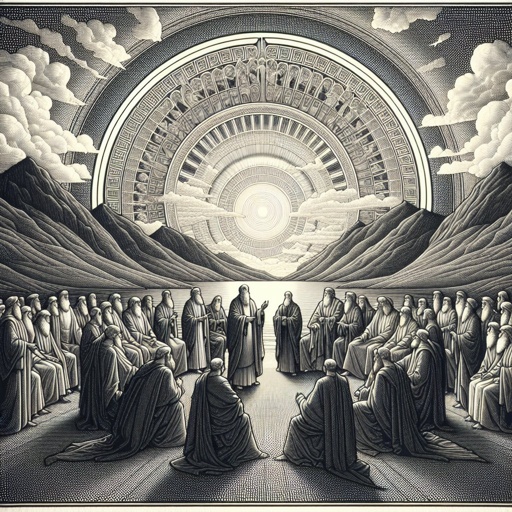
Leviticus 8:28 Artwork

Leviticus 8:28 - "And Moses took them from off their hands, and burnt them on the altar upon the burnt offering: they were consecrations for a sweet savour: it is an offering made by fire unto the LORD."
"And Moses took them from off their hands, and burnt them on the altar upon the burnt offering: they were consecrations for a sweet savour: it is an offering made by fire unto the LORD." - Leviticus 8:28

Leviticus 7:28 - "¶ And the LORD spake unto Moses, saying,"

Leviticus 16:8

Leviticus 8:30

Leviticus 22:28 - "And whether it be cow or ewe, ye shall not kill it and her young both in one day."

"¶ And the LORD spake unto Moses, saying," - Leviticus 7:28
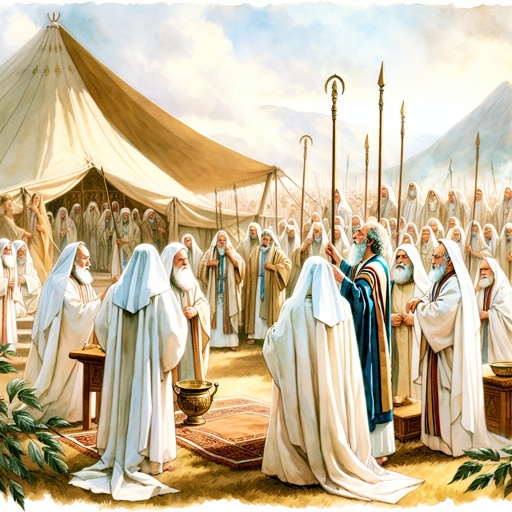
Leviticus 8:1-12

Leviticus 8:8 - "And he put the breastplate upon him: also he put in the breastplate the Urim and the Thummim."

matthew 8:28

Romans 8:28

Romans 8:28

Romans 8:28

Romans 8:28
Romans 8:28

Leviticus 6:8 - "¶ And the LORD spake unto Moses, saying,"
Leviticus 10:8 - "¶ And the LORD spake unto Aaron, saying,"

Leviticus 11:28 - "And he that beareth the carcase of them shall wash his clothes, and be unclean until the even: they are unclean unto you."

Leviticus 18:28 - "That the land spue not you out also, when ye defile it, as it spued out the nations that were before you."

Leviticus 6:28 - "But the earthen vessel wherein it is sodden shall be broken: and if it be sodden in a brasen pot, it shall be both scoured, and rinsed in water."

Leviticus 15:28 - "But if she be cleansed of her issue, then she shall number to herself seven days, and after that she shall be clean."

Leviticus 8:1 - "And the LORD spake unto Moses, saying,"

Leviticus 23:28 - "And ye shall do no work in that same day: for it is a day of atonement, to make an atonement for you before the LORD your God."

romans 8:26-28

Leviticus 26:28 - "Then I will walk contrary unto you also in fury; and I, even I, will chastise you seven times for your sins."

Leviticus 16:28 - "And he that burneth them shall wash his clothes, and bathe his flesh in water, and afterward he shall come into the camp."

Leviticus 19:28 - "Ye shall not make any cuttings in your flesh for the dead, nor print any marks upon you: I am the LORD."

Leviticus 8:32 - "And that which remaineth of the flesh and of the bread shall ye burn with fire."

Leviticus 13:28 - "And if the bright spot stay in his place, and spread not in the skin, but it be somewhat dark; it is a rising of the burning, and the priest shall pronounce him clean: for it is an inflammation of the burning."

Leviticus 8:6 - "And Moses brought Aaron and his sons, and washed them with water."