What does Leviticus 6:19 mean?
"¶ And the LORD spake unto Moses, saying," - Leviticus 6:19

Leviticus 6:19 (KJV) states, "And the Lord spake unto Moses, saying, This is the offering of Aaron and of his sons, which they shall offer unto the Lord in the day when he is anointed; the tenth part of an ephah of fine flour for a meat offering perpetual, half of it in the morning, and half thereof at night."
The book of Leviticus is the third book of the Hebrew Bible and the Old Testament. It is traditionally ascribed to Moses and serves as a guide for the Israelites on how to live a holy and righteous life under the covenant of God. Leviticus contains priestly laws and rituals, detailing the proper way to make offerings and sacrifices to God. In Leviticus 6:19, the focus is on the grain offering, also known as the "meat offering," which is a type of sacrifice that is presented to God by the priests on behalf of the people.
The verse opens with "And the Lord spake unto Moses, saying," indicating that the instructions that follow are directly from God. This sets the tone for the significance and importance of the offering that is to be made. The offering is specifically for Aaron and his sons, who were the priests chosen to serve in the tabernacle and later in the temple. This indicates a special role and responsibility that the priests had in mediating between God and the people.
The offering itself consists of a tenth part of an ephah of fine flour. An ephah was a unit of dry measure, and a tenth part would be a small portion. This emphasizes the principle of giving a portion of one's possessions back to God as an act of worship and thanksgiving. The use of fine flour highlights the quality and purity of the offering, demonstrating that only the best is to be presented to God.
The verse specifies that the offering is to be made on the day when the priest is anointed. Anointing was a sign of consecration and empowerment for the priestly office. It symbolized being set apart for God's service and receiving His blessing and authority. By making the offering on this occasion, it further reinforces the sacredness and significance of the act.
The offering is described as a "meat offering perpetual," indicating that it is to be a regular and ongoing practice. This highlights the importance of consistency and faithfulness in worship and obedience to God. It is not a one-time event, but a continual expression of devotion and commitment.
The instruction to divide the offering in half, with one portion offered in the morning and the other at night, reinforces the idea of regularity and continuity. It is a way of acknowledging God's presence and provision throughout the day, from dawn to dusk. This also suggests the idea of completeness and wholeness, as the offering spans the entire day, symbolizing the entirety of one's life being dedicated to God.
The themes of sacrifice, consecration, and worship are central to Leviticus 6:19. The act of making an offering was a form of worship and a means of seeking atonement and favor with God. It required a willing and obedient heart, as well as a recognition of God's holiness and authority. It served as a tangible expression of gratitude and dependence on God, as well as a way of seeking His presence and blessing in the lives of the worshippers.
The context of Leviticus 6:19 is within the larger framework of the Levitical laws and rituals outlined in the book of Leviticus. These laws were given to the Israelites to teach them how to live in obedience to God and maintain a relationship with Him. The grain offering, along with other types of offerings, served as a way for the people to express their devotion to God and seek His forgiveness and favor. It was an integral part of their worship and spiritual life.
Symbolically, the grain offering in Leviticus 6:19 represents the giving of oneself to God. The fine flour embodies purity and consecration, reflecting the inner disposition of the worshipper. The act of dividing the offering in half and presenting it in the morning and at night speaks to the concept of devotion and commitment throughout the day and throughout one's life. It is a way of acknowledging God's presence and sovereignty in every aspect of life, from the ordinary routines to the sacred moments.
In conclusion, Leviticus 6:19 is a verse that encapsulates the principles of worship, devotion, and consecration as outlined in the book of Leviticus. It provides specific instructions for the grain offering and conveys the importance of regular and sincere worship as a means of seeking God's favor and presence. The verse underscores the significance of giving one's best to God and acknowledging His authority and holiness. As such, it serves as a timeless reminder for believers to approach God with reverence and devotion, offering themselves as living sacrifices in worship and praise.
Have questions about Leviticus 6:19?
Dive deeper into this scripture with Bible Chat — an AI-powered tool for exploring God's Word through conversation. Ask questions, get context, and grow in your understanding of the Bible.
Get Our Apps


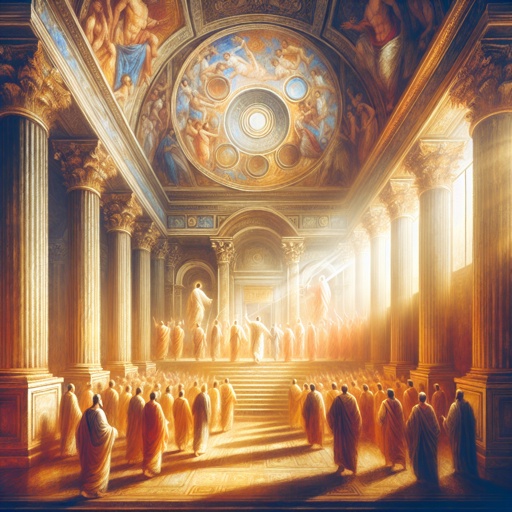
Leviticus 6:19 Artwork

Leviticus 6:19 - "¶ And the LORD spake unto Moses, saying,"

"¶ And the LORD spake unto Moses, saying," - Leviticus 6:19

Leviticus 19:6 - "It shall be eaten the same day ye offer it, and on the morrow: and if ought remain until the third day, it shall be burnt in the fire."

Leviticus 21:19 - "Or a man that is brokenfooted, or brokenhanded,"

Leviticus 19:1 - "And the LORD spake unto Moses, saying,"

"It shall be eaten the same day ye offer it, and on the morrow: and if ought remain until the third day, it shall be burnt in the fire." - Leviticus 19:6

Leviticus 11:19 - "And the stork, the heron after her kind, and the lapwing, and the bat."

Leviticus 19:7 - "And if it be eaten at all on the third day, it is abominable; it shall not be accepted."

"Or a man that is brokenfooted, or brokenhanded," - Leviticus 21:19

Leviticus 5:19 - "It is a trespass offering: he hath certainly trespassed against the LORD."

Leviticus 26: 4-6

Leviticus 19:35 - "¶ Ye shall do no unrighteousness in judgment, in meteyard, in weight, or in measure."
Leviticus 26: 4-6

Leviticus 26: 4-6

Leviticus 8:19 - "And he killed it; and Moses sprinkled the blood upon the altar round about."

Leviticus 19:33 - "¶ And if a stranger sojourn with thee in your land, ye shall not vex him."

Leviticus 6:24 - "¶ And the LORD spake unto Moses, saying,"

Leviticus 6:8 - "¶ And the LORD spake unto Moses, saying,"

Leviticus 19:11 - "¶ Ye shall not steal, neither deal falsely, neither lie one to another."

Leviticus 19:24 - "But in the fourth year all the fruit thereof shall be holy to praise the LORD withal."

Leviticus 6:1 - "And the LORD spake unto Moses, saying,"

Leviticus 13:19 - "And in the place of the boil there be a white rising, or a bright spot, white, and somewhat reddish, and it be shewed to the priest;"

Leviticus 22:19 - "Ye shall offer at your own will a male without blemish, of the beeves, of the sheep, or of the goats."

Leviticus 9:19 - "And the fat of the bullock and of the ram, the rump, and that which covereth the inwards, and the kidneys, and the caul above the liver:"

Leviticus 4:19 - "And he shall take all his fat from him, and burn it upon the altar."

Leviticus 19:30 - "¶ Ye shall keep my sabbaths, and reverence my sanctuary: I am the LORD."

Leviticus 19:5 - "¶ And if ye offer a sacrifice of peace offerings unto the LORD, ye shall offer it at your own will."

Leviticus 24:19 - "And if a man cause a blemish in his neighbour; as he hath done, so shall it be done to him;"

"And the LORD spake unto Moses, saying," - Leviticus 19:1

Leviticus 1:6 - "And he shall flay the burnt offering, and cut it into his pieces."