What does Leviticus 5:18 mean?
"And he shall bring a ram without blemish out of the flock, with thy estimation, for a trespass offering, unto the priest: and the priest shall make an atonement for him concerning his ignorance wherein he erred and wist it not, and it shall be forgiven him." - Leviticus 5:18
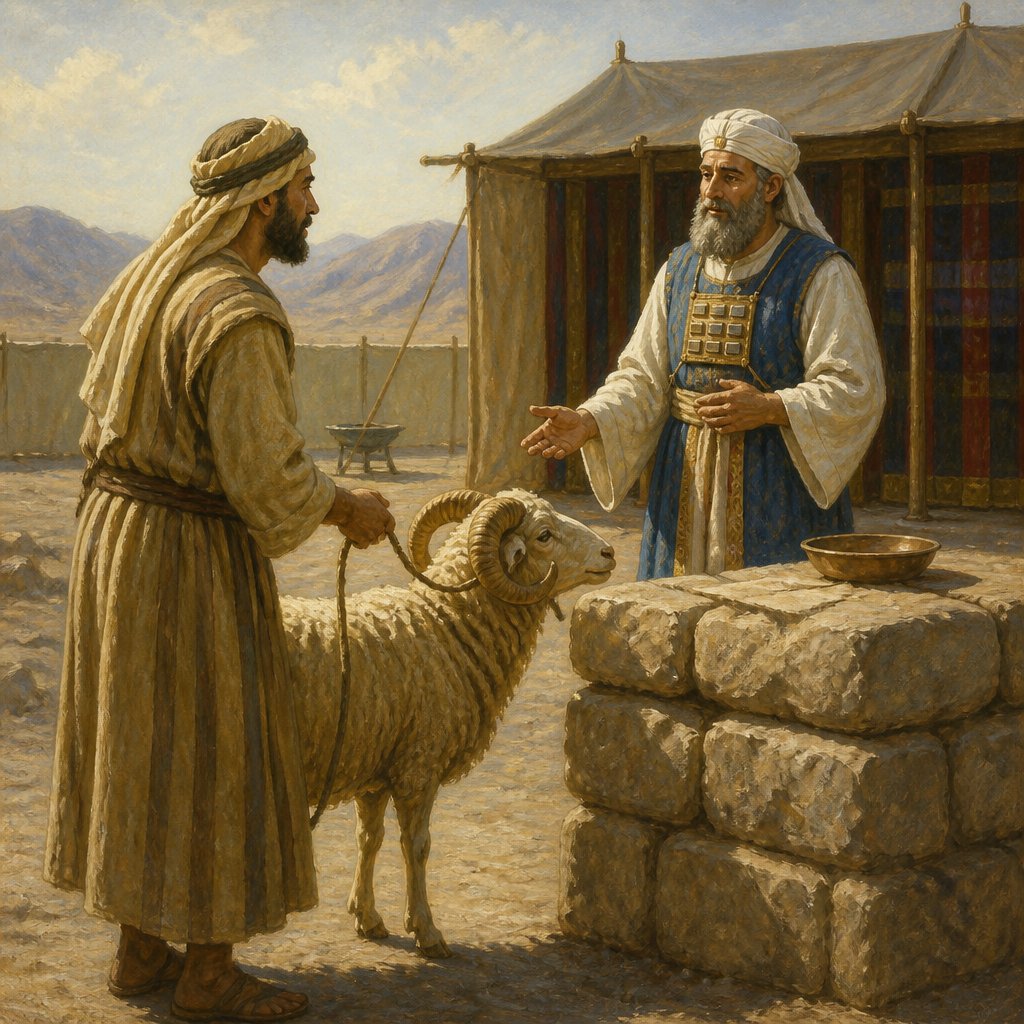
Leviticus 5:18 (KJV) states: "And he shall bring a ram without blemish out of the flock, with thy estimation, for a trespass offering, unto the priest: and the priest shall make an atonement for him concerning his ignorance wherein he erred and wist it not, and it shall be forgiven him."
This verse comes from the book of Leviticus, which is the third book of the Bible and is part of the Pentateuch, the first five books of the Old Testament. Leviticus is a book of laws and regulations that were given to the Israelites by God through Moses. These laws were meant to guide the Israelites in their worship, ethical behavior, and daily conduct.
In this specific verse, the focus is on the trespass offering, which was a sacrifice offered to atone for unintentional sins or offenses committed against God. The verse specifies that the offering should be a ram without blemish, which emphasizes the need for a pure and perfect sacrifice. This requirement reflects the principle of giving one's best to God and seeking reconciliation with Him.
The verse also mentions the concept of estimation, which refers to the valuation of the ram. This underscores the importance of acknowledging the value of the offering and the seriousness of the offense committed. The person making the offering must recognize the gravity of their actions and be willing to make amends for their wrongdoing.
Another key aspect of this verse is the role of the priest in making atonement for the individual. The priest acted as a mediator between the person offering the sacrifice and God, symbolizing the intercession and advocacy for the person seeking forgiveness. The act of atonement was a way for the individual to be reconciled with God and find restoration in their relationship with Him.
The verse also addresses the issue of ignorance, stating that the atonement is made for the person's ignorance and unintentional errors. This highlights the understanding that not all offenses are deliberate, and God's grace extends to those who sin unknowingly. It demonstrates God's compassion and willingness to forgive those who humbly seek His mercy.
The overarching theme of this verse is the need for atonement and forgiveness. It conveys the idea that all people are prone to making mistakes and falling short of God's standards, but there is a way to seek reconciliation and restoration through the offering of sacrifices and the mediation of the priest. It emphasizes the importance of acknowledging one's wrongdoing, seeking forgiveness, and making amends in order to maintain a right relationship with God.
In a broader context, this verse also points to the ultimate atonement provided by Jesus Christ. The sacrificial system outlined in Leviticus served as a foreshadowing of the perfect and final sacrifice made by Jesus on the cross. As the New Testament affirms, Jesus offered Himself as the unblemished Lamb of God, fulfilling the requirements of the law and providing atonement for the sins of humanity once and for all.
In conclusion, Leviticus 5:18 carries deep significance in its portrayal of the trespass offering and the process of atonement for unintentional sins. It highlights the themes of reconciliation, forgiveness, and the need for a pure and unblemished sacrifice. It also points to the role of the priest as a mediator and the concept of ignorance in sin. Ultimately, this verse foreshadows the ultimate atonement provided by Jesus Christ and serves as a reminder of God's grace and mercy towards humanity.
Have questions about Leviticus 5:18?
Dive deeper into this scripture with Bible Chat — an AI-powered tool for exploring God's Word through conversation. Ask questions, get context, and grow in your understanding of the Bible.
Get Our Apps


Leviticus 5:18 Artwork

Leviticus 5:18 - "And he shall bring a ram without blemish out of the flock, with thy estimation, for a trespass offering, unto the priest: and the priest shall make an atonement for him concerning his ignorance wherein he erred and wist it not, and it shall be forgiven him."
"And he shall bring a ram without blemish out of the flock, with thy estimation, for a trespass offering, unto the priest: and the priest shall make an atonement for him concerning his ignorance wherein he erred and wist it not, and it shall be forgiven him." - Leviticus 5:18
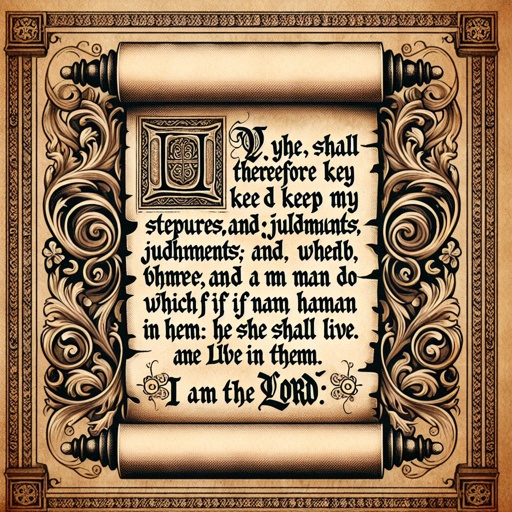
Leviticus 18:5 - "Ye shall therefore keep my statutes, and my judgments: which if a man do, he shall live in them: I am the LORD."

Leviticus 11:18 - "And the swan, and the pelican, and the gier eagle,"

Leviticus 18:1 - "And the LORD spake unto Moses, saying,"

Leviticus 18:22 - "Thou shalt not lie with mankind, as with womankind: it is abomination."

Leviticus 18:18 - "Neither shalt thou take a wife to her sister, to vex her, to uncover her nakedness, beside the other in her life time."

Leviticus 13:18 - "¶ The flesh also, in which, even in the skin thereof, was a boil, and is healed,"

Leviticus 24:18 - "And he that killeth a beast shall make it good; beast for beast."

Leviticus 5:14 - "¶ And the LORD spake unto Moses, saying,"

Leviticus 18:16 - "Thou shalt not uncover the nakedness of thy brother's wife: it is thy brother's nakedness."

Leviticus 18:8 - "The nakedness of thy father's wife shalt thou not uncover: it is thy father's nakedness."

"And the swan, and the pelican, and the gier eagle," - Leviticus 11:18

Leviticus 5:5 - "And it shall be, when he shall be guilty in one of these things, that he shall confess that he hath sinned in that thing:"

"Ye shall therefore keep my statutes, and my judgments: which if a man do, he shall live in them: I am the LORD." - Leviticus 18:5

Leviticus 23:5 - "In the fourteenth day of the first month at even is the LORD'S passover."

Leviticus 18:20 - "Moreover thou shalt not lie carnally with thy neighbour's wife, to defile thyself with her."

Leviticus 18:2 - "Speak unto the children of Israel, and say unto them, I am the LORD your God."

"And the LORD spake unto Moses, saying," - Leviticus 18:1

Leviticus 18:12 - "Thou shalt not uncover the nakedness of thy father's sister: she is thy father's near kinswoman."

Leviticus 18:27 - "(For all these abominations have the men of the land done, which were before you, and the land is defiled;)"

Leviticus 18:13 - "Thou shalt not uncover the nakedness of thy mother's sister: for she is thy mother's near kinswoman."

Leviticus 5:19 - "It is a trespass offering: he hath certainly trespassed against the LORD."

Leviticus 18:6 - "¶ None of you shall approach to any that is near of kin to him, to uncover their nakedness: I am the LORD."

Leviticus 8:18 - "¶ And he brought the ram for the burnt offering: and Aaron and his sons laid their hands upon the head of the ram."

Leviticus 8:5 - "And Moses said unto the congregation, This is the thing which the LORD commanded to be done."
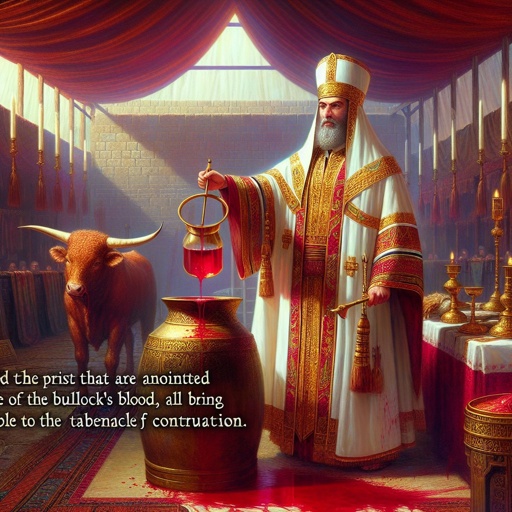
Leviticus 4:5 - "And the priest that is anointed shall take of the bullock's blood, and bring it to the tabernacle of the congregation:"

Leviticus 18:28 - "That the land spue not you out also, when ye defile it, as it spued out the nations that were before you."

Leviticus 18:24 - "Defile not ye yourselves in any of these things: for in all these the nations are defiled which I cast out before you:"

Leviticus 26:18 - "And if ye will not yet for all this hearken unto me, then I will punish you seven times more for your sins."