What does Leviticus 4:17 mean?
"And the priest shall dip his finger in some of the blood, and sprinkle it seven times before the LORD, even before the vail." - Leviticus 4:17

Leviticus 4:17 in the King James Version of the Bible states, "And the priest shall dip his finger in some of the blood, and sprinkle it seven times before the Lord, even before the vail." This verse is part of a larger passage that outlines the process of atonement for unintentional sins, specifically for the high priest and the congregation of Israel. The book of Leviticus is part of the Torah, the first five books of the Hebrew Bible, and it serves as a handbook for the sacrificial system and the proper way to approach God in worship.
The act of sprinkling blood seven times before the Lord symbolizes the completion and perfection of the atonement process. The number seven is often seen as a symbol of completion and the divine, and in this context, it signifies the thoroughness and effectiveness of the priest's action in making atonement for the sin of the people. The blood itself is symbolic of life and represents the shedding of innocent blood as a substitution for the guilt of sin. In the Old Testament sacrificial system, the shedding of blood was necessary for the forgiveness of sins, and the sprinkling of blood before the Lord was a way of symbolically covering the sins of the people.
The role of the priest in this verse is also significant. The priest served as a mediator between the people and God, and his actions in the atonement process were essential for the restoration of the relationship between the people and God. By dipping his finger in the blood and sprinkling it before the Lord, the priest was performing a sacred and solemn ritual that was meant to bring about reconciliation and forgiveness.
The context of Leviticus 4:17 is important for understanding its significance. The entire chapter of Leviticus 4 deals with the sin offering for unintentional sins committed by the people of Israel. The chapter outlines the specific procedures for making atonement for the sin of the high priest, the congregation, the leaders, or an individual. The emphasis on unintentional sin underscores the idea that even sins committed in ignorance or by accident required atonement in order to maintain the holiness of the community and the sanctity of the tabernacle.
One of the key themes in this verse is the concept of atonement. Atonement is the process of reconciling with God and obtaining forgiveness for sin. In the Old Testament, atonement was achieved through the sacrificial system, where the shedding of blood and the offering of animals served as a means of appeasing God's wrath and obtaining forgiveness. The act of sprinkling blood before the Lord was a crucial part of the atonement process, symbolizing the transfer of guilt and the covering of sin.
Another important theme in this verse is the role of the priest as a mediator. The priest acted as an intermediary between the people and God, carrying out the necessary rituals and sacrifices on behalf of the community. The priest's actions were meant to symbolize the people's submission to God and their desire for reconciliation with Him. This theme of mediation and intercession points forward to the ultimate mediator and high priest, Jesus Christ, who would offer Himself as a final and complete atonement for the sins of humanity.
In conclusion, Leviticus 4:17 is a verse that carries significant symbolic and theological meaning within the context of the Old Testament sacrificial system. The act of sprinkling blood seven times before the Lord represents the completion and perfection of the atonement process, while also emphasizing the role of the priest as a mediator between the people and God. This verse is a reminder of the seriousness of sin and the need for reconciliation with God, as well as a foreshadowing of the ultimate atonement and mediation provided by Jesus Christ in the New Testament.
Have questions about Leviticus 4:17?
Dive deeper into this scripture with Bible Chat — an AI-powered tool for exploring God's Word through conversation. Ask questions, get context, and grow in your understanding of the Bible.
Get Our Apps


Leviticus 4:17 Artwork

Leviticus 4:17 - "And the priest shall dip his finger in some of the blood, and sprinkle it seven times before the LORD, even before the vail."

"And the priest shall dip his finger in some of the blood, and sprinkle it seven times before the LORD, even before the vail." - Leviticus 4:17

Leviticus 17:7

Leviticus 17:4 - "And bringeth it not unto the door of the tabernacle of the congregation, to offer an offering unto the LORD before the tabernacle of the LORD; blood shall be imputed unto that man; he hath shed blood; and that man shall be cut off from among his people:"

Leviticus 23:17-22

Leviticus 11:17 - "And the little owl, and the cormorant, and the great owl,"

Leviticus 22:17 - "¶ And the LORD spake unto Moses, saying,"

Leviticus 17:1 - "And the LORD spake unto Moses, saying,"

Leviticus 7:17 - "But the remainder of the flesh of the sacrifice on the third day shall be burnt with fire."

Leviticus 24:17 - "¶ And he that killeth any man shall surely be put to death."

Leviticus 26: 4-6
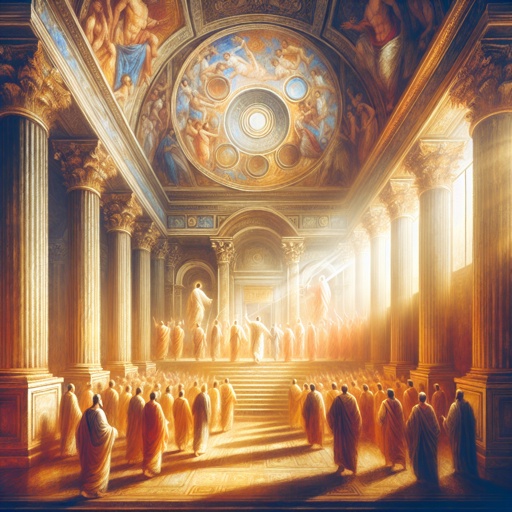
Leviticus 26: 4-6

Leviticus 26: 4-6

Leviticus 4:1 - "And the LORD spake unto Moses, saying,"

Leviticus 15:17 - "And every garment, and every skin, whereon is the seed of copulation, shall be washed with water, and be unclean until the even."

Leviticus 17:3 - "What man soever there be of the house of Israel, that killeth an ox, or lamb, or goat, in the camp, or that killeth it out of the camp,"

Leviticus 27:17 - "If he sanctify his field from the year of jubile, according to thy estimation it shall stand."

Leviticus 17:16 - "But if he wash them not, nor bathe his flesh; then he shall bear his iniquity."

"¶ And the LORD spake unto Moses, saying," - Leviticus 22:17

"And the LORD spake unto Moses, saying," - Leviticus 17:1

"And the little owl, and the cormorant, and the great owl," - Leviticus 11:17

Leviticus 27:4 - "And if it be a female, then thy estimation shall be thirty shekels."

Leviticus 9:17 - "And he brought the meat offering, and took an handful thereof, and burnt it upon the altar, beside the burnt sacrifice of the morning."

Leviticus 8:17 - "But the bullock, and his hide, his flesh, and his dung, he burnt with fire without the camp; as the LORD commanded Moses."

Leviticus 4:16 - "And the priest that is anointed shall bring of the bullock's blood to the tabernacle of the congregation:"
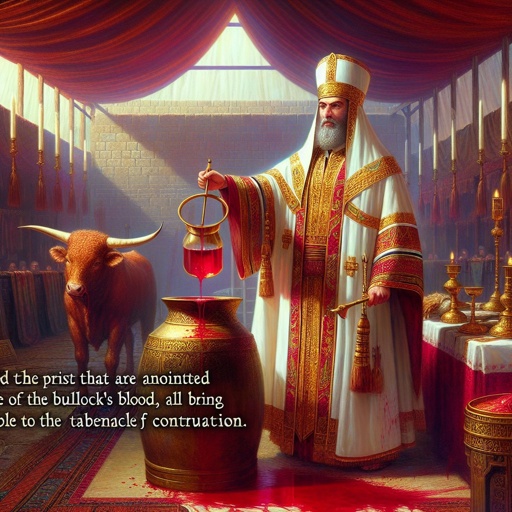
Leviticus 4:5 - "And the priest that is anointed shall take of the bullock's blood, and bring it to the tabernacle of the congregation:"

Leviticus 3:17 - "It shall be a perpetual statute for your generations throughout all your dwellings, that ye eat neither fat nor blood."

Leviticus 17:9 - "And bringeth it not unto the door of the tabernacle of the congregation, to offer it unto the LORD; even that man shall be cut off from among his people."

JAMES 4:17

Leviticus 25:17 - "Ye shall not therefore oppress one another; but thou shalt fear thy God: for I am the LORD your God."