What does Leviticus 4:10 mean?
"As it was taken off from the bullock of the sacrifice of peace offerings: and the priest shall burn them upon the altar of the burnt offering." - Leviticus 4:10
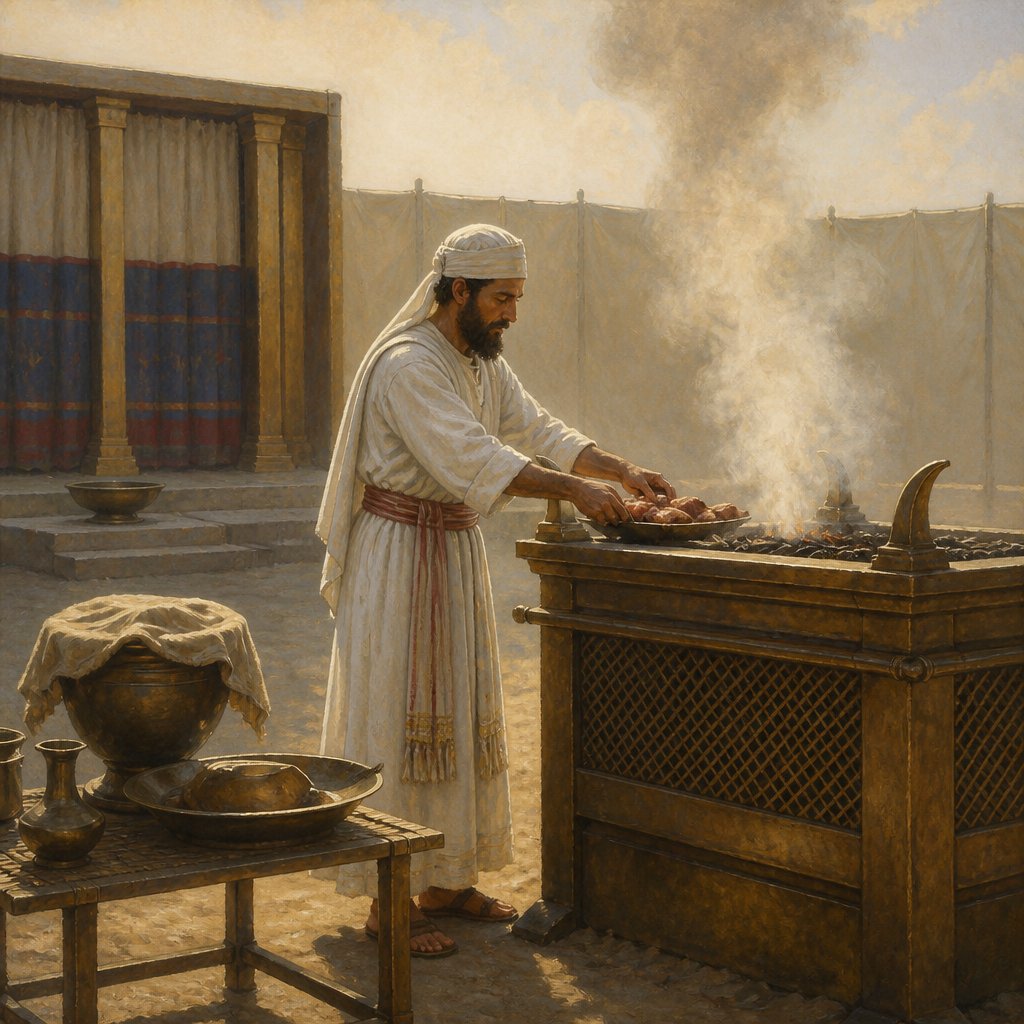
Leviticus 4:10 (KJV) says, "As it was taken off from the bullock of the sacrifice of peace offerings: and the priest shall burn them upon the altar of the burnt offering."
The book of Leviticus is the third book of the Hebrew Bible and the Old Testament. It is a deeply religious and legalistic text, detailing the laws and rituals of the Israelite people, and was likely written around the 6th century BC. Leviticus 4:10 is part of a larger section that deals with the regulations surrounding sin offerings. This verse in particular describes the handling of the fat from the sacrifice of a peace offering.
The peace offering, or "shelamim" in Hebrew, was a voluntary offering made by an individual as an expression of gratitude, or to fulfill a vow, or as a freewill offering. The peace offering was considered to be a way of restoring fellowship and communion with God, as well as fellowshipping with the priest and the people.
In Leviticus 4:10, the phrase "As it was taken off from the bullock of the sacrifice of peace offerings" refers to the fat of the bull that was to be sacrificed. The fat was considered to be the choicest part of the animal and was to be burned upon the altar of the burnt offering by the priest. This act symbolized the giving of the best portion to God, as well as the complete dedication and surrender of the offering to Him.
In a broader sense, the act of burning the fat on the altar can be seen as a symbolic act of purification and sanctification. Fire is often used in the Bible as a symbol of God's presence and holiness, and the burning of the fat on the altar was a way of purifying the offering and making it acceptable to God. This act also served as a reminder to the Israelites of the seriousness of sin and the need for atonement and forgiveness.
The context of Leviticus 4:10 is important for understanding its significance. The Israelites were a people who had been rescued from slavery in Egypt and were in the process of becoming a holy nation set apart for God. The laws and rituals outlined in Leviticus were meant to guide the Israelites in their worship of God and their daily lives, and to ensure their continued holiness and separation from the pagan practices of the surrounding nations.
The symbolism in Leviticus 4:10 is rich and multifaceted. The bull itself was a symbol of strength and power, and its sacrifice represented the surrender of that strength and power to God. The burning of the fat on the altar symbolized the complete dedication and consecration of the offering to God, as well as the purifying and sanctifying effect of God's presence.
Another theme that can be found in this verse is the importance of sacrifice and obedience. The Israelites were called to bring their best offerings to God and to follow His commands in order to maintain their relationship with Him. The burning of the fat on the altar was a tangible expression of their willingness to submit to God's will and to acknowledge His authority over their lives.
Overall, Leviticus 4:10 is a significant verse that carries layers of meaning and symbolism. It speaks to the themes of worship, purity, obedience, and dedication to God. It also serves as a reminder of the serious nature of sin and the need for atonement and forgiveness. While the laws and rituals of Leviticus may seem foreign and outdated to modern readers, they point to universal truths about the nature of God and the human condition, and can still offer valuable insights into the Christian faith today.
Have questions about Leviticus 4:10?
Dive deeper into this scripture with Bible Chat — an AI-powered tool for exploring God's Word through conversation. Ask questions, get context, and grow in your understanding of the Bible.
Get Our Apps


Leviticus 4:10 Artwork

Leviticus 4:10 - "As it was taken off from the bullock of the sacrifice of peace offerings: and the priest shall burn them upon the altar of the burnt offering."
"As it was taken off from the bullock of the sacrifice of peace offerings: and the priest shall burn them upon the altar of the burnt offering." - Leviticus 4:10

Leviticus 10:4 - "And Moses called Mishael and Elzaphan, the sons of Uzziel the uncle of Aaron, and said unto them, Come near, carry your brethren from before the sanctuary out of the camp."

Leviticus 10:10 - "And that ye may put difference between holy and unholy, and between unclean and clean;"

leviticus 16:7-10

Leviticus 10:20 - "And when Moses heard that, he was content."
Leviticus 10:8 - "¶ And the LORD spake unto Aaron, saying,"

Leviticus 26: 4-6
Leviticus 26: 4-6

Leviticus 26: 4-6

Leviticus 4:1 - "And the LORD spake unto Moses, saying,"

Leviticus 27:4 - "And if it be a female, then thy estimation shall be thirty shekels."

Leviticus 10:2 - "And there went out fire from the LORD, and devoured them, and they died before the LORD."

Leviticus 26:10 - "And ye shall eat old store, and bring forth the old because of the new."

Leviticus 8:10 - "And Moses took the anointing oil, and anointed the tabernacle and all that was therein, and sanctified them."

Leviticus 10:5 - "So they went near, and carried them in their coats out of the camp; as Moses had said."

Leviticus 4:16 - "And the priest that is anointed shall bring of the bullock's blood to the tabernacle of the congregation:"
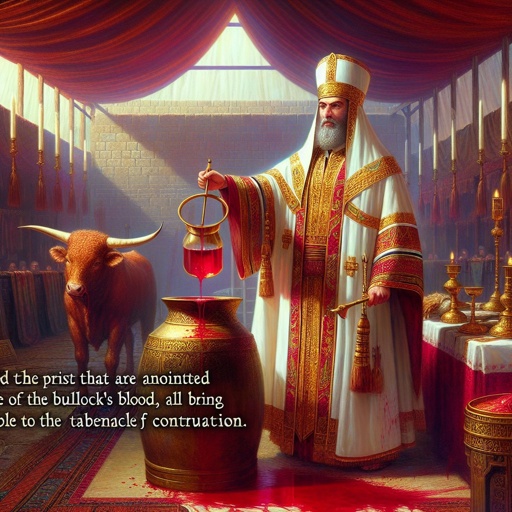
Leviticus 4:5 - "And the priest that is anointed shall take of the bullock's blood, and bring it to the tabernacle of the congregation:"
"¶ And the LORD spake unto Aaron, saying," - Leviticus 10:8
"And when Moses heard that, he was content." - Leviticus 10:20

Leviticus 24:4 - "He shall order the lamps upon the pure candlestick before the LORD continually."

Leviticus 23:4 - "¶ These are the feasts of the LORD, even holy convocations, which ye shall proclaim in their seasons."
"And that ye may put difference between holy and unholy, and between unclean and clean;" - Leviticus 10:10

Leviticus 22:10 - "There shall no stranger eat of the holy thing: a sojourner of the priest, or an hired servant, shall not eat of the holy thing."

Leviticus 7:10 - "And every meat offering, mingled with oil, and dry, shall all the sons of Aaron have, one as much as another."

Leviticus 1:10 - "¶ And if his offering be of the flocks, namely, of the sheep, or of the goats, for a burnt sacrifice; he shall bring it a male without blemish."

Leviticus 4:32 - "And if he bring a lamb for a sin offering, he shall bring it a female without blemish."

Leviticus 4:19 - "And he shall take all his fat from him, and burn it upon the altar."

Leviticus 4:4 - "And he shall bring the bullock unto the door of the tabernacle of the congregation before the LORD; and shall lay his hand upon the bullock's head, and kill the bullock before the LORD."

Leviticus 21:4 - "But he shall not defile himself, being a chief man among his people, to profane himself."