What does Leviticus 3:1 mean?
"And if his oblation be a sacrifice of peace offering, if he offer it of the herd; whether it be a male or female, he shall offer it without blemish before the LORD." - Leviticus 3:1
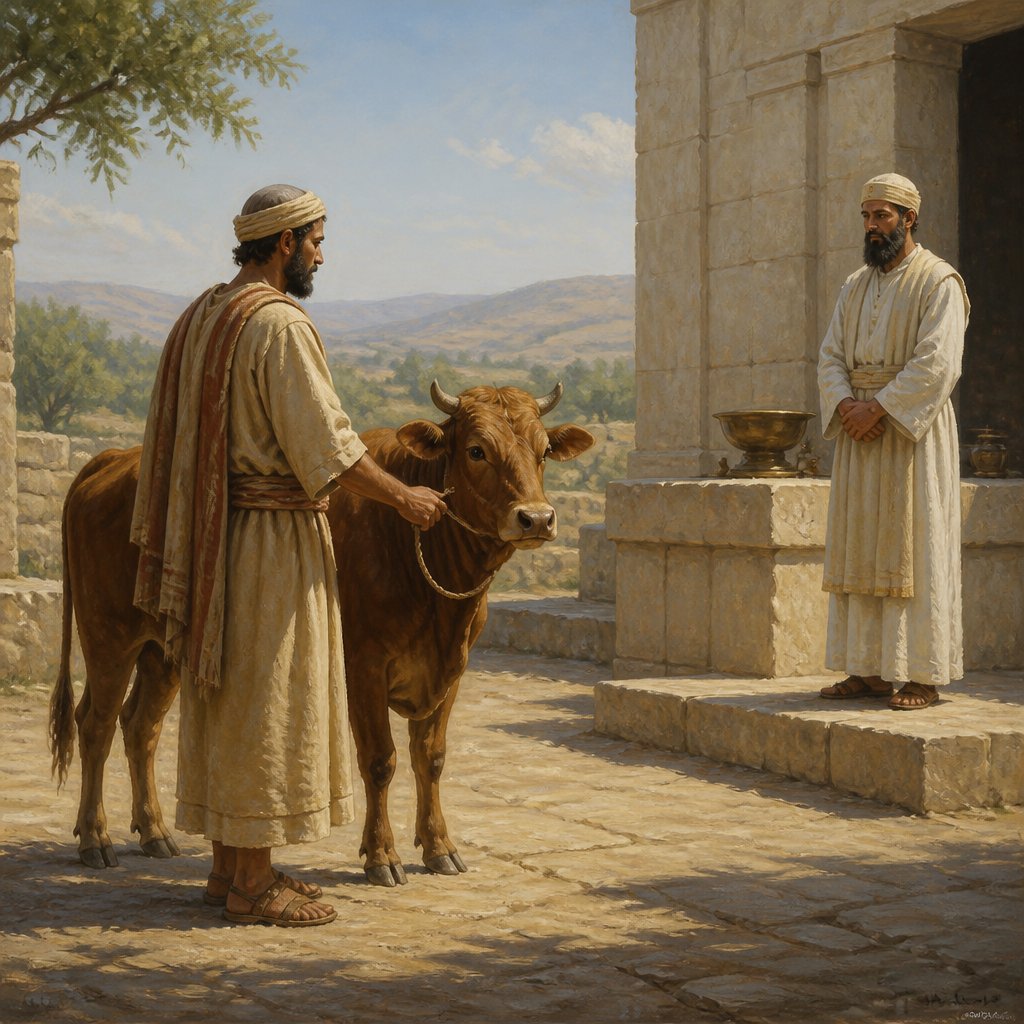
Leviticus 3:1 in the King James Version of the Bible reads, "And if his oblation be a sacrifice of peace offering, if he offer it of the herd; whether it be a male or female, he shall offer it without blemish before the Lord." This verse is part of the Old Testament, specifically within the book of Leviticus, which is the third book of the Hebrew Bible.
The book of Leviticus primarily consists of laws and regulations given to the Israelites by God through Moses. It addresses various aspects of worship, sacrifice, purification, and ethical conduct. Leviticus 3 specifically focuses on the peace offering, also known as the fellowship offering, which was a voluntary sacrifice made to express gratitude or seek reconciliation with God.
In this verse, the "oblation" refers to the offering that a person brings to present to God. It could be an animal from the herd, and it is specifically mentioned that the offering should be without blemish. This requirement emphasizes the idea of offering the best and most perfect sacrifice to the Lord. Imperfect or flawed animals were not suitable for offering as they did not represent the highest level of devotion and respect for God.
The peace offering mentioned in this verse holds profound symbolic and spiritual significance. It represents the reconciliation and fellowship between the offerer and God. Unlike other sacrifices that were focused on atonement for sin, the peace offering was a voluntary act of worship and thanksgiving. It encouraged a sense of communion and unity with God, expressing gratitude for His blessings and provisions.
The idea of offering a male or female animal without blemish reflects the inclusivity and accessibility of this form of worship. Both genders were acceptable for the peace offering, emphasizing that all individuals, regardless of their gender, had the opportunity to approach God and seek peace and fellowship with Him.
Furthermore, the requirement for the offering to be without blemish also points to the concept of purity and holiness. It conveys the idea that God deserves the best of what one has to offer and that one should strive to present their best before Him. This principle transcends the physical act of animal sacrifice and extends to the spiritual realm, calling for purity of heart, sincerity, and devotion in worship and service to God.
The broader context of Leviticus 3 and the book of Leviticus as a whole is rooted in the covenant relationship between God and the Israelites. The sacrificial system and the regulations outlined in Leviticus were designed to teach the people about God's holiness, their need for atonement, and the proper way to approach and worship a holy God. It provided a framework for maintaining purity, seeking forgiveness, and expressing devotion to God.
From a Christian perspective, the peace offering and the sacrificial system outlined in Leviticus find their fulfillment in the person of Jesus Christ. The New Testament portrays Jesus as the ultimate and perfect sacrifice, who reconciles humanity with God and establishes peace through His atoning death on the cross. The symbolism and themes of sacrifice, reconciliation, purity, and fellowship present in Leviticus 3 point to the redemptive work of Christ and the communion that believers can have with God through Him.
In conclusion, Leviticus 3:1 speaks to the profound spiritual and symbolic significance of the peace offering as a voluntary act of worship and thanksgiving, reflecting the desire for reconciliation and fellowship with God. The requirement for an unblemished offering underscores the principles of giving one's best to God and the pursuit of purity and holiness in worship. This verse, along with the broader context of Leviticus, forms part of the foundational teachings on devotion, atonement, and communion with God, carrying relevance and significance for both the ancient Israelites and contemporary believers.
Have questions about Leviticus 3:1?
Dive deeper into this scripture with Bible Chat — an AI-powered tool for exploring God's Word through conversation. Ask questions, get context, and grow in your understanding of the Bible.
Get Our Apps


Leviticus 3:1 Artwork

Leviticus 3:1 - "And if his oblation be a sacrifice of peace offering, if he offer it of the herd; whether it be a male or female, he shall offer it without blemish before the LORD."
"And if his oblation be a sacrifice of peace offering, if he offer it of the herd; whether it be a male or female, he shall offer it without blemish before the LORD." - Leviticus 3:1

Leviticus 1:3 - "If his offering be a burnt sacrifice of the herd, let him offer a male without blemish: he shall offer it of his own voluntary will at the door of the tabernacle of the congregation before the LORD."

Leviticus 12:3 - "And in the eighth day the flesh of his foreskin shall be circumcised."

Leviticus 3:12 - "¶ And if his offering be a goat, then he shall offer it before the LORD."

Leviticus 8:3 - "And gather thou all the congregation together unto the door of the tabernacle of the congregation."

Leviticus 26:3 - "¶ If ye walk in my statutes, and keep my commandments, and do them;"

Leviticus 3:7 - "If he offer a lamb for his offering, then shall he offer it before the LORD."

Leviticus 7:3 - "And he shall offer of it all the fat thereof; the rump, and the fat that covereth the inwards,"

Leviticus 3:3 - "And he shall offer of the sacrifice of the peace offering an offering made by fire unto the LORD; the fat that covereth the inwards, and all the fat that is upon the inwards,"

Leviticus 3:11 - "And the priest shall burn it upon the altar: it is the food of the offering made by fire unto the LORD."

Leviticus 23:21

Leviticus 23:21

Leviticus 14:51

Leviticus 23:20

Leviticus 23:21

Leviticus 23:21

Leviticus 11:3 - "Whatsoever parteth the hoof, and is clovenfooted, and cheweth the cud, among the beasts, that shall ye eat."

Leviticus 23:21

Leviticus 23:21

Leviticus 17:3 - "What man soever there be of the house of Israel, that killeth an ox, or lamb, or goat, in the camp, or that killeth it out of the camp,"

Leviticus 16:3 - "Thus shall Aaron come into the holy place: with a young bullock for a sin offering, and a ram for a burnt offering."
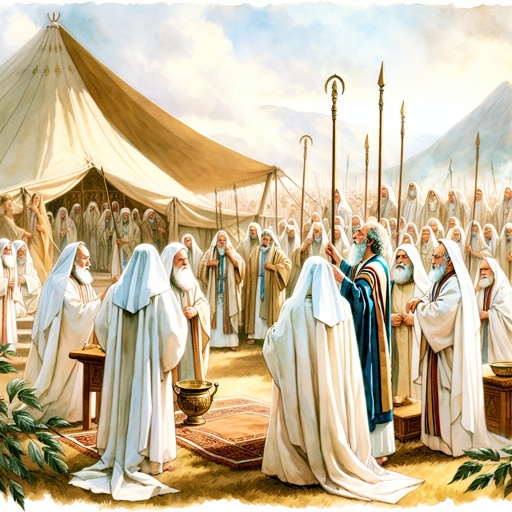
Leviticus 8:1-12

Leviticus 23:15-22

Leviticus 23:17-22

Leviticus 2:3 - "And the remnant of the meat offering shall be Aaron's and his sons': it is a thing most holy of the offerings of the LORD made by fire."

Leviticus 21:3 - "And for his sister a virgin, that is nigh unto him, which hath had no husband; for her may he be defiled."

Leviticus 14:3 - "And the priest shall go forth out of the camp; and the priest shall look, and, behold, if the plague of leprosy be healed in the leper;"

Leviticus 6:3 - "Or have found that which was lost, and lieth concerning it, and sweareth falsely; in any of all these that a man doeth, sinning therein:"

Leviticus 3:4 - "And the two kidneys, and the fat that is on them, which is by the flanks, and the caul above the liver, with the kidneys, it shall he take away."