What does Leviticus 25:45 mean?
"Moreover of the children of the strangers that do sojourn among you, of them shall ye buy, and of their families that are with you, which they begat in your land: and they shall be your possession." - Leviticus 25:45
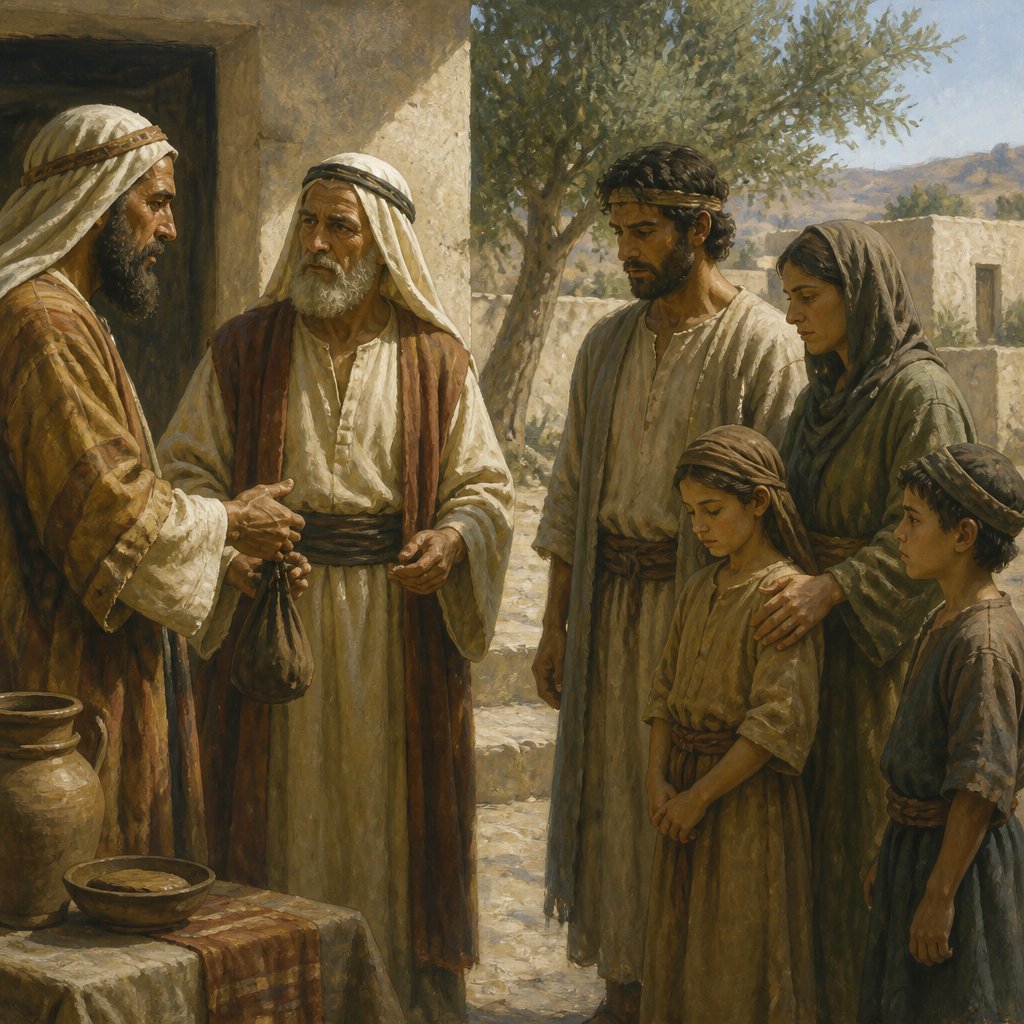
Leviticus 25:45 (KJV) states, “Moreover of the children of the strangers that do sojourn among you, of them shall ye buy, and of their families that are with you, which they begat in your land: and they shall be your possession.” This verse is part of the laws given to the Israelites by God through Moses at Mount Sinai. The book of Leviticus primarily deals with the laws and regulations concerning worship, holiness, and ethical living for the Israelites.
The context of this verse is important to understanding its meaning. In the preceding verses, the Lord gives instructions regarding the treatment of fellow Israelites who become poor and are forced to sell themselves as servants to their brethren. The law requires them to be treated as hired servants rather than as slaves, and they are to be released in the Year of Jubilee. However, in verse 44, the Lord makes a distinction between the Israelite slaves and the “strangers” or foreigners who reside among them. The strangers were not subject to the regulations concerning release in the Year of Jubilee and could be passed down as an inheritance to the owner's children. This verse has been a source of controversy and has been used to justify slavery, so it requires careful examination to understand its meaning in the larger context of the Bible.
One important theme of Leviticus 25:45 is the concept of ownership and possession. In ancient Israelite society, ownership of land, property, and even people was a common practice. This verse reflects the cultural norms of the time and the legal rights of the Israelites over the strangers living among them. However, it is crucial to note that the Bible does not endorse the dehumanization or mistreatment of these strangers. This verse must be understood within the broader context of the biblical commandments to love and care for the stranger, as well as the ethical principles of justice and compassion.
Additionally, this verse raises questions about the biblical view of equality and human dignity. While the Israelites considered themselves as God's chosen people, they were also commanded to treat the strangers with fairness and kindness. Throughout the Old Testament, there are numerous reminders of the Israelites' own experience as foreigners in the land of Egypt and the ethical imperative to show empathy and compassion to the vulnerable and marginalized in society. Leviticus 19:33-34 reinforces this sentiment, stating, “And if a stranger sojourn with thee in your land, ye shall not vex him. But the stranger that dwelleth with you shall be unto you as one born among you, and thou shalt love him as thyself; for ye were strangers in the land of Egypt: I am the Lord your God.”
The symbolism in Leviticus 25:45 may also be interpreted in a broader theological context. It can be seen as a foreshadowing of the inclusive nature of the gospel, where people from all nations and backgrounds are welcomed into the family of God. The New Testament emphasizes the equality of all believers in Christ, regardless of their social or ethnic status. In Galatians 3:28, the apostle Paul writes, “There is neither Jew nor Greek, there is neither bond nor free, there is neither male nor female: for ye are all one in Christ Jesus.” This verse challenges the idea of ownership and possession of others, instead emphasizing the unity and equality of all believers before God.
In conclusion, Leviticus 25:45 presents a complex and challenging aspect of the Old Testament law. It reflects the social and cultural norms of ancient Israel while also raising important ethical and theological questions about justice, compassion, and human dignity. While this verse has been used to justify oppressive systems such as slavery, a careful examination within the larger biblical context reveals a deeper commitment to love and care for the vulnerable and marginalized in society. As Christians, it is important to approach these difficult passages with humility and a willingness to seek God's guidance in understanding and applying His word in our lives.
Have questions about Leviticus 25:45?
Dive deeper into this scripture with Bible Chat — an AI-powered tool for exploring God's Word through conversation. Ask questions, get context, and grow in your understanding of the Bible.
Get Our Apps


Leviticus 25:45 Artwork

Leviticus 25:45 - "Moreover of the children of the strangers that do sojourn among you, of them shall ye buy, and of their families that are with you, which they begat in your land: and they shall be your possession."
"Moreover of the children of the strangers that do sojourn among you, of them shall ye buy, and of their families that are with you, which they begat in your land: and they shall be your possession." - Leviticus 25:45

Isaiah 45:25 - "In the LORD shall all the seed of Israel be justified, and shall glory."

Genesis 45:25 - "¶ And they went up out of Egypt, and came into the land of Canaan unto Jacob their father,"

Leviticus 11:45 - "For I am the LORD that bringeth you up out of the land of Egypt, to be your God: ye shall therefore be holy, for I am holy."

Leviticus 26:45 - "But I will for their sakes remember the covenant of their ancestors, whom I brought forth out of the land of Egypt in the sight of the heathen, that I might be their God: I am the LORD."

Leviticus 14:45 - "And he shall break down the house, the stones of it, and the timber thereof, and all the morter of the house; and he shall carry them forth out of the city into an unclean place."

Matthew 25:45 - "Then shall he answer them, saying, Verily I say unto you, Inasmuch as ye did it not to one of the least of these, ye did it not to me."

Leviticus 13:45 - "And the leper in whom the plague is, his clothes shall be rent, and his head bare, and he shall put a covering upon his upper lip, and shall cry, Unclean, unclean."

"In the LORD shall all the seed of Israel be justified, and shall glory." - Isaiah 45:25

Leviticus 25:26 - "And if the man have none to redeem it, and himself be able to redeem it;"

Leviticus 25:34 - "But the field of the suburbs of their cities may not be sold; for it is their perpetual possession."

Leviticus 25:1 - "And the LORD spake unto Moses in mount Sinai, saying,"

Leviticus 16:25 - "And the fat of the sin offering shall he burn upon the altar."

Leviticus 25:24 - "And in all the land of your possession ye shall grant a redemption for the land."

Leviticus 25:13 - "In the year of this jubile ye shall return every man unto his possession."

Leviticus 25:23 - "¶ The land shall not be sold for ever: for the land is mine; for ye are strangers and sojourners with me."
Leviticus 25:7 - "And for thy cattle, and for the beast that are in thy land, shall all the increase thereof be meat."

"¶ And they went up out of Egypt, and came into the land of Canaan unto Jacob their father," - Genesis 45:25
Leviticus 25:43 - "Thou shalt not rule over him with rigour; but shalt fear thy God."

Ezekiel 45:25 - "In the seventh month, in the fifteenth day of the month, shall he do the like in the feast of the seven days, according to the sin offering, according to the burnt offering, and according to the meat offering, and according to the oil."

Leviticus 25:32 - "Notwithstanding the cities of the Levites, and the houses of the cities of their possession, may the Levites redeem at any time."

Leviticus 27:25 - "And all thy estimations shall be according to the shekel of the sanctuary: twenty gerahs shall be the shekel."

Leviticus 25:25 - "¶ If thy brother be waxen poor, and hath sold away some of his possession, and if any of his kin come to redeem it, then shall he redeem that which his brother sold."

Cycle of sabbath rest year. Leviticus 25:1-7

Leviticus 25:12 - "For it is the jubile; it shall be holy unto you: ye shall eat the increase thereof out of the field."

Leviticus 25:40 - "But as an hired servant, and as a sojourner, he shall be with thee, and shall serve thee unto the year of jubile:"

Leviticus 25:42 - "For they are my servants, which I brought forth out of the land of Egypt: they shall not be sold as bondmen."
Leviticus 11:25 - "And whosoever beareth ought of the carcase of them shall wash his clothes, and be unclean until the even."

Leviticus 25:48 - "After that he is sold he may be redeemed again; one of his brethren may redeem him:"