What does Leviticus 24:14 mean?
"Bring forth him that hath cursed without the camp; and let all that heard him lay their hands upon his head, and let all the congregation stone him." - Leviticus 24:14
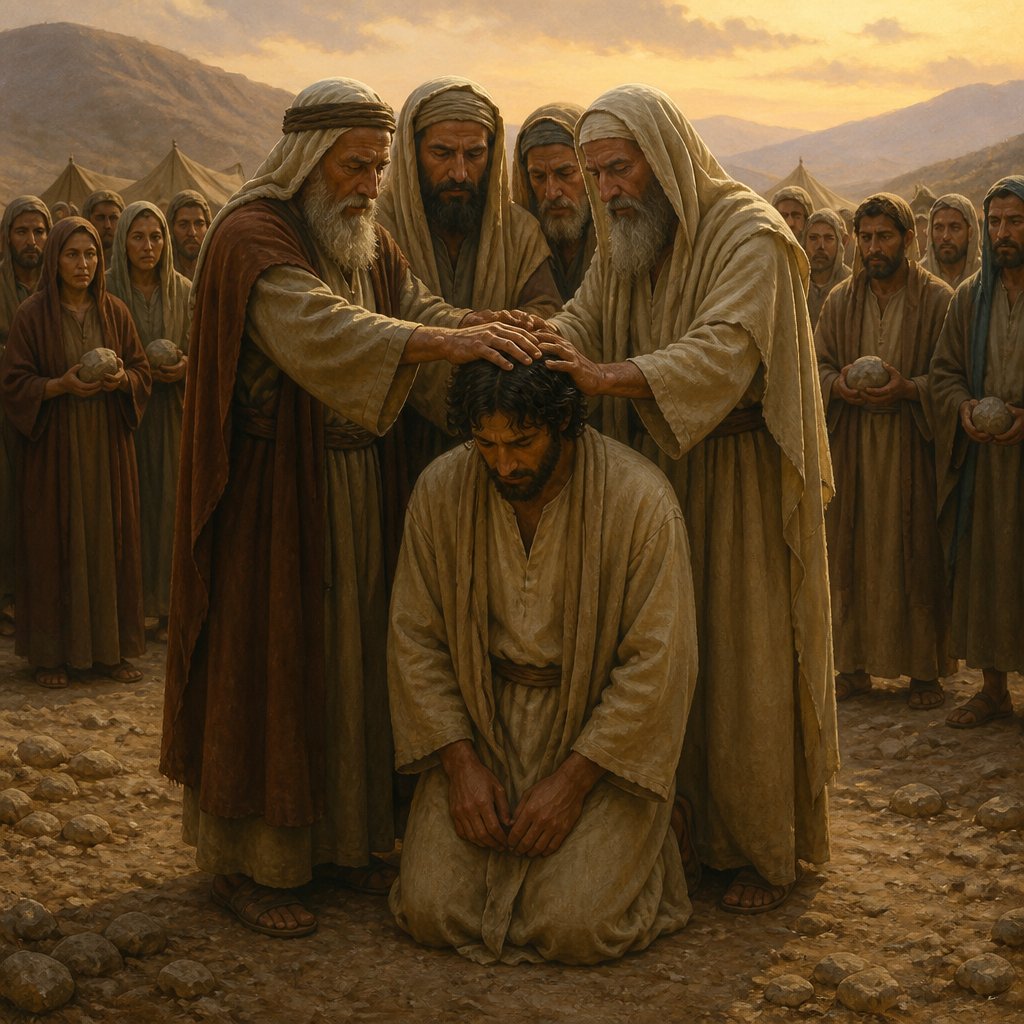
Leviticus 24:14 in the King James Version of the Bible states, "Bring forth him that hath cursed without the camp; and let all that heard him lay their hands upon his head, and let all the congregation stone him." This verse is found in the Old Testament and is part of a chapter that outlines various laws and regulations for the Israelite community. The verse specifically addresses the punishment for cursing in the community and the need for communal participation in the punishment.
The context of this verse is important to understanding its meaning. Leviticus 24 is a chapter that deals with various laws and regulations related to the tabernacle and the conduct of the priests and the people. The chapter begins with instructions for the lampstand, the bread of the presence, and blasphemy laws. The verse in question is part of the section on the punishment for blasphemy, which was considered a serious offense in the Israelite community.
The theme of justice and communal responsibility is central to the meaning of this verse. The verse emphasizes the communal nature of the punishment, as it requires all those who heard the curse to lay their hands on the head of the one who cursed. This act symbolizes the transfer of guilt and responsibility from the individual to the community. By participating in the punishment, the community is taking a stand against blasphemy and upholding the moral and ethical standards of the community.
The symbolism in this verse is significant and multifaceted. The act of laying hands on the head of the one who cursed symbolizes the transfer of guilt and responsibility. This is a powerful image that underscores the communal nature of justice and punishment in the Israelite community. It also serves as a warning to others, as it shows the serious consequences of blasphemy and the importance of upholding the moral and ethical standards of the community.
The act of stoning as a form of punishment is also symbolic in this verse. Stoning was a common form of punishment in ancient times, and it symbolizes a communal act of judgment and justice. By participating in the stoning, the community is collectively condemning the act of blasphemy and reaffirming their commitment to upholding the laws and regulations set forth in the Torah.
Ultimately, this verse serves as a powerful reminder of the importance of community and communal responsibility in upholding the moral and ethical standards of the Israelite community. It emphasizes the seriousness of blasphemy as an offense and the need for collective action in addressing such transgressions. It also highlights the symbolic nature of punishment and the importance of maintaining a just and moral society.
In conclusion, Leviticus 24:14 in the King James Version of the Bible addresses the punishment for cursing in the Israelite community and the need for communal participation in the punishment. The verse underscores the themes of justice and communal responsibility and carries significant symbolism in its depiction of the transfer of guilt and the act of stoning as a form of punishment. Ultimately, this verse serves as a powerful reminder of the importance of community and communal responsibility in upholding the moral and ethical standards of the Israelite community.
Have questions about Leviticus 24:14?
Dive deeper into this scripture with Bible Chat — an AI-powered tool for exploring God's Word through conversation. Ask questions, get context, and grow in your understanding of the Bible.
Get Our Apps


Leviticus 24:14 Artwork

Leviticus 24:14 - "Bring forth him that hath cursed without the camp; and let all that heard him lay their hands upon his head, and let all the congregation stone him."
"Bring forth him that hath cursed without the camp; and let all that heard him lay their hands upon his head, and let all the congregation stone him." - Leviticus 24:14

Leviticus 14:24 - "And the priest shall take the lamb of the trespass offering, and the log of oil, and the priest shall wave them for a wave offering before the LORD:"

Leviticus 24:20-23

Leviticus 6:24 - "¶ And the LORD spake unto Moses, saying,"

Leviticus 24:1 - "And the LORD spake unto Moses, saying,"

Leviticus 24:13 - "And the LORD spake unto Moses, saying,"

Leviticus 14:51

"And the priest shall take the lamb of the trespass offering, and the log of oil, and the priest shall wave them for a wave offering before the LORD:" - Leviticus 14:24

Leviticus 24:12 - "And they put him in ward, that the mind of the LORD might be shewed them."

Leviticus 14:55 - "And for the leprosy of a garment, and of a house,"

Leviticus 14:56 - "And for a rising, and for a scab, and for a bright spot:"

Leviticus 24:17 - "¶ And he that killeth any man shall surely be put to death."

Leviticus 24:18 - "And he that killeth a beast shall make it good; beast for beast."

Leviticus 14:1 - "And the LORD spake unto Moses, saying,"

Leviticus 11:14 - "And the vulture, and the kite after his kind;"

Leviticus 5:14 - "¶ And the LORD spake unto Moses, saying,"

Leviticus 25:24 - "And in all the land of your possession ye shall grant a redemption for the land."

Leviticus 21:24 - "And Moses told it unto Aaron, and to his sons, and unto all the children of Israel."

Leviticus 14:54 - "This is the law for all manner of plague of leprosy, and scall,"

Leviticus 19:24 - "But in the fourth year all the fruit thereof shall be holy to praise the LORD withal."

Leviticus 24:4 - "He shall order the lamps upon the pure candlestick before the LORD continually."

Leviticus 11:24 - "And for these ye shall be unclean: whosoever toucheth the carcase of them shall be unclean until the even."

Genesis 24-14

Leviticus 26:14 - "¶ But if ye will not hearken unto me, and will not do all these commandments;"

Leviticus 14:33 - "¶ And the LORD spake unto Moses and unto Aaron, saying,"

"¶ And the LORD spake unto Moses, saying," - Leviticus 6:24

Leviticus 14:57 - "To teach when it is unclean, and when it is clean: this is the law of leprosy."

"And for the leprosy of a garment, and of a house," - Leviticus 14:55

"And the LORD spake unto Moses, saying," - Leviticus 24:13