What does Leviticus 20:25 mean?
"Ye shall therefore put difference between clean beasts and unclean, and between unclean fowls and clean: and ye shall not make your souls abominable by beast, or by fowl, or by any manner of living thing that creepeth on the ground, which I have separated from you as unclean." - Leviticus 20:25
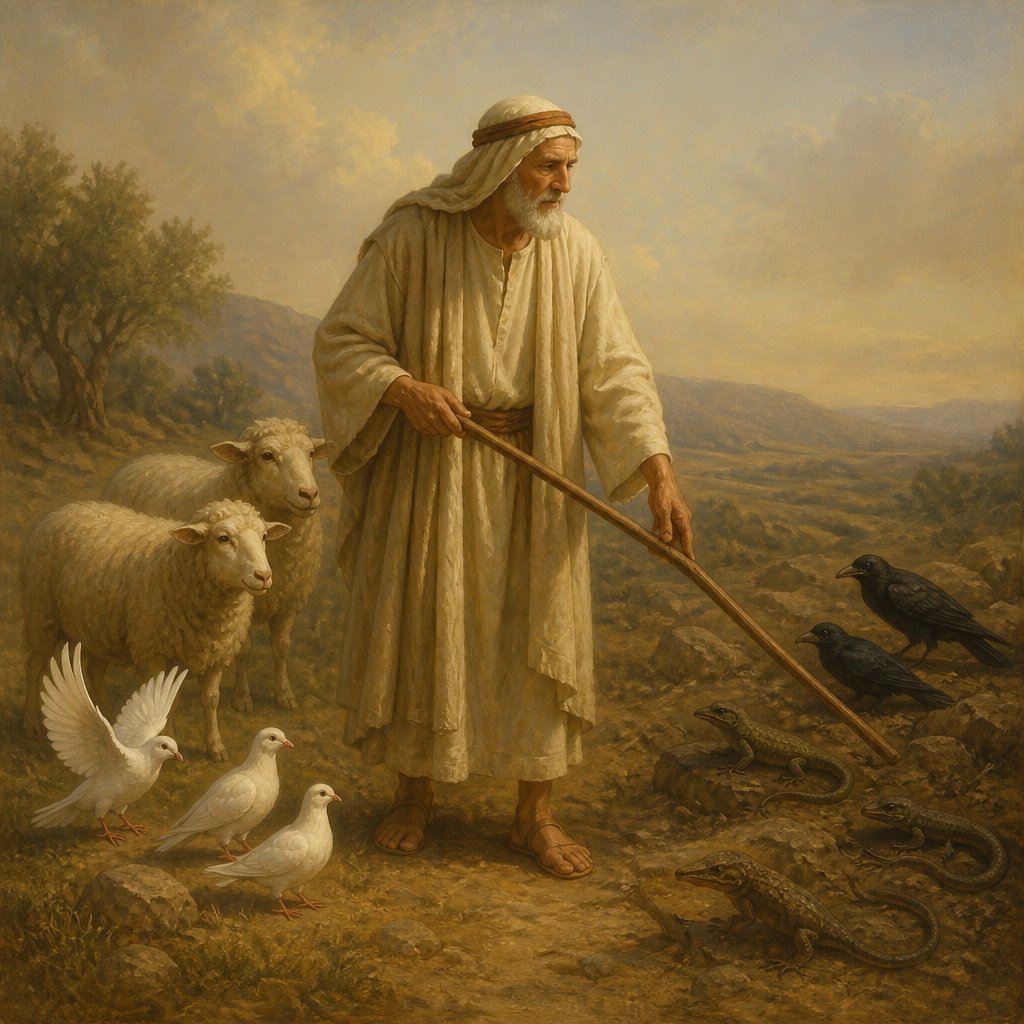
Leviticus 20:25 in the King James Version (KJV) of the Bible states: "Ye shall therefore put difference between clean beasts and unclean, and between unclean fowls and clean: and ye shall not make your souls abominable by beast, or by fowl, or by any manner of living thing that creepeth on the ground, which I have separated from you as unclean."
This verse is part of the Book of Leviticus, which is the third book in the Old Testament of the Bible. It is a book of laws and rituals that were given to the Israelites by God through Moses. The book covers a wide range of topics, including moral behavior, cleanliness, punishment for sin, and the role of priests and sacrifice in the worship of God.
In Leviticus 20:25, God commands the Israelites to make a clear distinction between clean and unclean animals, and to not defile themselves by consuming or interacting with anything that has been deemed unclean. This command is part of the larger framework of the Israelite dietary laws, which are laid out in the following chapters of Leviticus.
The concept of clean and unclean animals has a deeper symbolic meaning in the Bible. In the Old Testament, the distinction between clean and unclean animals was not just about dietary habits, but it also represented the distinction between purity and impurity, holiness and defilement. The Israelites were called to be a holy people, set apart for God's purposes, and adhering to the dietary laws was a way for them to demonstrate their obedience and commitment to God.
The theme of holiness and separation is central to this verse and to the entire book of Leviticus. The Israelites were called to be a distinct and separate people, living according to God's laws and commandments. This separation was not just physical, but also moral and spiritual. By obeying the laws regarding clean and unclean animals, the Israelites were making a visible and tangible statement about their commitment to God and their desire to be set apart from the surrounding pagan cultures.
The symbolism of clean and unclean animals continues into the New Testament, where it takes on a new meaning in light of the coming of Christ. In Acts 10, Peter has a vision in which he is told to kill and eat animals that were previously considered unclean. This vision was a powerful symbol of the inclusion of the Gentiles in God's plan of redemption, breaking down the barriers between Jew and Gentile and demonstrating that all people are now welcome in the kingdom of God.
In a broader context, Leviticus 20:25 speaks to the idea of moral and spiritual purity in general. The Israelites were called to be a holy people, set apart for God's purposes, and to refrain from anything that would defile them. This concept of holiness and separation continues into the New Testament, where Christians are called to live lives that are pleasing and acceptable to God, avoiding anything that would defile their bodies, minds, or spirits.
Overall, Leviticus 20:25 is a powerful reminder of the importance of holiness and separation in the lives of God's people. It serves as a symbol of the Israelites' commitment to God and their desire to be set apart from the surrounding pagan cultures. It also has a broader significance in terms of moral and spiritual purity, reminding us to live lives that are pleasing and acceptable to God. As we reflect on this verse, may we be encouraged to pursue holiness and purity in every area of our lives, demonstrating our commitment to God and our desire to be set apart for His purposes.
Have questions about Leviticus 20:25?
Dive deeper into this scripture with Bible Chat — an AI-powered tool for exploring God's Word through conversation. Ask questions, get context, and grow in your understanding of the Bible.
Get Our Apps


Leviticus 20:25 Artwork

Leviticus 20:25 - "Ye shall therefore put difference between clean beasts and unclean, and between unclean fowls and clean: and ye shall not make your souls abominable by beast, or by fowl, or by any manner of living thing that creepeth on the ground, which I have separated from you as unclean."
"Ye shall therefore put difference between clean beasts and unclean, and between unclean fowls and clean: and ye shall not make your souls abominable by beast, or by fowl, or by any manner of living thing that creepeth on the ground, which I have separated from you as unclean." - Leviticus 20:25

Leviticus 25:20 - "And if ye shall say, What shall we eat the seventh year? behold, we shall not sow, nor gather in our increase:"

Leviticus 23:20
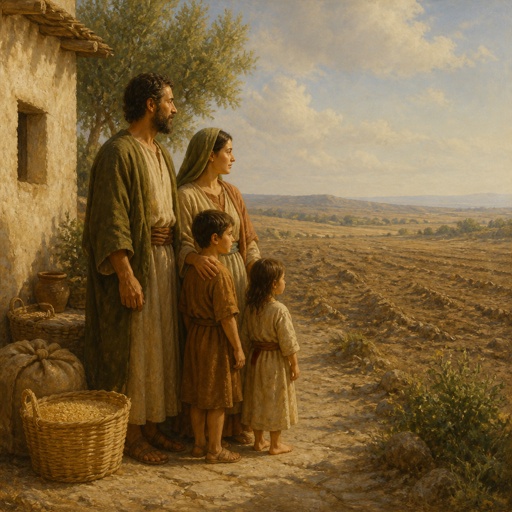
"And if ye shall say, What shall we eat the seventh year? behold, we shall not sow, nor gather in our increase:" - Leviticus 25:20

Leviticus 24:20-23

Leviticus 25:26 - "And if the man have none to redeem it, and himself be able to redeem it;"

Leviticus 25:34 - "But the field of the suburbs of their cities may not be sold; for it is their perpetual possession."

Leviticus 25:1 - "And the LORD spake unto Moses in mount Sinai, saying,"

Leviticus 16:25 - "And the fat of the sin offering shall he burn upon the altar."

Leviticus 20:1 - "And the LORD spake unto Moses, saying,"

Leviticus 10:20 - "And when Moses heard that, he was content."

Leviticus 25:24 - "And in all the land of your possession ye shall grant a redemption for the land."

Leviticus 25:13 - "In the year of this jubile ye shall return every man unto his possession."

Leviticus 25:23 - "¶ The land shall not be sold for ever: for the land is mine; for ye are strangers and sojourners with me."
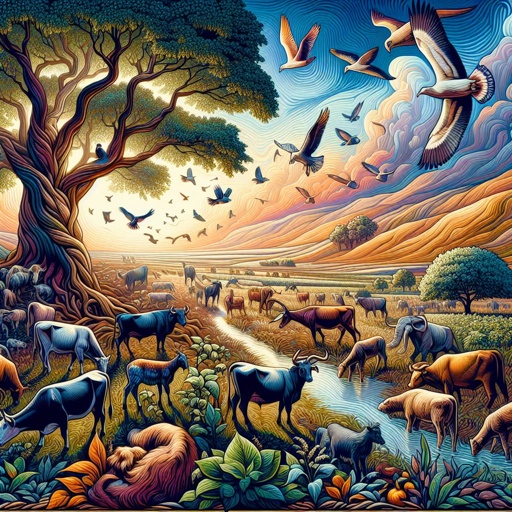
Leviticus 25:7 - "And for thy cattle, and for the beast that are in thy land, shall all the increase thereof be meat."
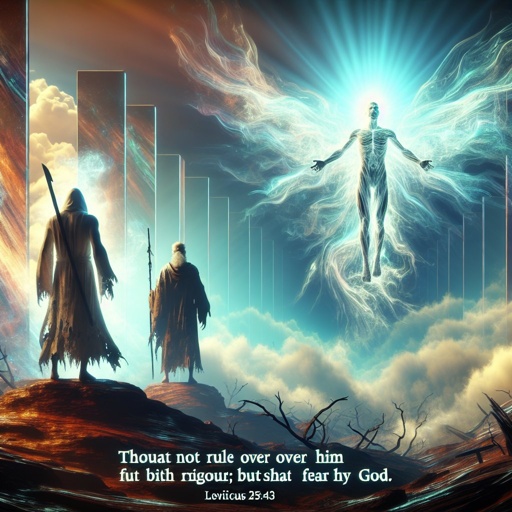
Leviticus 25:43 - "Thou shalt not rule over him with rigour; but shalt fear thy God."

Leviticus 25:32 - "Notwithstanding the cities of the Levites, and the houses of the cities of their possession, may the Levites redeem at any time."

Leviticus 27:25 - "And all thy estimations shall be according to the shekel of the sanctuary: twenty gerahs shall be the shekel."

Leviticus 20:22-26 simple picture

Picture to summarize Leviticus 20:22-26

Leviticus 25:25 - "¶ If thy brother be waxen poor, and hath sold away some of his possession, and if any of his kin come to redeem it, then shall he redeem that which his brother sold."

Cycle of sabbath rest year. Leviticus 25:1-7

Leviticus 25:12 - "For it is the jubile; it shall be holy unto you: ye shall eat the increase thereof out of the field."

Leviticus 25:40 - "But as an hired servant, and as a sojourner, he shall be with thee, and shall serve thee unto the year of jubile:"

Leviticus 20:20 - "And if a man shall lie with his uncle's wife, he hath uncovered his uncle's nakedness: they shall bear their sin; they shall die childless."

Leviticus 25:42 - "For they are my servants, which I brought forth out of the land of Egypt: they shall not be sold as bondmen."
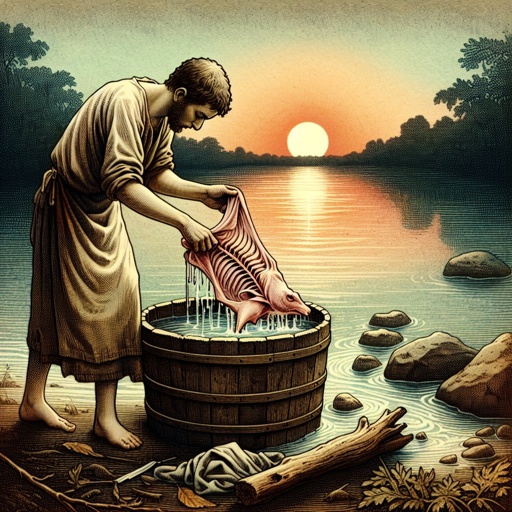
Leviticus 11:25 - "And whosoever beareth ought of the carcase of them shall wash his clothes, and be unclean until the even."

Leviticus 25:48 - "After that he is sold he may be redeemed again; one of his brethren may redeem him:"

Leviticus 9:20 - "And they put the fat upon the breasts, and he burnt the fat upon the altar:"