What does Leviticus 1:17 mean?
"And he shall cleave it with the wings thereof, but shall not divide it asunder: and the priest shall burn it upon the altar, upon the wood that is upon the fire: it is a burnt sacrifice, an offering made by fire, of a sweet savour unto the LORD." - Leviticus 1:17
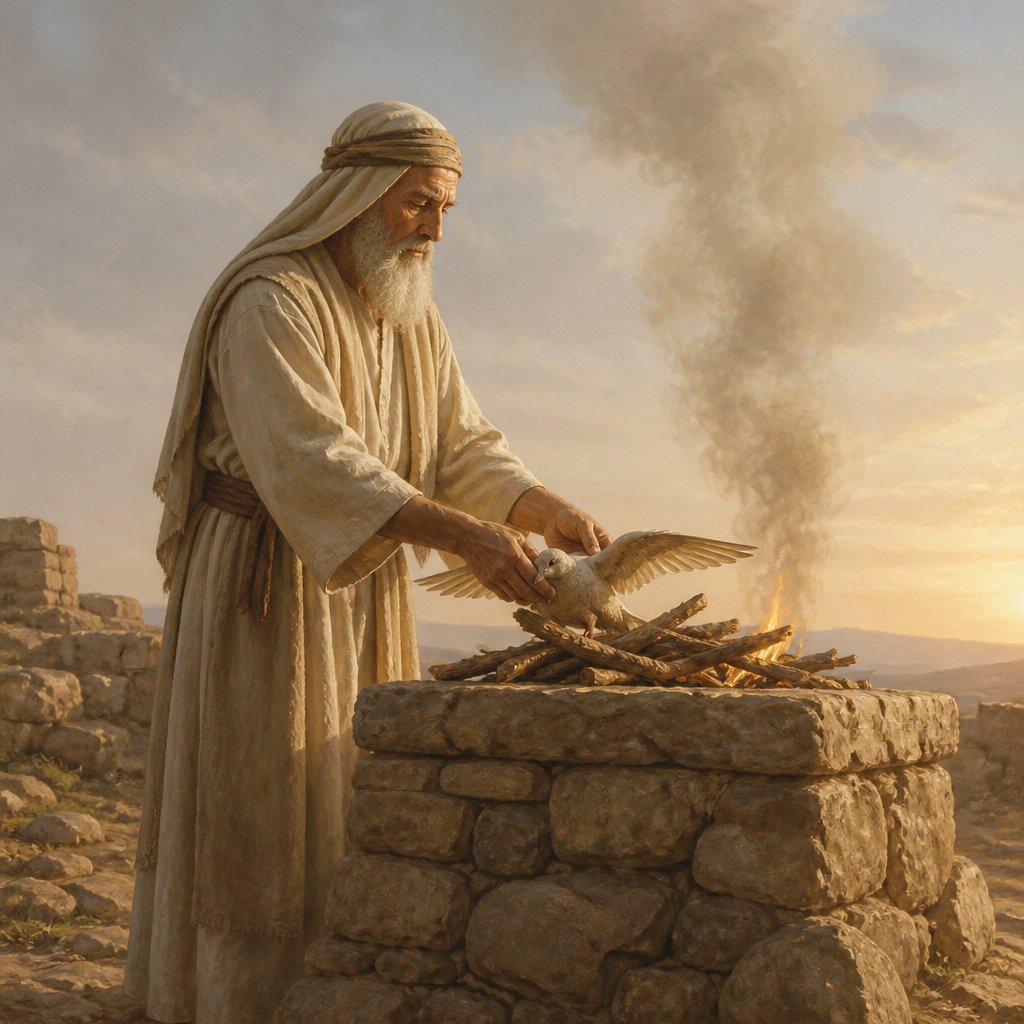
Leviticus 1:17 (KJV) states, "And he shall cleave it with the wings thereof, but shall not divide it asunder: and the priest shall burn it upon the altar, upon the wood that is upon the fire: it is a burnt sacrifice, an offering made by fire, of a sweet savour unto the Lord."
The book of Leviticus, from which this verse is taken, is the third book of the Bible and is primarily concerned with the religious and ethical laws of the Israelite people. This particular verse comes from a section specifically discussing the burnt offerings that were to be made to the Lord. In this context, the verse is part of a larger set of instructions for the proper way to make these sacrifices.
At first glance, this verse may seem like a simple directive for the proper way to prepare a burnt offering. However, a deeper examination reveals a rich and complex set of meanings and symbolism. The act of sacrificing an animal and burning it as an offering to God was a central part of Israelite religious practice, and the detailed instructions for how to do so were vital for maintaining the purity and holiness of the ritual.
The verse begins by describing how the animal is to be cleaved with its wings, but not completely divided. This seemingly specific instruction has been interpreted in various ways. Some scholars suggest that the act of cleaving the animal with its wings intact symbolizes the entirety and oneness of the sacrifice. It is to be presented as a whole, not fragmented or divided in any way. This symbolizes the complete devotion and surrender of the animal to God, as well as the unity and coherence of the Israelite community in their worship.
The next part of the verse instructs that the priest is to burn the offering on the altar, specifically on the wood that is already on the fire. This detail points to the importance of the altar and the fire as sacred elements in the act of sacrifice. The fire represents the presence of God and the purifying power of His holiness. By burning the offering on the wood already on the fire, the priest is ensuring that the sacrifice is consumed completely and transformed into smoke, symbolizing the ascent of the offering to God and His acceptance of it.
The verse concludes by noting that the burnt sacrifice is "of a sweet savour unto the Lord." This phrase is commonly used throughout the book of Leviticus to describe the pleasing aroma that rises from the burnt sacrifices. On a literal level, it refers to the pleasant scent of the burning flesh as it rises to the heavens. However, on a symbolic level, it signifies the acceptance and approval of the sacrifice by God. The sweet savour represents the righteousness and faithfulness of the worshipper, and the Lord's pleasure in their obedience.
In the broader context of the book of Leviticus, this verse exemplifies the themes of obedience, holiness, and the importance of ritual in the Israelite religion. The meticulous instructions for the burnt offerings served to uphold the purity and integrity of the community's worship, as well as their relationship with God. The symbolism of the sacrifice as a whole, the significance of the altar and fire, and the pleasing aroma all point to the deep spiritual significance of the act of sacrifice in the Israelite religious tradition.
Today, this verse can be seen as a reminder of the importance of devotion, obedience, and the offering of oneself to God in worship. While the practices of burnt offerings may no longer be a part of modern religious traditions, the fundamental principles of complete surrender, purification, and pleasing God with our worship remain relevant. The imagery and symbolism in this verse also serve as a reminder of the depth and richness of ancient religious practices, and the ways in which they can still provide profound insights into the nature of faith and devotion.
Have questions about Leviticus 1:17?
Dive deeper into this scripture with Bible Chat — an AI-powered tool for exploring God's Word through conversation. Ask questions, get context, and grow in your understanding of the Bible.
Get Our Apps


Leviticus 1:17 Artwork

Leviticus 1:17 - "And he shall cleave it with the wings thereof, but shall not divide it asunder: and the priest shall burn it upon the altar, upon the wood that is upon the fire: it is a burnt sacrifice, an offering made by fire, of a sweet savour unto the LORD."
"And he shall cleave it with the wings thereof, but shall not divide it asunder: and the priest shall burn it upon the altar, upon the wood that is upon the fire: it is a burnt sacrifice, an offering made by fire, of a sweet savour unto the LORD." - Leviticus 1:17

Leviticus 23:17-22

Leviticus 17:1 - "And the LORD spake unto Moses, saying,"

Levítico 1:1–17

Leviticus 1:7 - "And the sons of Aaron the priest shall put fire upon the altar, and lay the wood in order upon the fire:"

"And the LORD spake unto Moses, saying," - Leviticus 17:1

Leviticus 17:7

Leviticus 11:17 - "And the little owl, and the cormorant, and the great owl,"

Leviticus 22:17 - "¶ And the LORD spake unto Moses, saying,"
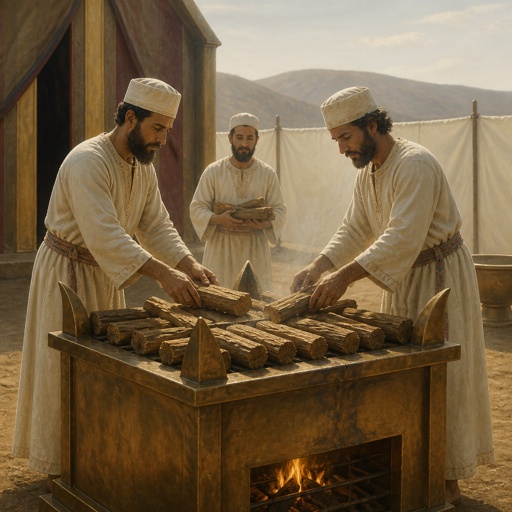
"And the sons of Aaron the priest shall put fire upon the altar, and lay the wood in order upon the fire:" - Leviticus 1:7

Leviticus 7:17 - "But the remainder of the flesh of the sacrifice on the third day shall be burnt with fire."

Leviticus 24:17 - "¶ And he that killeth any man shall surely be put to death."

Leviticus 15:17 - "And every garment, and every skin, whereon is the seed of copulation, shall be washed with water, and be unclean until the even."

Leviticus 17:3 - "What man soever there be of the house of Israel, that killeth an ox, or lamb, or goat, in the camp, or that killeth it out of the camp,"

Leviticus 27:17 - "If he sanctify his field from the year of jubile, according to thy estimation it shall stand."

Leviticus 17:16 - "But if he wash them not, nor bathe his flesh; then he shall bear his iniquity."

"¶ And the LORD spake unto Moses, saying," - Leviticus 22:17

"And the little owl, and the cormorant, and the great owl," - Leviticus 11:17

Leviticus 9:17 - "And he brought the meat offering, and took an handful thereof, and burnt it upon the altar, beside the burnt sacrifice of the morning."

Leviticus 8:17 - "But the bullock, and his hide, his flesh, and his dung, he burnt with fire without the camp; as the LORD commanded Moses."

Leviticus 4:17 - "And the priest shall dip his finger in some of the blood, and sprinkle it seven times before the LORD, even before the vail."

Leviticus 3:17 - "It shall be a perpetual statute for your generations throughout all your dwellings, that ye eat neither fat nor blood."

Leviticus 17:9 - "And bringeth it not unto the door of the tabernacle of the congregation, to offer it unto the LORD; even that man shall be cut off from among his people."

Leviticus 25:17 - "Ye shall not therefore oppress one another; but thou shalt fear thy God: for I am the LORD your God."

Leviticus 17:6 - "And the priest shall sprinkle the blood upon the altar of the LORD at the door of the tabernacle of the congregation, and burn the fat for a sweet savour unto the LORD."

Leviticus 17:8 - "¶ And thou shalt say unto them, Whatsoever man there be of the house of Israel, or of the strangers which sojourn among you, that offereth a burnt offering or sacrifice,"

Leviticus 19:17 - "¶ Thou shalt not hate thy brother in thine heart: thou shalt in any wise rebuke thy neighbour, and not suffer sin upon him."

Leviticus 17:7 - "And they shall no more offer their sacrifices unto devils, after whom they have gone a whoring. This shall be a statute for ever unto them throughout their generations."

Leviticus 13:17 - "And the priest shall see him: and, behold, if the plague be turned into white; then the priest shall pronounce him clean that hath the plague: he is clean."