What does Leviticus 17:15 mean?
"And every soul that eateth that which died of itself, or that which was torn with beasts, whether it be one of your own country, or a stranger, he shall both wash his clothes, and bathe himself in water, and be unclean until the even: then shall he be clean." - Leviticus 17:15
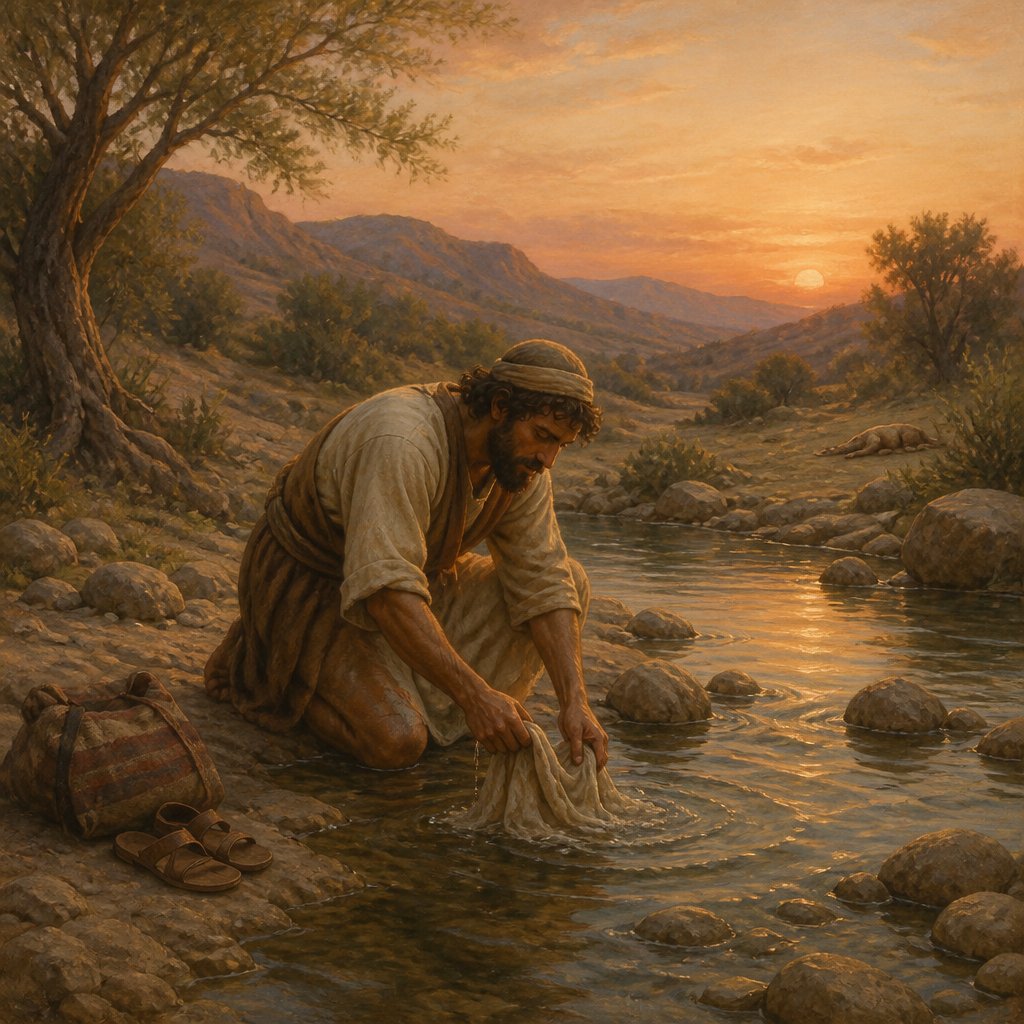
Leviticus 17:15 (KJV) states, "And every soul that eateth that which died of itself, or that which was torn with beasts, whether it be one of your own country, or a stranger, he shall both wash his clothes, and bathe himself in water, and be unclean until the even: then shall he be clean."
The book of Leviticus is the third book of the Hebrew Bible and the Old Testament, and it is largely concerned with rituals and laws specific to the priests and the Israelites. Leviticus 17:15 is part of these laws, and it deals with the proper handling of animals that have died by themselves or have been torn by beasts.
In the context of Leviticus, this verse is found within a section that emphasizes the importance of making proper atonement for sin through the blood of animals. In Leviticus 17:11, it is stated, "For the life of the flesh is in the blood: and I have given it to you upon the altar to make an atonement for your souls: for it is the blood that maketh an atonement for the soul." Therefore, the previous verses set the stage for understanding the significance of Leviticus 17:15 in terms of cleanliness and purification.
This verse reflects the belief that contact with death or blood had the potential to defile a person, making them unclean in the sight of God. This concept of ritual purity and uncleanness was central to the religious life of the Israelites, and it was necessary for them to adhere to these laws in order to maintain their relationship with God.
The specific actions required in Leviticus 17:15 serve as a symbolic cleansing of the individual who has come into contact with the forbidden food. Washing one's clothes and bathing in water were physical acts that symbolized spiritual purification. The fact that both a native Israelite and a foreigner were subject to these laws indicates that ritual cleanliness was expected of everyone within the community, regardless of their background.
Leviticus 17:15 emphasizes the seriousness of defilement and the need for proper repentance and restoration. The requirement to be unclean until the evening, followed by the assurance of being clean again, highlights the symbolic importance of the process of purification. The evening was seen as the beginning of a new day, signifying a fresh start and a renewed state of purity.
Symbolically, the command to wash clothes and bathe in water suggests the idea of washing away impurity and being reborn into a state of cleanliness. The water, a common symbol of purification and renewal in many ancient cultures, represents the cleansing of the soul and the removal of sin. The physical act of washing serves as a tangible demonstration of the individual's repentance and desire to be reconciled with God.
From a broader perspective, Leviticus 17:15 also highlights the themes of obedience, holiness, and the need to adhere to God's commands. The Israelites were called to demonstrate their faithfulness to God by following these rituals and laws, even in matters as seemingly mundane as handling the carcasses of animals. By obeying these regulations, they were reaffirming their commitment to the covenant relationship with God.
In conclusion, Leviticus 17:15 serves as a significant reminder of the Israelites' commitment to ritual purity and their dedication to seeking forgiveness and restoration in the eyes of God. The symbolic actions of washing and bathing illustrate the importance of repentance and the desire for spiritual renewal. This verse contributes to the overarching themes of holiness, obedience, and the need for atonement that are prevalent throughout the book of Leviticus.
Have questions about Leviticus 17:15?
Dive deeper into this scripture with Bible Chat — an AI-powered tool for exploring God's Word through conversation. Ask questions, get context, and grow in your understanding of the Bible.
Get Our Apps


Leviticus 17:15 Artwork
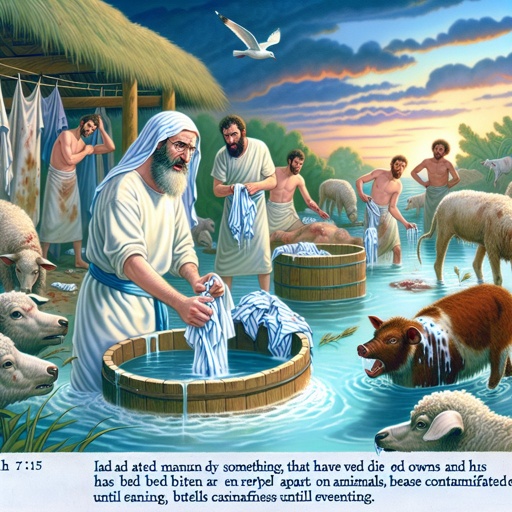
Leviticus 17:15 - "And every soul that eateth that which died of itself, or that which was torn with beasts, whether it be one of your own country, or a stranger, he shall both wash his clothes, and bathe himself in water, and be unclean until the even: then shall he be clean."
"And every soul that eateth that which died of itself, or that which was torn with beasts, whether it be one of your own country, or a stranger, he shall both wash his clothes, and bathe himself in water, and be unclean until the even: then shall he be clean." - Leviticus 17:15

Leviticus 15:17 - "And every garment, and every skin, whereon is the seed of copulation, shall be washed with water, and be unclean until the even."
"And every garment, and every skin, whereon is the seed of copulation, shall be washed with water, and be unclean until the even." - Leviticus 15:17

Leviticus 17:7

Leviticus 23:17-22

Leviticus 11:17 - "And the little owl, and the cormorant, and the great owl,"

Leviticus 22:17 - "¶ And the LORD spake unto Moses, saying,"

Leviticus 23:15-22

Leviticus 17:1 - "And the LORD spake unto Moses, saying,"

Leviticus 11:15 - "Every raven after his kind;"

Leviticus 15:1 - "And the LORD spake unto Moses and to Aaron, saying,"

Leviticus 7:17 - "But the remainder of the flesh of the sacrifice on the third day shall be burnt with fire."

Leviticus 24:17 - "¶ And he that killeth any man shall surely be put to death."

Leviticus 15:15 - "And the priest shall offer them, the one for a sin offering, and the other for a burnt offering; and the priest shall make an atonement for him before the LORD for his issue."

Genesis 17-15

Provers 15:17

Acts 17:15

Genesis 15:17

Leviticus 15:9 - "And what saddle soever he rideth upon that hath the issue shall be unclean."

Leviticus 2:15 - "And thou shalt put oil upon it, and lay frankincense thereon: it is a meat offering."

Leviticus 22:15 - "And they shall not profane the holy things of the children of Israel, which they offer unto the LORD;"

Leviticus 17:3 - "What man soever there be of the house of Israel, that killeth an ox, or lamb, or goat, in the camp, or that killeth it out of the camp,"

Leviticus 27:17 - "If he sanctify his field from the year of jubile, according to thy estimation it shall stand."

Leviticus 17:16 - "But if he wash them not, nor bathe his flesh; then he shall bear his iniquity."

"¶ And the LORD spake unto Moses, saying," - Leviticus 22:17

"And the LORD spake unto Moses, saying," - Leviticus 17:1

"And the little owl, and the cormorant, and the great owl," - Leviticus 11:17

Leviticus 9:17 - "And he brought the meat offering, and took an handful thereof, and burnt it upon the altar, beside the burnt sacrifice of the morning."

Leviticus 13:15 - "And the priest shall see the raw flesh, and pronounce him to be unclean: for the raw flesh is unclean: it is a leprosy."