What does Leviticus 16:4 mean?
"He shall put on the holy linen coat, and he shall have the linen breeches upon his flesh, and shall be girded with a linen girdle, and with the linen mitre shall he be attired: these are holy garments; therefore shall he wash his flesh in water, and so put them on." - Leviticus 16:4
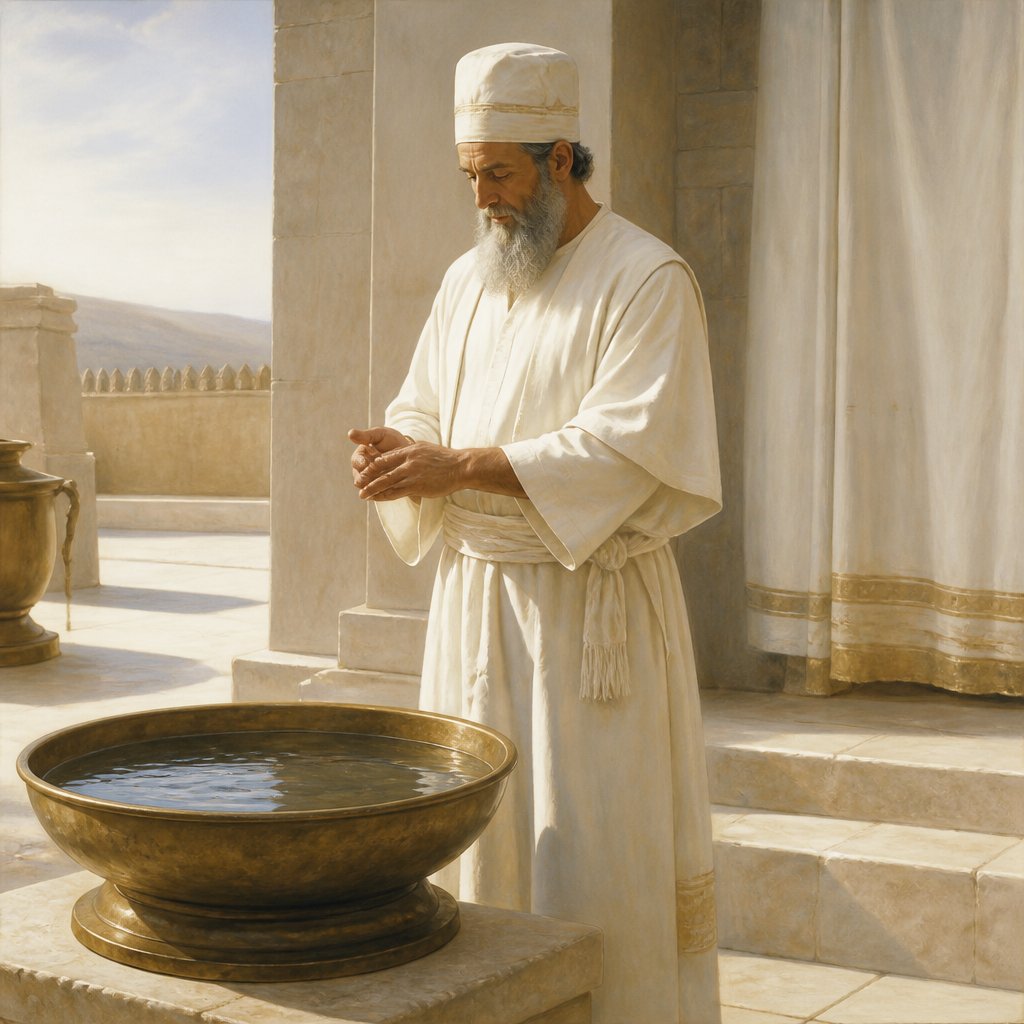
Leviticus 16:4 (KJV) - "He shall put on the holy linen coat, and he shall have the linen breeches upon his flesh, and shall be girded with a linen girdle, and with the linen mitre shall he be attired: these are holy garments; therefore shall he wash his flesh in water, and so put them on."
The book of Leviticus is the third book of the Hebrew Bible and the Old Testament. It is a book of laws and regulations given by God to the Israelites through Moses. Leviticus 16:4 is part of a passage that describes the ritual that Aaron, the high priest, must perform on the Day of Atonement. This ritual, also known as Yom Kippur, was the most important and sacred day in the Jewish calendar.
The verse begins with a description of the garments that Aaron must wear during the ritual. He is instructed to put on the holy linen coat, linen breeches, linen girdle, and linen mitre. These garments were specifically designed for the high priest and were considered holy because they were set apart for use in the service of God. The emphasis on linen reflects the purity and righteousness required for the high priest to perform this sacred duty.
The use of linen in the garments also carries symbolic significance. In the Bible, linen is often associated with purity and righteousness. In Revelation 19:8, it is said that the bride of Christ is given "fine linen, clean and white," which represents the righteous acts of the saints. By wearing these linen garments, Aaron is symbolically representing the holiness and purity required to stand before God and make atonement for the sins of the people.
It is important to note that the high priest had to wash himself with water before putting on these holy garments. This act of washing symbolizes the need for spiritual cleansing and purification before approaching God. In this context, water symbolizes purification and renewal, which are necessary for the high priest to fulfill his role as a mediator between God and the people.
The broader theme of this verse is the concept of holiness and the requirements for approaching God. The high priest's garments, the act of washing, and the ritual of atonement all point to the need for purity and righteousness in the presence of God. This theme is central to the book of Leviticus, which outlines the various laws and regulations that the Israelites were to follow in order to maintain their holiness and relationship with God.
In a broader cultural and historical context, the ritual described in Leviticus 16:4 also serves as a foreshadowing of the ultimate atonement provided by Jesus Christ. The high priest in the Old Testament served as a mediator between God and the people, making atonement for their sins through the sacrificial system. In the New Testament, Jesus is described as the ultimate high priest who offered himself as a sacrifice for the sins of humanity, providing a way for reconciliation with God.
In conclusion, Leviticus 16:4 provides a detailed and in-depth look at the requirements for the high priest to perform the Day of Atonement ritual. The use of specific garments, the act of washing, and the emphasis on holiness and purity all point to the need for a righteous mediator to stand before God on behalf of the people. This verse not only emphasizes the importance of holiness and purity in approaching God but also serves as a foreshadowing of the ultimate atonement provided by Jesus Christ in the New Testament.
Have questions about Leviticus 16:4?
Dive deeper into this scripture with Bible Chat — an AI-powered tool for exploring God's Word through conversation. Ask questions, get context, and grow in your understanding of the Bible.
Get Our Apps


Leviticus 16:4 Artwork

Leviticus 16:4 - "He shall put on the holy linen coat, and he shall have the linen breeches upon his flesh, and shall be girded with a linen girdle, and with the linen mitre shall he be attired: these are holy garments; therefore shall he wash his flesh in water, and so put them on."
"He shall put on the holy linen coat, and he shall have the linen breeches upon his flesh, and shall be girded with a linen girdle, and with the linen mitre shall he be attired: these are holy garments; therefore shall he wash his flesh in water, and so put them on." - Leviticus 16:4

Leviticus 4:16 - "And the priest that is anointed shall bring of the bullock's blood to the tabernacle of the congregation:"

"And the priest that is anointed shall bring of the bullock's blood to the tabernacle of the congregation:" - Leviticus 4:16

Leviticus 16:8

leviticus 16:7-10

Leviticus 21:16 - "¶ And the LORD spake unto Moses, saying,"

Leviticus 9:16 - "And he brought the burnt offering, and offered it according to the manner."

Leviticus 11:16 - "And the owl, and the night hawk, and the cuckow, and the hawk after his kind,"

Leviticus 16:25 - "And the fat of the sin offering shall he burn upon the altar."

Leviticus 26: 4-6
Leviticus 26: 4-6

Leviticus 26: 4-6

Leviticus 18:16 - "Thou shalt not uncover the nakedness of thy brother's wife: it is thy brother's nakedness."

Leviticus 4:1 - "And the LORD spake unto Moses, saying,"

Leviticus 27:4 - "And if it be a female, then thy estimation shall be thirty shekels."

Leviticus 17:16 - "But if he wash them not, nor bathe his flesh; then he shall bear his iniquity."

Leviticus 16:7 - "And he shall take the two goats, and present them before the LORD at the door of the tabernacle of the congregation."
"¶ And the LORD spake unto Moses, saying," - Leviticus 21:16

Leviticus 16:31 - "It shall be a sabbath of rest unto you, and ye shall afflict your souls, by a statute for ever."

Leviticus 13:16 - "Or if the raw flesh turn again, and be changed unto white, he shall come unto the priest;"

Leviticus 16:8 - "And Aaron shall cast lots upon the two goats; one lot for the LORD, and the other lot for the scapegoat."

Leviticus 16:9 - "And Aaron shall bring the goat upon which the LORD'S lot fell, and offer him for a sin offering."

Leviticus 16:3 - "Thus shall Aaron come into the holy place: with a young bullock for a sin offering, and a ram for a burnt offering."

Leviticus 16:16 - "And he shall make an atonement for the holy place, because of the uncleanness of the children of Israel, and because of their transgressions in all their sins: and so shall he do for the tabernacle of the congregation, that remaineth among them in the midst of their uncleanness."

Leviticus 16:1 - "And the LORD spake unto Moses after the death of the two sons of Aaron, when they offered before the LORD, and died;"

Leviticus 22:16 - "Or suffer them to bear the iniquity of trespass, when they eat their holy things: for I the LORD do sanctify them."

Leviticus 16:6 - "And Aaron shall offer his bullock of the sin offering, which is for himself, and make an atonement for himself, and for his house."
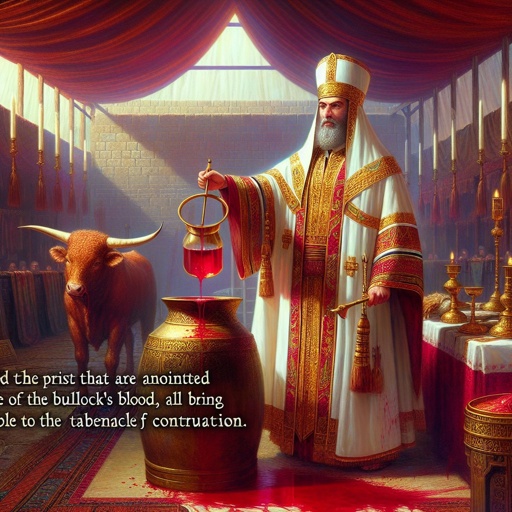
Leviticus 4:5 - "And the priest that is anointed shall take of the bullock's blood, and bring it to the tabernacle of the congregation:"

Leviticus 3:16 - "And the priest shall burn them upon the altar: it is the food of the offering made by fire for a sweet savour: all the fat is the LORD'S."