What does Leviticus 15:5 mean?
"And whosoever toucheth his bed shall wash his clothes, and bathe himself in water, and be unclean until the even." - Leviticus 15:5
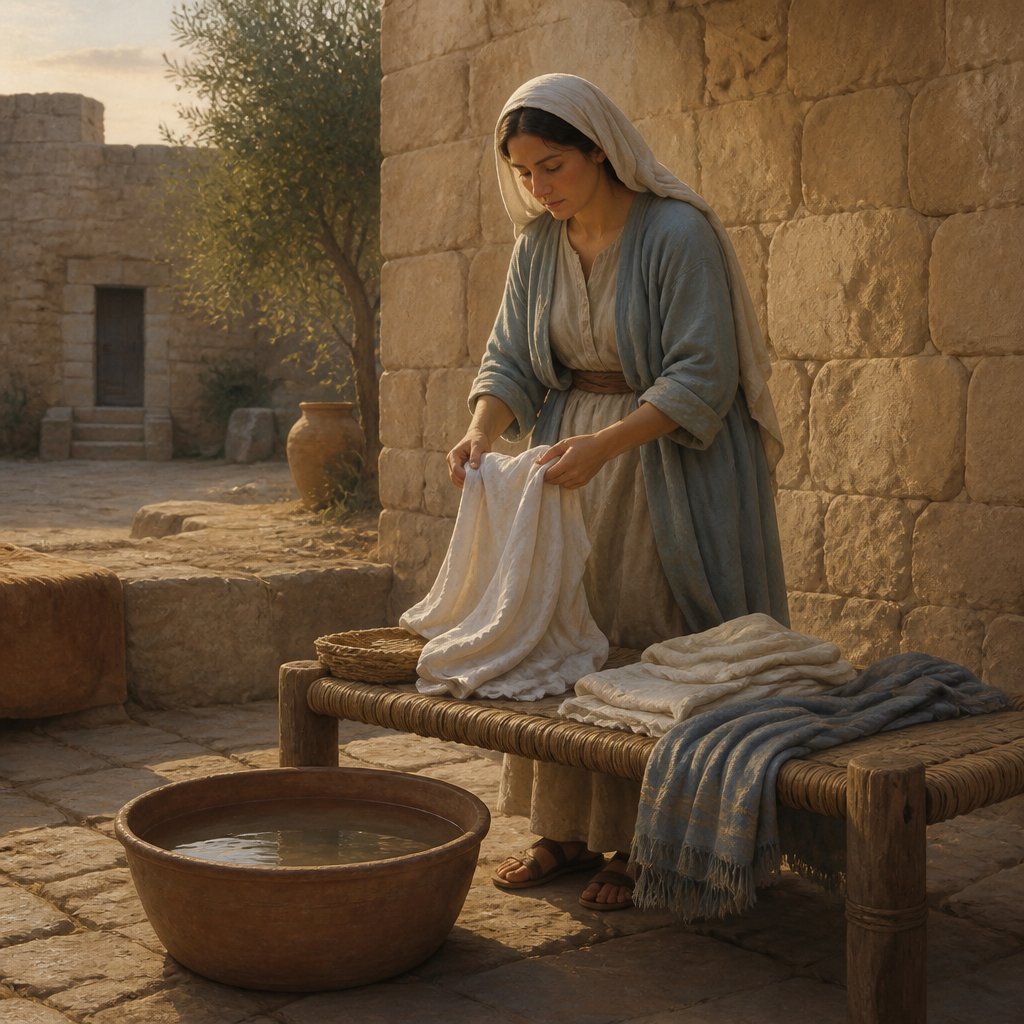
Leviticus 15:5 (KJV) states, "And whosoever toucheth his bed shall wash his clothes, and bathe himself in water, and be unclean until the even."
The book of Leviticus is part of the Torah, the first five books of the Old Testament, and it primarily deals with laws and rituals. This particular verse falls under a section of the book that deals with bodily discharges and their implications for ritual purity. In this context, the verse addresses the issue of becoming unclean through contact with one's bed.
The verse begins by stating that "whosoever toucheth his bed" shall undergo a series of steps to restore their ritual purity. It is important to note that in the context of Leviticus, becoming unclean does not necessarily imply sinfulness, but rather a state of ritual impurity that needs to be rectified in order to participate in certain religious activities.
The first step for someone who has touched their bed is to "wash his clothes." This act symbolizes the outward cleansing of impurity. In the religious and cultural context of the time, cleanliness was closely associated with holiness and divine favor. Washing one's clothes served as a visible sign of purification and readiness to approach God.
The next step is to "bathe himself in water." This act represents a more thorough cleansing, as water was considered a purifying element in ancient Jewish traditions. Bathing was a common practice in the ritual purification process, and it symbolized the cleansing of both the body and the soul.
Finally, the individual who had touched their bed is to "be unclean until the even." This indicates that despite the cleansing rituals, the individual remains in a state of impurity until the end of the day. In the Levitical system, a period of time was often required for the completion of purification rituals, and the evening marked the end of a day in Jewish tradition.
In terms of themes, Leviticus 15:5 reflects the importance of ritual purity in the religious practices of ancient Israel. The concept of purity and cleanliness was deeply ingrained in the religious consciousness of the Israelites, and it was seen as a prerequisite for approaching God and participating in religious ceremonies.
The verse also highlights the significance of physical actions as symbolic representations of inner states. The acts of washing and bathing served as tangible expressions of the individual's desire to be cleansed from impurity, both outwardly and inwardly. This emphasis on outward cleansing as a reflection of inner purity is a recurring theme in the book of Leviticus.
Additionally, Leviticus 15:5 underscores the idea of temporal separation and waiting as part of the purification process. The requirement to remain unclean until the evening signifies the importance of patience and perseverance in seeking purification. This theme of waiting and the passage of time as integral parts of the purification process can be seen throughout the book of Leviticus.
In terms of context, Leviticus 15:5 is situated within a larger set of laws and regulations concerning bodily discharges and ritual impurity. The purpose of these laws was to maintain the purity of the Israelite community and to regulate the behavior and activities of individuals in relation to their state of ritual cleanliness.
Symbolically, the verse represents the idea of spiritual and moral cleanliness as a prerequisite for approaching the divine. The act of washing and bathing serves as a metaphor for the purification of the soul from impurity and sin. The requirement to remain unclean until the evening serves as a reminder of the time and patience needed for the process of purification and restoration.
In conclusion, Leviticus 15:5 presents a rich tapestry of themes, context, and symbolism within the larger framework of Levitical law. It speaks to the importance of ritual purity, the symbolism of physical actions, and the temporal aspect of purification. While rooted in the specific religious and cultural context of ancient Israel, the verse offers timeless insights into the human quest for spiritual and moral cleanliness.
Have questions about Leviticus 15:5?
Dive deeper into this scripture with Bible Chat — an AI-powered tool for exploring God's Word through conversation. Ask questions, get context, and grow in your understanding of the Bible.
Get Our Apps


Leviticus 15:5 Artwork

Leviticus 15:5 - "And whosoever toucheth his bed shall wash his clothes, and bathe himself in water, and be unclean until the even."
"And whosoever toucheth his bed shall wash his clothes, and bathe himself in water, and be unclean until the even." - Leviticus 15:5
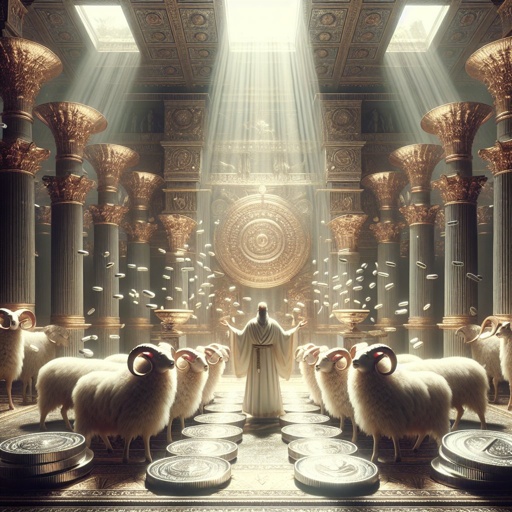
Leviticus 5:15 - "If a soul commit a trespass, and sin through ignorance, in the holy things of the LORD; then he shall bring for his trespass unto the LORD a ram without blemish out of the flocks, with thy estimation by shekels of silver, after the shekel of the sanctuary, for a trespass offering:"

Leviticus 23:15-22

Leviticus 11:15 - "Every raven after his kind;"

Leviticus 15:1 - "And the LORD spake unto Moses and to Aaron, saying,"
Leviticus 5:14 - "¶ And the LORD spake unto Moses, saying,"

Leviticus 15:15 - "And the priest shall offer them, the one for a sin offering, and the other for a burnt offering; and the priest shall make an atonement for him before the LORD for his issue."

Leviticus 5:5 - "And it shall be, when he shall be guilty in one of these things, that he shall confess that he hath sinned in that thing:"

Leviticus 23:5 - "In the fourteenth day of the first month at even is the LORD'S passover."

Leviticus 15:9 - "And what saddle soever he rideth upon that hath the issue shall be unclean."

Leviticus 2:15 - "And thou shalt put oil upon it, and lay frankincense thereon: it is a meat offering."

Leviticus 22:15 - "And they shall not profane the holy things of the children of Israel, which they offer unto the LORD;"

Leviticus 5:19 - "It is a trespass offering: he hath certainly trespassed against the LORD."

Leviticus 8:5 - "And Moses said unto the congregation, This is the thing which the LORD commanded to be done."
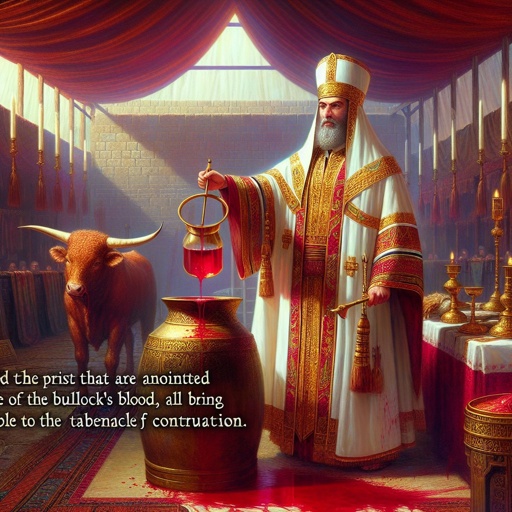
Leviticus 4:5 - "And the priest that is anointed shall take of the bullock's blood, and bring it to the tabernacle of the congregation:"

Leviticus 15:17 - "And every garment, and every skin, whereon is the seed of copulation, shall be washed with water, and be unclean until the even."

Leviticus 14:15 - "And the priest shall take some of the log of oil, and pour it into the palm of his own left hand:"

Leviticus 13:15 - "And the priest shall see the raw flesh, and pronounce him to be unclean: for the raw flesh is unclean: it is a leprosy."

"Every raven after his kind;" - Leviticus 11:15

Leviticus 21:15 - "Neither shall he profane his seed among his people: for I the LORD do sanctify him."

Leviticus 15:21 - "And whosoever toucheth her bed shall wash his clothes, and bathe himself in water, and be unclean until the even."

Leviticus 15:33 - "And of her that is sick of her flowers, and of him that hath an issue, of the man, and of the woman, and of him that lieth with her that is unclean."

Leviticus 10:5 - "So they went near, and carried them in their coats out of the camp; as Moses had said."

Leviticus 14:5 - "And the priest shall command that one of the birds be killed in an earthen vessel over running water:"

Leviticus 11:5 - "And the coney, because he cheweth the cud, but divideth not the hoof; he is unclean unto you."

Leviticus 15:12 - "And the vessel of earth, that he toucheth which hath the issue, shall be broken: and every vessel of wood shall be rinsed in water."

Leviticus 15:4 - "Every bed, whereon he lieth that hath the issue, is unclean: and every thing, whereon he sitteth, shall be unclean."

Leviticus 3:15 - "And the two kidneys, and the fat that is upon them, which is by the flanks, and the caul above the liver, with the kidneys, it shall he take away."

Leviticus 24:15 - "And thou shalt speak unto the children of Israel, saying, Whosoever curseth his God shall bear his sin."