What does Leviticus 14:6 mean?
"As for the living bird, he shall take it, and the cedar wood, and the scarlet, and the hyssop, and shall dip them and the living bird in the blood of the bird that was killed over the running water:" - Leviticus 14:6
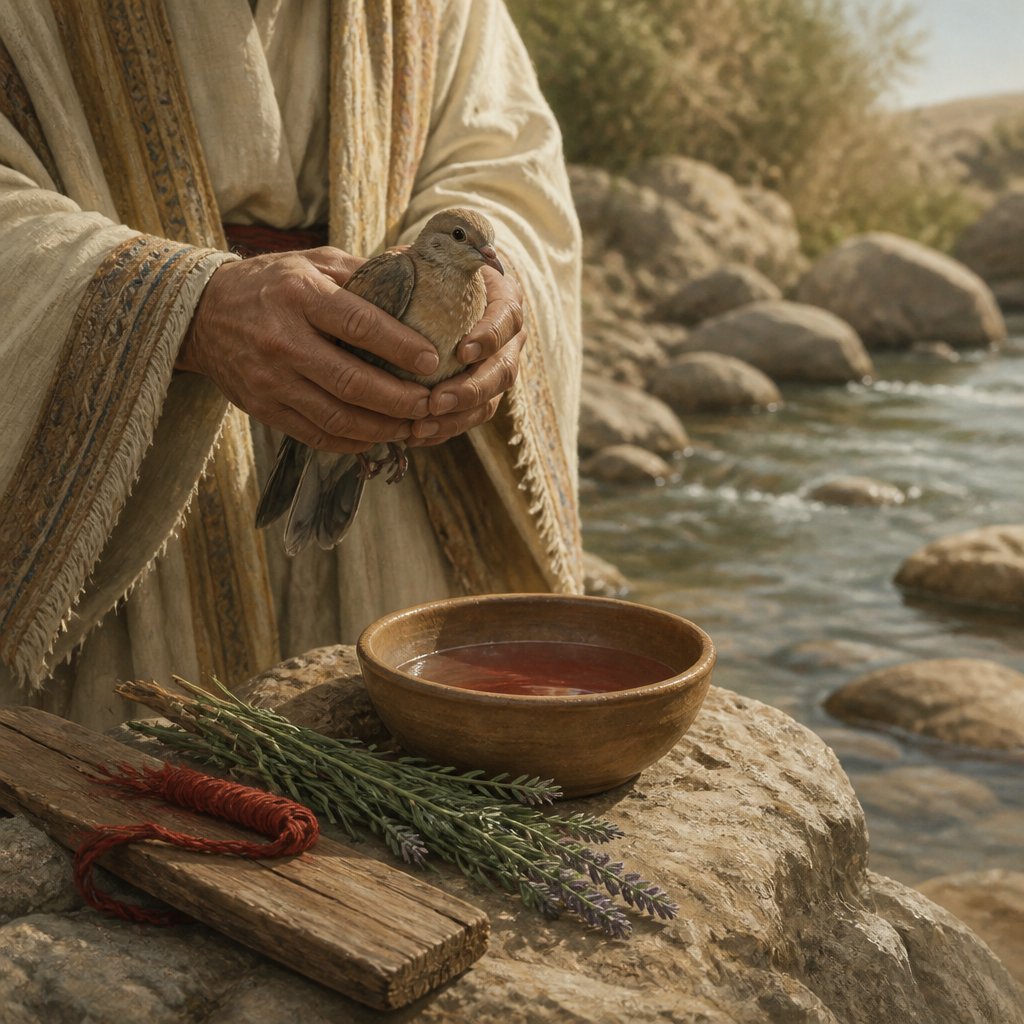
Leviticus 14:6 (KJV) reads: "As for the living bird, he shall take it, and the cedar wood, and the scarlet, and the hyssop, and shall dip them and the living bird in the blood of the bird that was killed over the running water."
This verse is part of a larger passage in the book of Leviticus, which is the third book of the Hebrew Bible. The book of Leviticus is primarily concerned with the instructions for the Israelites regarding their worship, sacrifices, and purification rituals. Leviticus 14 specifically deals with the cleansing of lepers and the purification process they have to undergo to re-enter the community.
In this verse, the focus is on the purification ritual that a person who has been healed from leprosy must undergo. The priest is instructed to take a living bird, along with cedar wood, scarlet yarn, and hyssop, and dip them all in the blood of another bird that has been killed over running water. The living bird is then set free in an open field.
The symbolic meaning of this ritual is deeply rooted in the religious and cultural practices of the ancient Israelites. The bird that is killed represents the death and removal of the disease or impurity, while the living bird represents the restored and cleansed person. The cedar wood, scarlet yarn, and hyssop were all considered to have cleansing or purifying properties in the ancient world, and so their inclusion in the ritual adds to the symbolism of the purification process.
The use of the running water in the ritual is also significant. Running water was considered to be pure and was often used in purification rituals to symbolize cleansing and renewal. The act of dipping the living bird and the other elements in the blood of the killed bird over running water represents a symbolic cleansing and renewal of the person who has been healed from leprosy.
In a broader context, this verse can be seen as a representation of the theme of spiritual and physical restoration. The ritual symbolizes the process of being cleansed from impurity or disease and being welcomed back into the community. It illustrates the concept of redemption and the possibility of starting anew after experiencing affliction or suffering.
In Christian theology, this verse can also be seen as a foreshadowing of the sacrificial death of Jesus Christ. The use of the bird as a sacrifice for purification, along with the references to blood and cleansing, are all elements that are echoed in the New Testament and the concept of Jesus' sacrificial death for the redemption of humanity.
Overall, Leviticus 14:6 is a deeply symbolic and ritualistic verse that carries layers of meaning related to purification, renewal, and restoration. It serves as a reminder of the ancient Israelites' beliefs and practices regarding physical and spiritual healing, as well as a foreshadowing of the themes that are further developed in Christian theology.
Have questions about Leviticus 14:6?
Dive deeper into this scripture with Bible Chat — an AI-powered tool for exploring God's Word through conversation. Ask questions, get context, and grow in your understanding of the Bible.
Get Our Apps


Leviticus 14:6 Artwork

Leviticus 14:6 - "As for the living bird, he shall take it, and the cedar wood, and the scarlet, and the hyssop, and shall dip them and the living bird in the blood of the bird that was killed over the running water:"
"As for the living bird, he shall take it, and the cedar wood, and the scarlet, and the hyssop, and shall dip them and the living bird in the blood of the bird that was killed over the running water:" - Leviticus 14:6

Leviticus 6:14 - "¶ And this is the law of the meat offering: the sons of Aaron shall offer it before the LORD, before the altar."
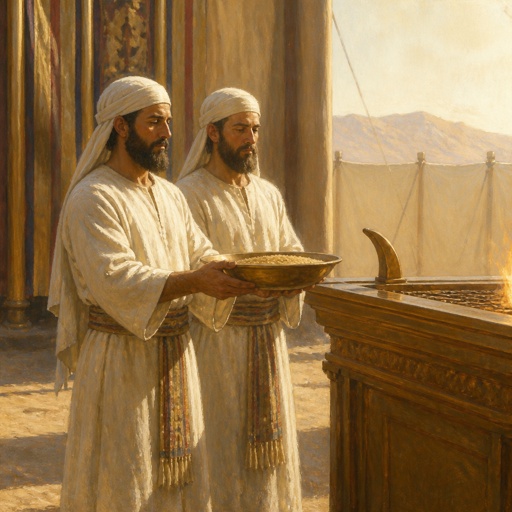
"¶ And this is the law of the meat offering: the sons of Aaron shall offer it before the LORD, before the altar." - Leviticus 6:14

Leviticus 14:51

Leviticus 14:55 - "And for the leprosy of a garment, and of a house,"

Leviticus 14:56 - "And for a rising, and for a scab, and for a bright spot:"

Leviticus 14:1 - "And the LORD spake unto Moses, saying,"

Leviticus 11:14 - "And the vulture, and the kite after his kind;"
Leviticus 5:14 - "¶ And the LORD spake unto Moses, saying,"

Leviticus 26: 4-6

Leviticus 14:54 - "This is the law for all manner of plague of leprosy, and scall,"
Leviticus 26: 4-6

Leviticus 26: 4-6

Leviticus 26:14 - "¶ But if ye will not hearken unto me, and will not do all these commandments;"

Leviticus 14:33 - "¶ And the LORD spake unto Moses and unto Aaron, saying,"

Leviticus 6:24 - "¶ And the LORD spake unto Moses, saying,"

Leviticus 6:8 - "¶ And the LORD spake unto Moses, saying,"

Leviticus 14:57 - "To teach when it is unclean, and when it is clean: this is the law of leprosy."

"And for the leprosy of a garment, and of a house," - Leviticus 14:55

Leviticus 6:19 - "¶ And the LORD spake unto Moses, saying,"

Leviticus 6:1 - "And the LORD spake unto Moses, saying,"

Leviticus 13:14 - "But when raw flesh appeareth in him, he shall be unclean."

Leviticus 14:26 - "And the priest shall pour of the oil into the palm of his own left hand:"

Leviticus 14:30 - "And he shall offer the one of the turtledoves, or of the young pigeons, such as he can get;"

"And for a rising, and for a scab, and for a bright spot:" - Leviticus 14:56

Leviticus 1:6 - "And he shall flay the burnt offering, and cut it into his pieces."

Leviticus 14:50 - "And he shall kill the one of the birds in an earthen vessel over running water:"

Leviticus 9:14 - "And he did wash the inwards and the legs, and burnt them upon the burnt offering on the altar."

Leviticus 8:6 - "And Moses brought Aaron and his sons, and washed them with water."