What does Leviticus 14:13 mean?
"And he shall slay the lamb in the place where he shall kill the sin offering and the burnt offering, in the holy place: for as the sin offering is the priest's, so is the trespass offering: it is most holy:" - Leviticus 14:13
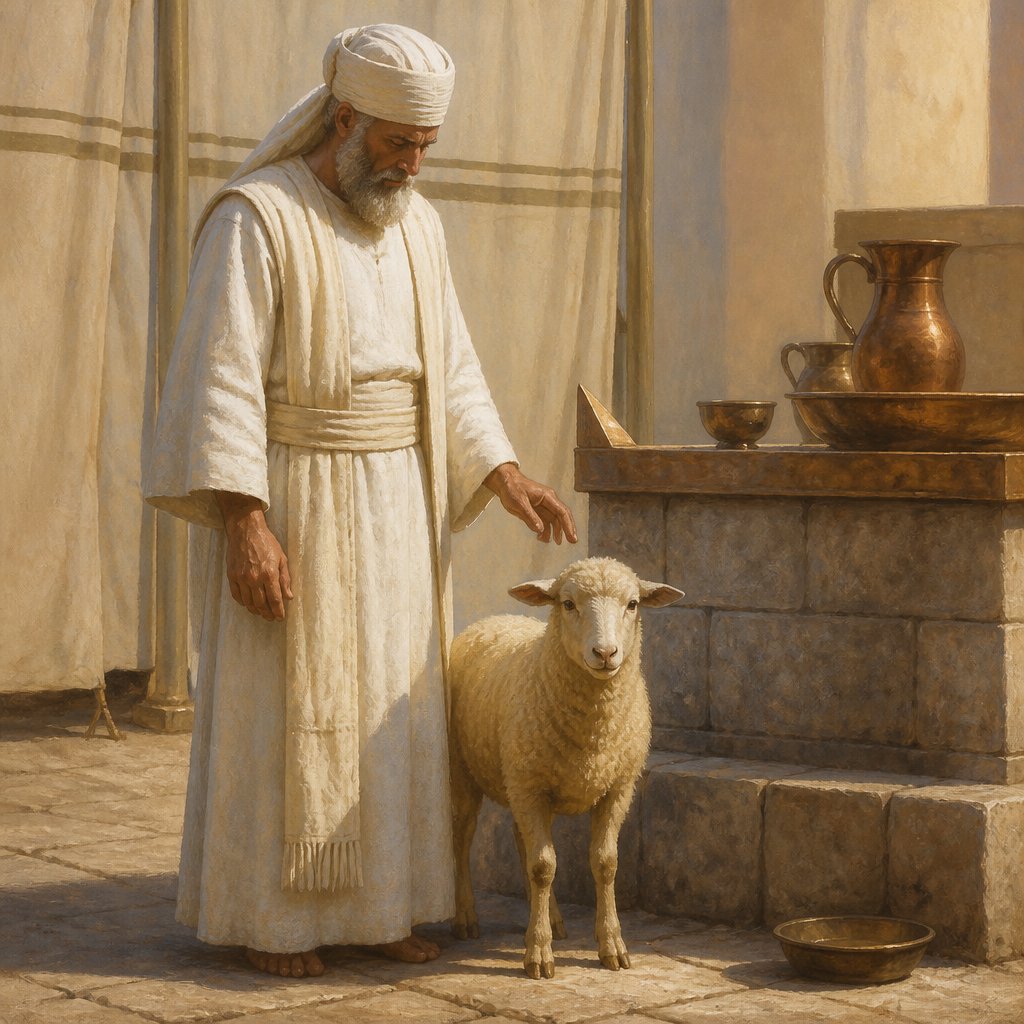
Leviticus 14:13 (KJV) states: "And he shall slay the lamb in the place where he shall kill the sin offering and the burnt offering, in the holy place: for as the sin offering is the priest's, so is the trespass offering: it is most holy."
This verse is part of a larger passage in the book of Leviticus that details the ritual for cleansing a leper. In the context of this verse, the process for the cleansing of a leper involves a number of steps, including the use of two birds, cedar wood, scarlet, and hyssop, as well as the blood of a slain lamb. The ritual is to be performed by a priest in the holy place of the tabernacle.
The book of Leviticus is part of the Torah, the first five books of the Hebrew Bible, and it primarily deals with the responsibilities and rituals of the priests and Levites. It provides a guide for the Israelites on how to live in a way that is pleasing to God, and it outlines various laws and regulations for sacrifice, purity, and atonement.
In this particular verse, the focus is on the importance of the holy place and the significance of the offerings. The act of slaying the lamb in the holy place signifies the sacredness of the location and the ritual itself. The blood of the lamb is considered holy and is used as a means of atonement for the leper, symbolizing the cleansing of sin and impurity.
The concept of sacrifice is a recurring theme in the Bible, and it is particularly prominent in the book of Leviticus. Sacrifices were an integral part of the Israelites' relationship with God, serving as a way to seek forgiveness, express gratitude, and maintain a sense of spiritual purity. The act of slaying the lamb as a sin offering and a trespass offering emphasizes the need for an atonement for wrongdoing and the importance of seeking reconciliation with God.
Furthermore, the verse underscores the role of the priest as a mediator between the people and God. The priest is responsible for conducting the rituals and offering the sacrifices on behalf of the individual seeking cleansing. This highlights the significance of the priestly office and the importance of having a designated intermediary in matters of faith and worship.
Symbolically, the lamb holds significant meaning in Christian theology as well. In the New Testament, Jesus is often referred to as the "Lamb of God" who takes away the sins of the world. The sacrificial nature of the lamb in Leviticus can be seen as a foreshadowing of Christ's ultimate sacrifice on the cross, where his blood was shed for the atonement of humanity's sins. This connection adds a deeper layer of symbolism to the verse, pointing to the redemptive work of Jesus and the fulfillment of the sacrificial system in the Old Testament.
In conclusion, Leviticus 14:13 captures the essence of the sacrificial system in ancient Israel and the significance of the priestly rituals for cleansing and atonement. It offers a glimpse into the religious practices and beliefs of the Israelites and provides a foundation for understanding the broader themes of sacrifice, holiness, and redemption in the Bible. The verse also holds relevance for Christians, serving as a precursor to the ultimate sacrifice of Jesus and the redemptive power of his blood.
Have questions about Leviticus 14:13?
Dive deeper into this scripture with Bible Chat — an AI-powered tool for exploring God's Word through conversation. Ask questions, get context, and grow in your understanding of the Bible.
Get Our Apps


Leviticus 14:13 Artwork

Leviticus 14:13 - "And he shall slay the lamb in the place where he shall kill the sin offering and the burnt offering, in the holy place: for as the sin offering is the priest's, so is the trespass offering: it is most holy:"
"And he shall slay the lamb in the place where he shall kill the sin offering and the burnt offering, in the holy place: for as the sin offering is the priest's, so is the trespass offering: it is most holy:" - Leviticus 14:13

Leviticus 13:14 - "But when raw flesh appeareth in him, he shall be unclean."

"But when raw flesh appeareth in him, he shall be unclean." - Leviticus 13:14

Leviticus 14:51

Leviticus 14:55 - "And for the leprosy of a garment, and of a house,"

Leviticus 14:56 - "And for a rising, and for a scab, and for a bright spot:"

Leviticus 14:1 - "And the LORD spake unto Moses, saying,"

Leviticus 11:14 - "And the vulture, and the kite after his kind;"
Leviticus 5:14 - "¶ And the LORD spake unto Moses, saying,"

Leviticus 24:13 - "And the LORD spake unto Moses, saying,"

Leviticus 14:54 - "This is the law for all manner of plague of leprosy, and scall,"

Leviticus 21:13 - "And he shall take a wife in her virginity."

Leviticus 13:1 - "And the LORD spake unto Moses and Aaron, saying,"

Leviticus 26:14 - "¶ But if ye will not hearken unto me, and will not do all these commandments;"

Leviticus 14:33 - "¶ And the LORD spake unto Moses and unto Aaron, saying,"

Leviticus 13:35 - "But if the scall spread much in the skin after his cleansing;"

Leviticus 14:57 - "To teach when it is unclean, and when it is clean: this is the law of leprosy."

"And for the leprosy of a garment, and of a house," - Leviticus 14:55

Leviticus 13:29 - "¶ If a man or woman have a plague upon the head or the beard;"

Leviticus 13:18 - "¶ The flesh also, in which, even in the skin thereof, was a boil, and is healed,"

Leviticus 14:26 - "And the priest shall pour of the oil into the palm of his own left hand:"

Leviticus 13:47 - "¶ The garment also that the plague of leprosy is in, whether it be a woollen garment, or a linen garment;"

Leviticus 13:9 - "¶ When the plague of leprosy is in a man, then he shall be brought unto the priest;"

Leviticus 14:30 - "And he shall offer the one of the turtledoves, or of the young pigeons, such as he can get;"

"And for a rising, and for a scab, and for a bright spot:" - Leviticus 14:56

Leviticus 13:22 - "And if it spread much abroad in the skin, then the priest shall pronounce him unclean: it is a plague."

Leviticus 25:13 - "In the year of this jubile ye shall return every man unto his possession."

Leviticus 6:13 - "The fire shall ever be burning upon the altar; it shall never go out."

Leviticus 14:50 - "And he shall kill the one of the birds in an earthen vessel over running water:"