What does Lamentations 5:8 mean?
"Servants have ruled over us: there is none that doth deliver us out of their hand." - Lamentations 5:8
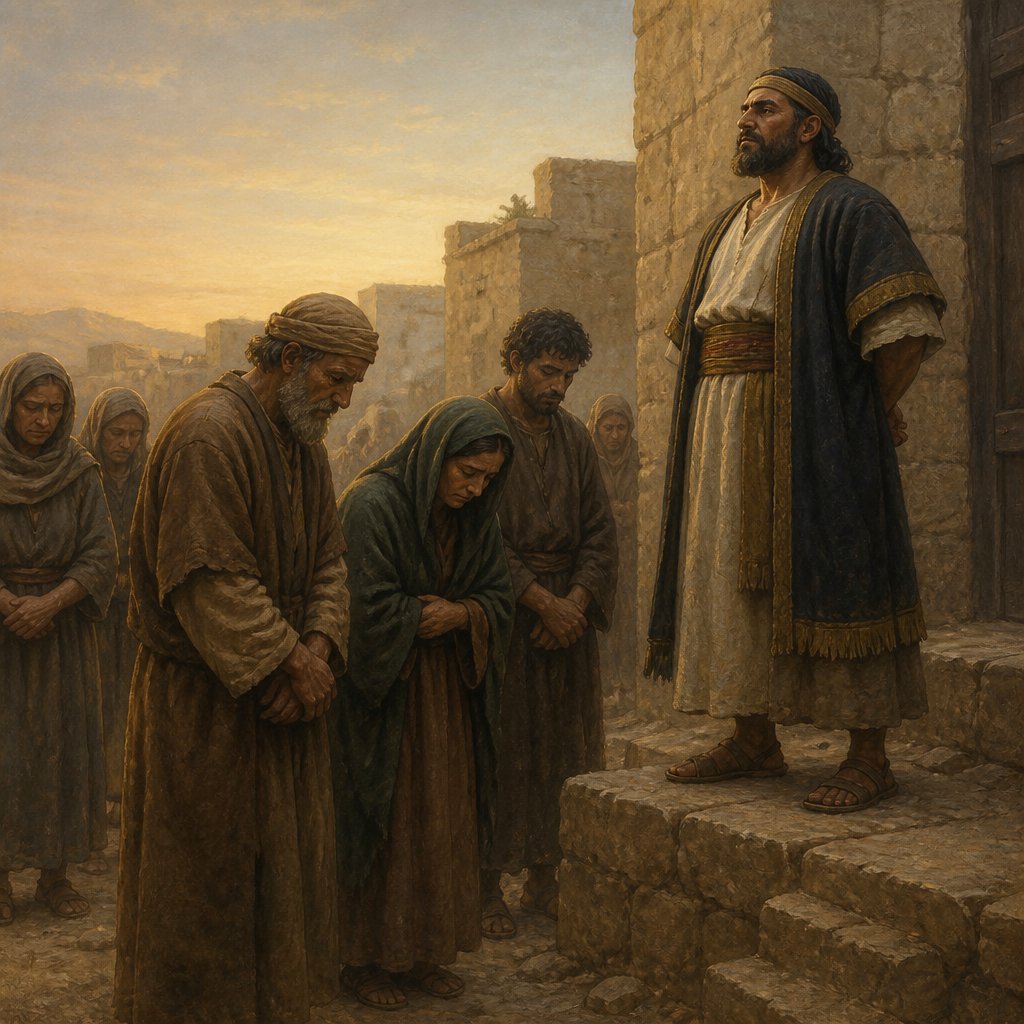
The Bible verse Lamentations 5:8 in the King James Version (KJV) reads: "Servants have ruled over us: there is none that doth deliver us out of their hand."
Lamentations is a book in the Old Testament, traditionally attributed to the prophet Jeremiah. It is a collection of five sorrowful poems that lament the destruction of Jerusalem and the suffering of the people of Judah. In this particular verse, the author expresses the deep sense of oppression and helplessness felt by the people, as they are being ruled by servants rather than their own leaders and there is no one to deliver them from this situation.
The themes present in this verse are oppression, powerlessness, and the absence of a savior. The people of Judah have been subjugated to the rule of servants, which signifies a reversal of their usual social order. Instead of being governed by their rightful leaders, they are now ruled by those who are meant to serve them. This situation has left them feeling powerless and at the mercy of their oppressors. The absence of anyone to deliver them from this predicament further intensifies their despair.
The context of Lamentations 5:8 is the aftermath of the destruction of Jerusalem and the exile of the people of Judah. The city has been ransacked, the temple destroyed, and the people taken captive by the Babylonians. The once proud and powerful nation of Judah is now in ruins, and its people are suffering under foreign rule. The book of Lamentations captures the grief, despair, and bewilderment of the people as they struggle to make sense of their calamity and to find hope in the midst of their suffering.
This verse can be seen as a poignant reflection of the consequences of disobedience and the devastating impact of sin. Throughout the Old Testament, God's people are warned of the dire consequences of turning away from God and following their own desires. The destruction of Jerusalem and the suffering of the people of Judah can be understood as the fulfillment of these warnings. The people have experienced the devastating consequences of their disobedience, and now they find themselves in a state of helplessness and despair, longing for deliverance.
In addition, the verse can also be seen as a cry for justice and restoration. The people long for someone to rise up and deliver them from their oppressive situation. They yearn for a leader who will overthrow their oppressors and restore them to their rightful place. This longing for deliverance reflects the inherent human desire for justice and the hope for a better future.
The symbolism in Lamentations 5:8 lies in the juxtaposition of servants ruling over the people. This reversal of roles represents the disruption of the social order and the loss of power and autonomy. The image of servants ruling over the people serves as a stark reminder of the fallen state of Judah and the dire need for redemption. The absence of anyone to deliver them further emphasizes the urgency of their situation and the desperate need for a savior.
In conclusion, Lamentations 5:8 is a poignant expression of the suffering and despair of the people of Judah following the destruction of Jerusalem. The verse conveys themes of oppression, powerlessness, and the longing for deliverance, set in the context of the consequences of disobedience and the yearning for justice and restoration. The symbolism of servants ruling over the people serves as a powerful representation of the disruption of the social order and the urgent need for redemption. Overall, the verse captures the depth of the people's despair and their longing for hope and deliverance in the midst of their suffering.
Have questions about Lamentations 5:8?
Dive deeper into this scripture with Bible Chat — an AI-powered tool for exploring God's Word through conversation. Ask questions, get context, and grow in your understanding of the Bible.
Get Our Apps


Lamentations 5:8 Artwork

Lamentations 5:8 - "Servants have ruled over us: there is none that doth deliver us out of their hand."
"Servants have ruled over us: there is none that doth deliver us out of their hand." - Lamentations 5:8

Lamentations 5:5 - "Our necks are under persecution: we labour, and have no rest."

Lamentations 5:11 - "They ravished the women in Zion, and the maids in the cities of Judah."

Lamentations 5:3 - "We are orphans and fatherless, our mothers are as widows."

Lamentations 5:2 - "Our inheritance is turned to strangers, our houses to aliens."

Lamentations 5:17 - "For this our heart is faint; for these things our eyes are dim."

Lamentations 5:7 - "Our fathers have sinned, and are not; and we have borne their iniquities."

Lamentations 5:15 - "The joy of our heart is ceased; our dance is turned into mourning."

Lamentations 5:18 - "Because of the mountain of Zion, which is desolate, the foxes walk upon it."

Lamentations 5:6 - "We have given the hand to the Egyptians, and to the Assyrians, to be satisfied with bread."

Lamentations 5:10 - "Our skin was black like an oven because of the terrible famine."

Lamentations 5:13 - "They took the young men to grind, and the children fell under the wood."

Lamentations 5:12 - "Princes are hanged up by their hand: the faces of elders were not honoured."

Lamentations 3:5 - "He hath builded against me, and compassed me with gall and travail."

Lamentations 5:14 - "The elders have ceased from the gate, the young men from their musick."

Lamentations 3:8 - "Also when I cry and shout, he shutteth out my prayer."

Lamentations 5:9 - "We gat our bread with the peril of our lives because of the sword of the wilderness."

Lamentations 5:19 – "You, Lord, reign forever; your throne endures from generation to generation."

Lamentations 5:19 - "Thou, O LORD, remainest for ever; thy throne from generation to generation."
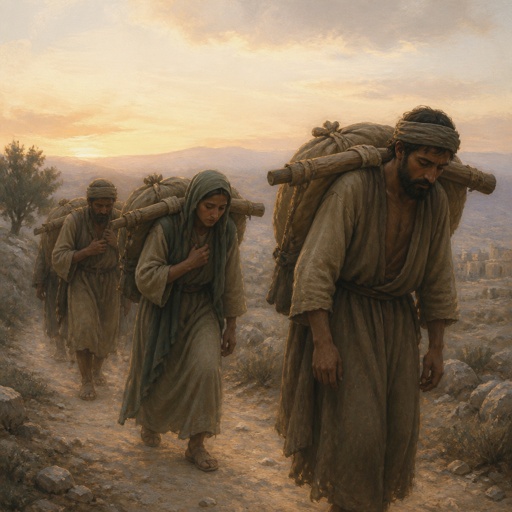
"Our necks are under persecution: we labour, and have no rest." - Lamentations 5:5

Lamentations 5:1 - "Remember, O LORD, what is come upon us: consider, and behold our reproach."

Lamentations 5:22 - "But thou hast utterly rejected us; thou art very wroth against us."

Lamentations 4:5 - "They that did feed delicately are desolate in the streets: they that were brought up in scarlet embrace dunghills."

Lamentations 5:4 - "We have drunken our water for money; our wood is sold unto us."

Lamentations 5:20 - "Wherefore dost thou forget us for ever, and forsake us so long time?"

Lamentations 5:16 - "The crown is fallen from our head: woe unto us, that we have sinned!"

Lamentations 4:8 - "Their visage is blacker than a coal; they are not known in the streets: their skin cleaveth to their bones; it is withered, it is become like a stick."
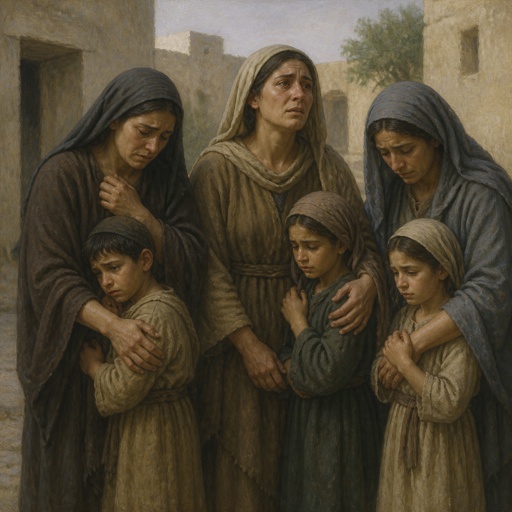
"We are orphans and fatherless, our mothers are as widows." - Lamentations 5:3
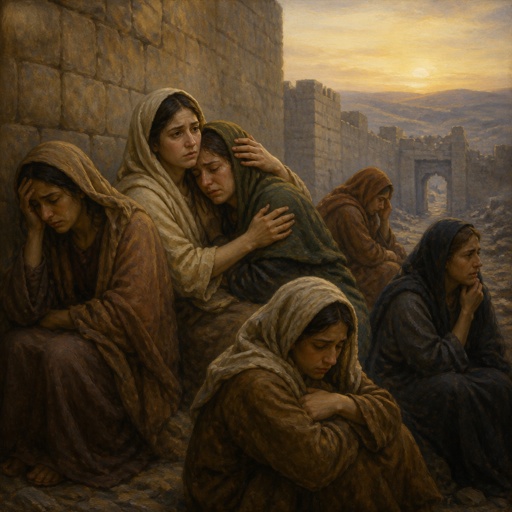
"They ravished the women in Zion, and the maids in the cities of Judah." - Lamentations 5:11